
Portable Stair Lifts in Education: Flexible Access for Schools, Colleges and Universities
Accessibility in education is about far more than entering a building. Pupils and students should be able to reach classrooms, …

A conventional stair lift can provide an effective way to overcome stairs, but it is not the right solution for every person or property.
Installation requires a permanent rail, the staircase must have sufficient space, and the user will normally need to transfer onto the stair lift’s seat. These requirements can make a fixed stair lift impractical in some homes, schools, workplaces and public buildings.
A powered stairclimber offers a portable alternative. It can transport a person up and down suitable stairs without a permanent rail or major structural alterations.
A powered stairclimber is a battery-operated mobility device controlled by a trained operator.
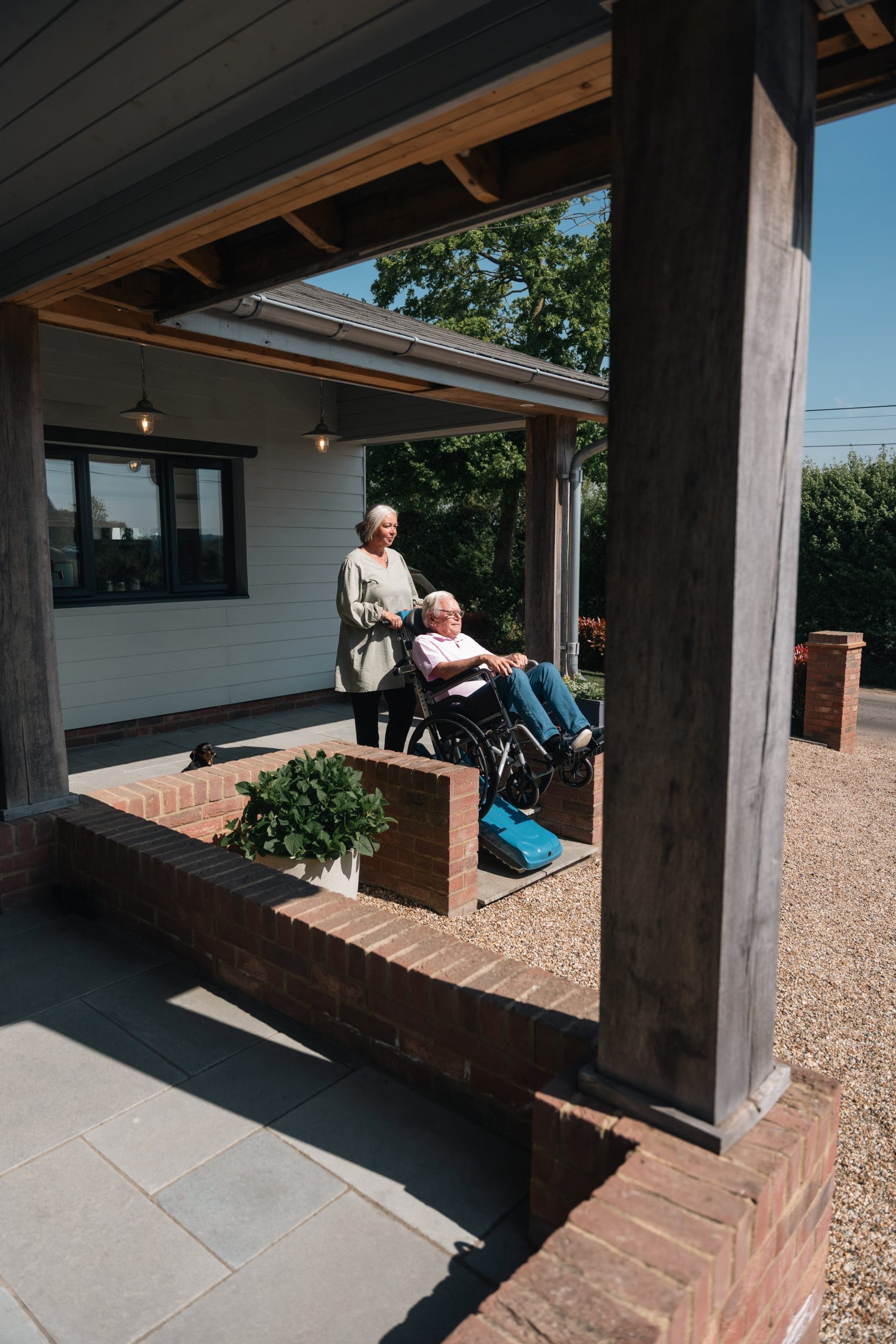
Depending on the model, the passenger can sit in an integrated seat or remain in their compatible wheelchair. The electric climbing system controls movement between levels while the operator positions and guides the equipment.
Unlike a fixed stair lift, a powered stair climber is not permanently attached to one staircase. It can usually be stored away after use and moved between compatible locations.
Our complete Powered Stairclimber guide explains the different models and their wider applications.
A stair lift travels along a rail fixed to the staircase. It is generally intended for one person using the same route regularly.
Some people can use a fixed stair lift independently. However, they usually need to transfer from their wheelchair or walking aid onto the stair lift’s seat.
A powered stairclimber is mobile equipment. It is positioned at the staircase when needed and controlled by an operator.
Non-transfer stairclimbers can attach to compatible wheelchairs. This allows the person to remain in their own chair rather than moving onto a separate seat.
This can be particularly valuable for someone who uses tilt-in-space seating, requires postural support or cannot transfer safely.
A powered stairclimber may be considered when permanent installation is difficult or undesirable.
A rented property may have restrictions on structural alterations. A listed building may need to preserve historic features. A school or university may need occasional access to several different areas.
Fixed stair lift rails can also reduce the available staircase width. This may create difficulties in narrow communal stairways or buildings used by large numbers of people.
Because a stairclimber can be removed after use, the staircase remains clear at other times.
The equipment may also be suitable for temporary requirements, such as an injury, building work, an event or a passenger lift breakdown.
A powered stairclimber is not always the best option.
A fixed stair lift may provide greater independence for someone who can transfer and operate it without assistance. It is also permanently available, so the user does not have to wait for a trained operator.
A stairclimber usually requires another person every time it is used. This means families and organisations need enough trained operators to make the arrangement reliable.
The decision should therefore consider independence, frequency of use, transfer ability, available space and the individual’s preferences.
A portable electric stairclimber does not normally require a rail, structural work or permanent installation.
However, the staircase must still be assessed. Its width, angle, step dimensions, landings and surrounding obstacles can all affect suitability.
Tracked stairclimbers are generally suited to straight staircases with adequate landing space. Compact stepping models may be considered for certain tighter or turning stairs.
An assessment should also consider the passenger, wheelchair and proposed operators.
The choice between a powered stairclimber and a fixed stair lift should not be made on price alone.
The most suitable solution is the one that provides safe, dignified and sustainable access for the individual. For some people, that will be an independently operated stair lift. For others, a portable stair lift alternative that accommodates their wheelchair may be more appropriate.
The Stair Climbing Company provides professional assessments and demonstrations throughout England. Our team can compare the available options and establish whether a seated or non-transfer stairclimber is suitable.
To discuss a powered stair climber for your home or building, contact The Stair Climbing Company.
For more on Powered stairclimbers please check out our pillar post below.
Accessibility in education is about far more than entering a building. Pupils and students should be able to reach classrooms, …

Portable Stair Lift Solutions: Why a Mobile Stair Lift and Electric Stair Climber Can Transform Access Accessibility should allow people …
The Complete Guide to Safe and Flexible Access Stairs remain one of the most common barriers faced by wheelchair users …

Schools Evacuation Planning School evacuation is changing because expectations are changing. Parents rightly expect schools to provide an environment where …

School Evacuation in England: Why Powered Stair Climbers Should Be Part of Every Conversation School evacuation is one of the …
Estimated reading time: 4 minutes