Powered Stair Climbers for Workplace Access: Removing Barriers Without Major Building Work
Powered Stair Climbers for Workplace Access: Removing Barriers Without Major Building Work Need to improve wheelchair access in your workplace? …

Accessibility should allow people to participate in everyday life without the staircase becoming an unnecessary barrier. However, installing a conventional stair lift is not always practical, affordable or suitable for the building.
A narrow staircase, limited landing space, rented accommodation, listed status or the need to remain in a wheelchair can all make a permanently installed stair lift unsuitable. In these situations, a portable stair lift, often described as a mobile stair lift or electric stair climber, can offer a more flexible solution.
Unlike a fixed stair lift, an electric stair climber does not normally require permanent rails or major alterations to the staircase. It can be stored when it is not required, transported between locations and used on different flights of stairs, subject to a professional assessment.
This flexibility is helping families, Occupational Therapists, schools, care providers, heritage venues and facilities managers improve access without immediately committing to expensive structural work.
The Stair Climbing Company specialises in providing stair climbing solutions for homes, public buildings, schools, workplaces, care environments and historic properties. Through assessments, demonstrations, training, hire and purchase options, the company helps clients find a solution that suits the person, the wheelchair and the staircase.
A portable stair lift is a powered mobility device designed to help transport a person safely up or down a staircase. Rather than being attached permanently to the stairs, it is controlled by a trained operator and can be moved or stored when it is not in use.
The term can cover several different types of equipment. Some models include an integrated seat for a person who can transfer from their usual chair. Others work as wheelchair stair climbers, allowing the passenger to remain in their own compatible wheelchair.
The second option can be particularly valuable for people who use specialist wheelchairs, moulded seating or postural support. Avoiding an unnecessary transfer may make the journey more comfortable and dignified while reducing the number of separate handling activities that must be considered.
A portable stair lift should not be confused with an ordinary domestic stair lift. A conventional stair lift normally has a seat that moves along a rail permanently fixed to one side of the staircase. It is designed for use on that specific flight of stairs.
An electric stair climber is mobile equipment. It travels on the steps using a powered climbing system and can potentially be used in more than one part of a building. The correct model will depend on the staircase, landing dimensions, passenger requirements, wheelchair and intended frequency of use.
A fixed stair lift can be an excellent solution for an ambulant person who can transfer safely onto its seat. However, it may not meet every access requirement.
Wheelchair users can face a particular difficulty. They may need to transfer from their wheelchair onto the stair lift at the bottom of the stairs and then transfer into a second wheelchair at the top. This creates additional equipment requirements and may not be appropriate for someone with poor balance, limited trunk control, pain, fatigue or complex postural needs.
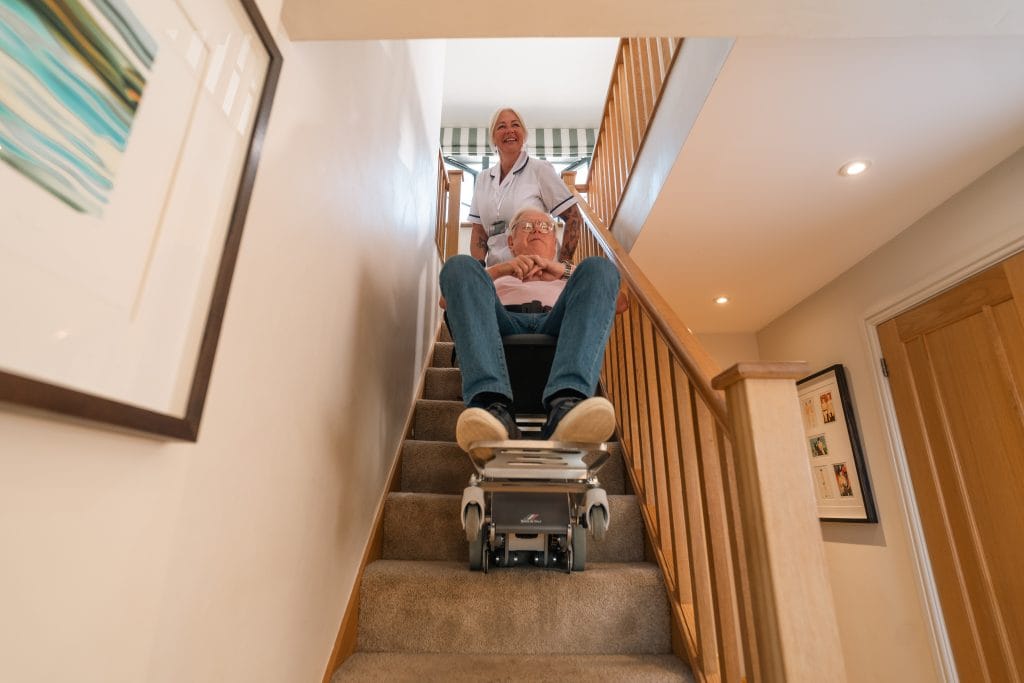
A mobile stair lift can provide a different approach. Depending on the selected equipment, the passenger may remain seated in their wheelchair throughout the journey. This can remove the need to leave a personally configured seating system simply to travel between floors.
A mobile solution can also be considered when permanent installation is restricted. This may include rented homes, temporary accommodation, heritage properties, event structures, schools or commercial buildings where alterations would be difficult.
Because the equipment is not fixed to one staircase, it can also offer greater flexibility during building changes, temporary lift failures or short-term access requirements.
An electric stair climber uses a rechargeable battery to power its movement on the stairs. Depending on the model, it may use tracks or a step-by-step climbing mechanism.
A tracked stair climber travels along the line of the staircase using powered tracks. These models can work well on suitable straight staircases with adequate landing space.
A step-by-step electric stair climber moves from one individual step to the next. This design may provide more manoeuvrability where a staircase has turns, winding sections or smaller landings. However, every staircase and situation must be assessed individually.
The operator guides and controls the equipment rather than physically lifting the full weight of the passenger and chair. This does not remove the need for safe technique, training or risk assessment, but it can provide a controlled alternative to carrying or improvised manual handling.
The Health and Safety Executive’s guidance on moving and handling explains that employers should avoid hazardous moving and handling tasks where reasonably practicable, assess risks that cannot be avoided and introduce measures to reduce those risks. It also stresses the importance of suitable equipment, staff training, maintenance and individual assessment.
An electric stair climber should therefore be introduced as part of a planned access solution. The passenger’s needs, operator requirements, staircase, wheelchair compatibility and environment all need to be considered.
One of the main advantages of a portable stair lift is that it does not normally require a permanent rail or major structural alteration. This can make it an attractive option where building work would be disruptive, restricted or disproportionate.
The equipment can also be stored when it is not needed. In a school, workplace, hotel or visitor attraction, this means the staircase does not have to be permanently narrowed by a fixed installation.
Portability can be useful when access is needed in several areas. A suitable mobile stair lift may be transported between staircases or buildings, provided each location has been assessed and approved for its use.
Another important advantage is speed of provision. Installing a lift, platform lift or conventional stair lift can involve surveys, permissions, manufacture and construction work. A professionally assessed electric stair climber may be available much sooner, helping to prevent a person from being unnecessarily restricted while a longer-term plan is considered.
There can also be financial benefits. Although the cost depends on the model, seating, training and service package, a portable solution may avoid substantial building alterations. Hire and lease options can also help organisations respond to temporary or changing requirements.
Most importantly, the right stair climber can improve participation. It may allow a person to reach bedrooms, classrooms, meeting rooms, heritage spaces, family events or community facilities that were previously inaccessible.
Stairs can become a major obstacle following illness, injury, disability or a change in mobility. In some homes, the individual may be left sleeping downstairs or depending on family members to carry them.
Carrying a person on stairs can expose both the passenger and the person assisting them to avoidable risks. A properly selected electric stair climber can provide a more structured solution, but the home, staircase and individual must first be assessed.
The NHS guidance on home adaptations explains that local councils can assess a person’s home and recommend adaptations or equipment. An Occupational Therapist will usually consider the activities the person finds difficult and work with them to identify suitable support.
A mobile stair lift can form part of this wider assessment. It may be particularly useful when the individual cannot safely transfer onto a fixed stair lift or when permanent adaptations are unsuitable.
The Stair Climbing Company works alongside Occupational Therapists, families and care professionals to examine the full journey. This includes approaching the stairs, attaching the wheelchair where applicable, travelling between floors, manoeuvring on the landing and reaching the required destination.
This complete assessment is essential. It is not enough to establish that a machine can climb an individual step. The solution must work safely within the real home and support the person’s wider mobility needs.
Schools and colleges often contain older buildings, split levels, temporary classrooms and areas where lift installation would be extremely difficult. Yet pupils, staff members and visitors should be able to participate as fully as possible.
A portable stair lift can help an educational establishment address a particular access barrier without permanently changing every staircase. It can also move with a pupil or be reassigned if requirements change.
For wheelchair users with specialist seating, a wheelchair-compatible electric stair climber may avoid the need to transfer into a generic stair lift seat. This is especially relevant for children who need carefully configured postural support.
However, equipment provision alone does not create a complete solution. The school must consider suitable operators, staff availability, storage, charging, maintenance and how the arrangement fits into the pupil’s access plan.
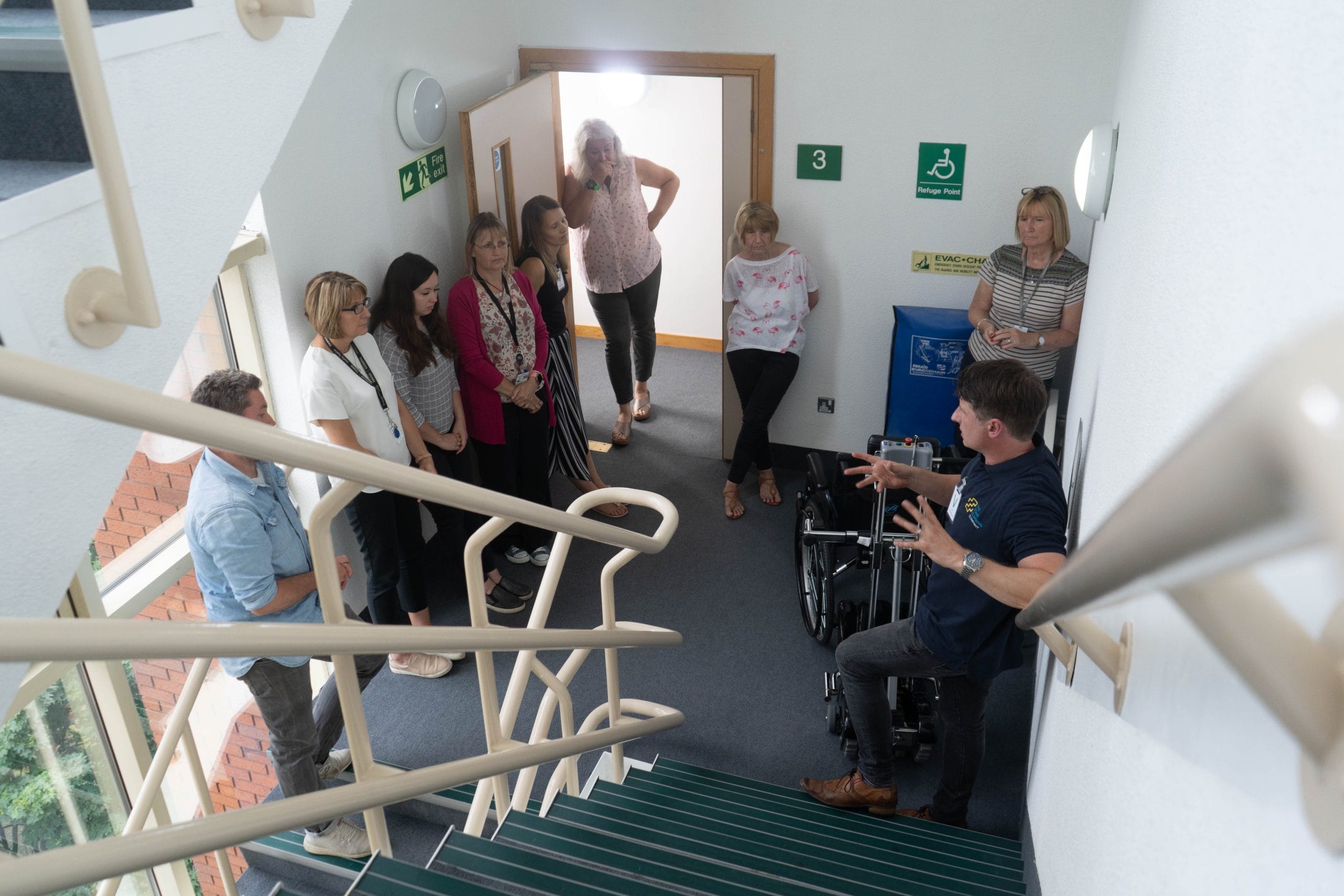
The Stair Climbing Company can support educational establishments with practical site assessments, equipment selection, demonstrations and operator training. Its compact Skyclimber stair climber can be configured as a seated solution or wheelchair carrier, making it a versatile option for different access requirements.
Many public and commercial buildings have access challenges that cannot be solved easily with a conventional stair lift. Listed features, narrow circulation areas, shared staircases and planning restrictions can all complicate permanent installation.
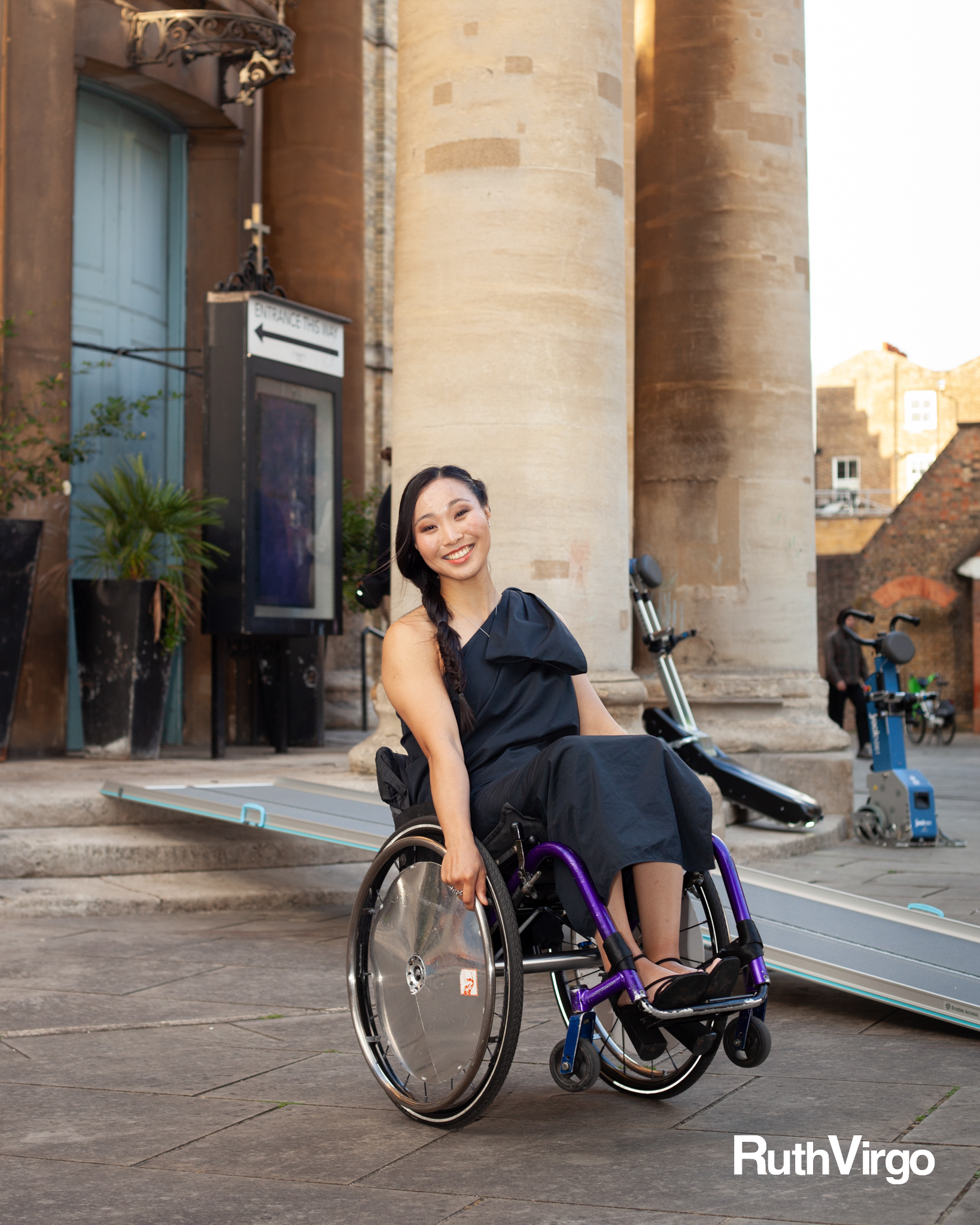
A mobile stair lift may provide a practical access option for heritage venues, theatres, hotels, offices, community buildings, sports facilities and visitor attractions. The equipment can be brought into use when required and stored away afterwards.
This can be particularly valuable in heritage buildings. Permanent rails, lifts or platforms may affect protected architecture or be physically impossible to install. An electric stair climber can provide access while limiting alterations to the historic environment.
Businesses and service providers also need to consider their responsibilities under the Equality Act 2010. What is reasonable will depend on the circumstances, so organisations should obtain appropriate accessibility and legal advice rather than assuming that one product automatically satisfies every duty.
The strongest approach is to look at the complete visitor or employee journey. This means considering entrances, internal steps, upper floors, accessible toilets, escape arrangements and staff support.
A passenger lift failure can quickly make a building inaccessible to wheelchair users and people with limited mobility. Repairs may take days or weeks, particularly when specialist parts are required.
An electric stair climber can be included within a lift-failure contingency plan. This may allow an organisation to maintain access while repairs are completed, rather than closing an area or excluding people who cannot use the stairs independently.
The Stair Climbing Company provides stair climber hire for temporary access requirements, including lift failure, events and short-term building projects.
Planning before a breakdown is preferable to searching for equipment after access has already been lost. Facilities managers can identify suitable staircases, establish where the stair climber will be stored, select and train operators and ensure that contact details are available when support is needed.
Access during normal use and evacuation during an emergency are not necessarily the same task. Organisations should assess each requirement separately and ensure that any emergency arrangement is appropriate, documented and supported by the correct equipment and training.
A portable stair lift should never be selected purely from an online photograph or basic product specification. Two staircases with similar widths can behave very differently because of tread depth, nosings, turns, gradients, handrails and landing layouts.
The passenger’s requirements are equally important. The assessment should consider body weight, height, posture, mobility, medical needs, ability to transfer and any anxiety associated with travelling on stairs.
For wheelchair-carrying equipment, compatibility must be confirmed. Wheelchair frames, anti-tip bars, batteries, footplates, tilt mechanisms and seating accessories can all influence whether a particular stair climber is suitable.
The operator must also be able to use the equipment confidently. Professional training should cover preparation, safety checks, attachment procedures, movement on the stairs, landing manoeuvres, communication with the passenger, charging and storage.
Regular inspection and servicing are necessary to keep the equipment ready for use. An electric stair climber that has been stored for months without checking its battery or condition cannot be assumed to be operational when suddenly required.
The Stair Climbing Company offers different solutions because no single model is appropriate for every environment.
The Skyclimber is the company’s highly versatile and compact option. It climbs one step at a time and can operate as a seated stair climber or be adapted to carry compatible wheelchairs. Its manoeuvrability can make it suitable for tighter landings, turns and more complicated domestic environments.
The Skyline stair climber uses a tracked system and is well suited to appropriate straight staircases with sufficient landing space. It allows many passengers to remain in their own wheelchair and is used in settings including public buildings, hospitality venues, heritage properties and temporary event structures.
Choosing between them requires more than comparing prices. The correct decision depends on the user, wheelchair, staircase, environment and intended pattern of use.
The Stair Climbing Company is one of the UK’s leading specialists in portable stair lift and electric stair climber solutions. Its work covers homes, schools, care environments, public buildings, workplaces, hospitality venues, events and heritage properties.
Rather than simply supplying a machine, the company provides a complete service based on assessment and long-term support. Clients can access demonstrations, stair trials, operator training, servicing and aftercare.
Purchase, lease hire, short-term hire and long-term hire options are available, allowing the solution to match both the access requirement and available budget.
The team also works closely with Occupational Therapists, families, facilities managers, estate teams and care professionals. This collaborative approach helps ensure that the chosen mobile stair lift is suitable for the person and the place.
A portable stair lift may be appropriate when permanent installation is not possible, when wheelchair transfers need to be reduced or when access is required across several locations.
It can also provide an effective response to temporary situations such as lift failure, building work, events or short-term changes in mobility.
However, every situation should be assessed individually. Stair dimensions, passenger needs, wheelchair compatibility, operator ability, storage and maintenance all influence whether an electric stair climber is the right solution.
A portable stair lift is not simply a smaller version of a traditional stair lift. It is a different type of access equipment that provides mobility, adaptability and the potential for non-permanent access.
No. A portable stair lift or electric stair climber is mobile equipment and does not normally require a permanent rail. It can be moved and stored when it is not in use.
Certain models can carry a person in a compatible wheelchair. Other models use an integrated seat. A professional assessment is required to confirm the correct configuration.
Some step-by-step models can work on suitable curved or winding staircases. The turns, stair dimensions and landing space must be assessed before use.
Yes. The Stair Climbing Company offers short-term and long-term hire options for requirements including lift failure, events, home access and temporary building access.
Yes. Operators should receive appropriate practical training for the selected equipment and environment. Training supports safe use, correct setup and passenger confidence.
A staircase should not automatically mean that a home, school, workplace or visitor attraction is inaccessible. Where permanent building work is impractical, a portable stair lift can provide a flexible and dignified alternative.
The mobility of the equipment is what makes it different. A mobile stair lift can be stored, transported and used in locations where a conventional rail-based system may not be possible. A wheelchair-compatible electric stair climber can also allow some passengers to remain in their own wheelchair, reducing unnecessary transfers.
The best results begin with a professional assessment. The Stair Climbing Company brings together specialist equipment, practical experience, training and ongoing support to help clients create accessible places.
To discuss a home, school, public building, heritage property or lift-failure requirement, contact The Stair Climbing Company to arrange a complimentary assessment and explore the most appropriate portable stair lift solution.
Powered Stair Climbers for Workplace Access: Removing Barriers Without Major Building Work Need to improve wheelchair access in your workplace? …

Powered Stair Climbers for Wheelchair Access: A Flexible Way to Overcome Stairs Need to create wheelchair access where stairs are …

Part M Stair Climbers for London Buildings: Accessible Retrofit Without Major Structural Change Improving accessibility in an existing London building? …

Part M Stair Climbers for Retrofit Buildings: Creating Accessible Buildings Without Major Structural Change Retrofitting an existing building and struggling …
Part M Stair Climbers for London Retrofit Buildings: Practical Access in Constrained Spaces Discuss a London Access Assessment Retrofitting a …

Part M Stair Climber Access: Creating More Inclusive Buildings Without Losing Flexibility Creating an accessible building is rarely about a …
Estimated reading time: 13 minutes