Powered Stairclimbers in UK Universities: Creating More Accessible Campuses
University should be a place where students can learn, participate and build their future. Yet for wheelchair users and people …

Creating an accessible building is rarely about a single product or one design decision. It requires architects, designers, facilities managers and access professionals to understand how people will approach, enter and move around a place in everyday use.
Approved Document M provides important guidance on access to and use of buildings in England. In new construction and building work, it helps design teams consider inclusive routes, entrances, facilities and changes of level from the earliest stages. Existing buildings, however, can present difficult constraints. Limited space, heritage features, planning restrictions and the cost or disruption of structural alterations can make conventional lift or ramp solutions challenging.
This is where Part M stair climber access deserves careful consideration. A powered stair climber can provide a flexible way to support a wheelchair user on a staircase when it is suitable for the person, the building and the proposed route. It does not automatically make a development compliant with Part M, and it should not be used to avoid reasonable accessible design. Used as part of a properly assessed access strategy, however, it can solve real barriers that would otherwise prevent someone from using a space.
The Stair Climbing Company will demonstrate this approach at NeuroPlaces during Shoreditch Design Week, taking place at Protein Studios in Shoreditch from 15 to 17 September 2026. As the event’s Gold Sponsor for Accessibility in Action, we will provide portable ramps and a stair climber to help visitors navigate areas where permanent step-free access is limited.
Approved Document M, Volume 2 supports the Building Regulations requirements for access to and use of buildings other than dwellings in England. It addresses matters such as approaches to buildings, entrances, circulation, changes of level, accessible facilities and the needs of a broad range of users.
Part M is often discussed as though it were a complete accessibility checklist. In reality, an Approved Document gives practical guidance on common ways of meeting particular Building Regulations requirements. The correct solution depends on the nature of the project and should be considered alongside wider duties, standards, planning requirements and professional advice.
For architects and project teams, accessibility should begin at concept stage. A well-designed step-free route is generally preferable to adding equipment after decisions have already created a barrier. Passenger lifts, platform lifts and permanent ramps can provide independent access where they are feasible and appropriate.
The challenge arises when a building cannot easily accommodate these solutions. A listed property may have protected fabric that cannot be significantly altered. A small venue may not have room for a compliant permanent ramp. A retrofit project may encounter a short internal staircase between two important areas, while a temporary event may occupy a space whose fixed layout cannot be changed in time.
In these circumstances, dismissing the inaccessible area is not an inclusive answer. A carefully selected powered stair climber may provide a practical alternative or supporting measure, subject to a suitable assessment and management plan.
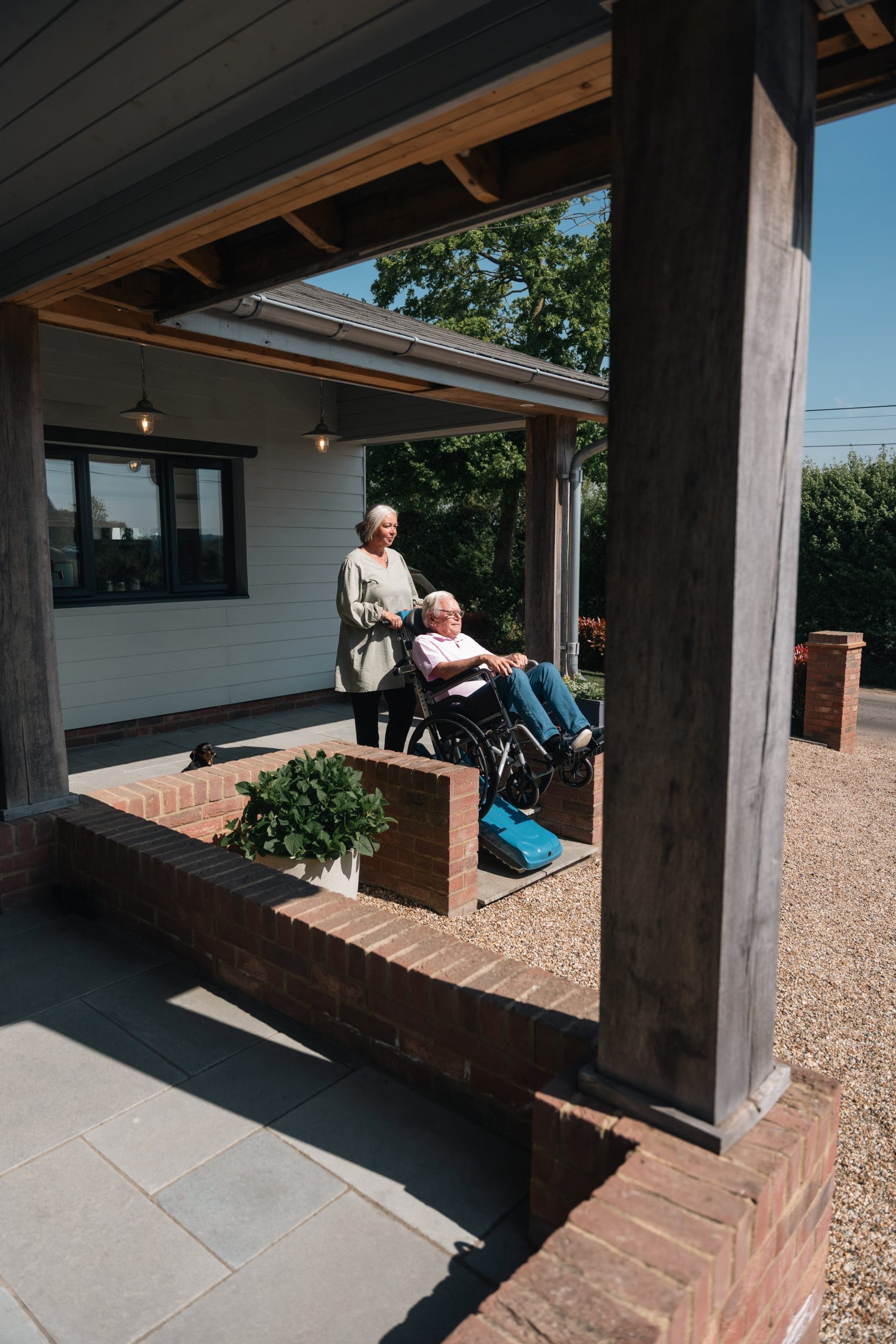
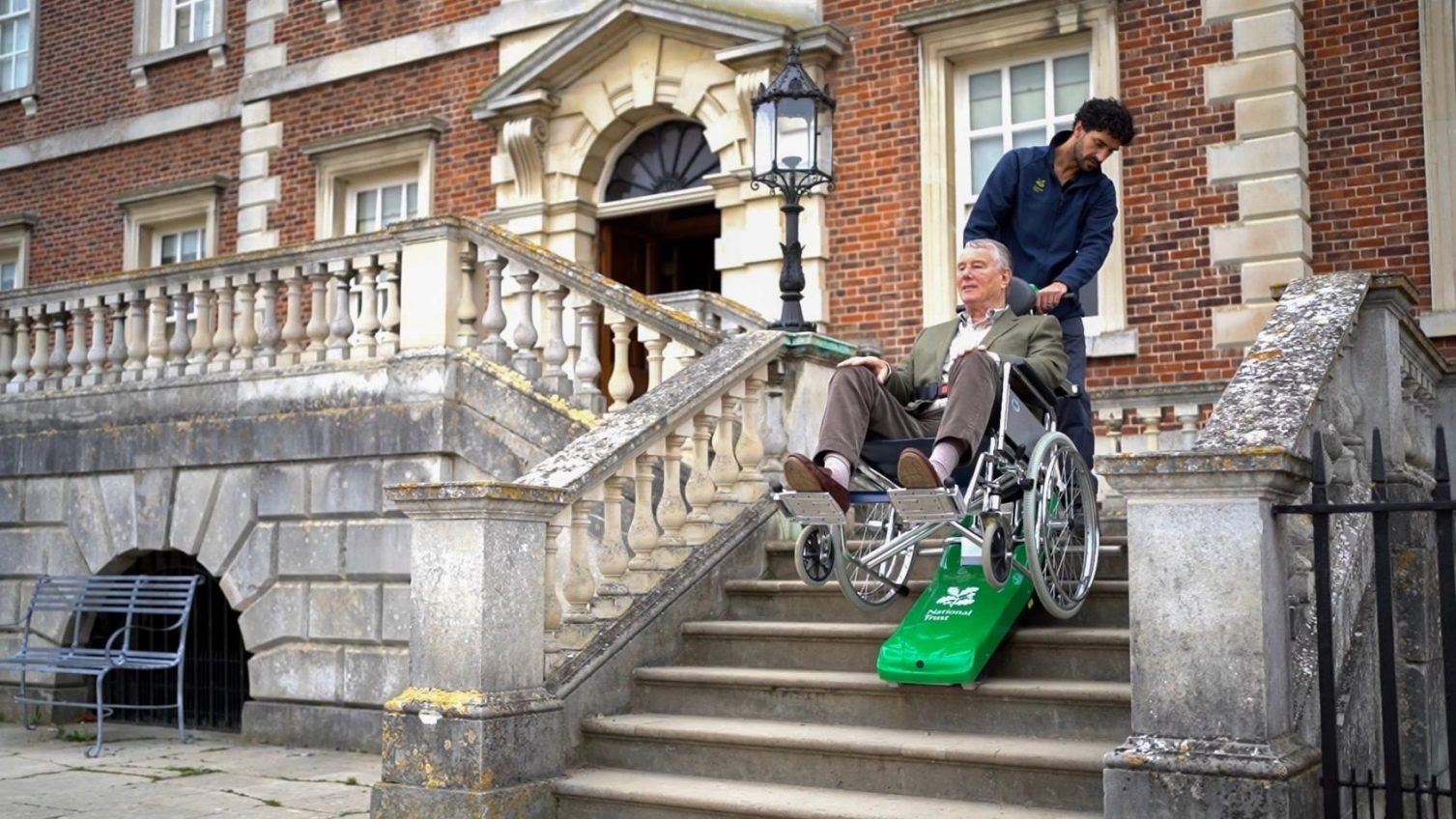
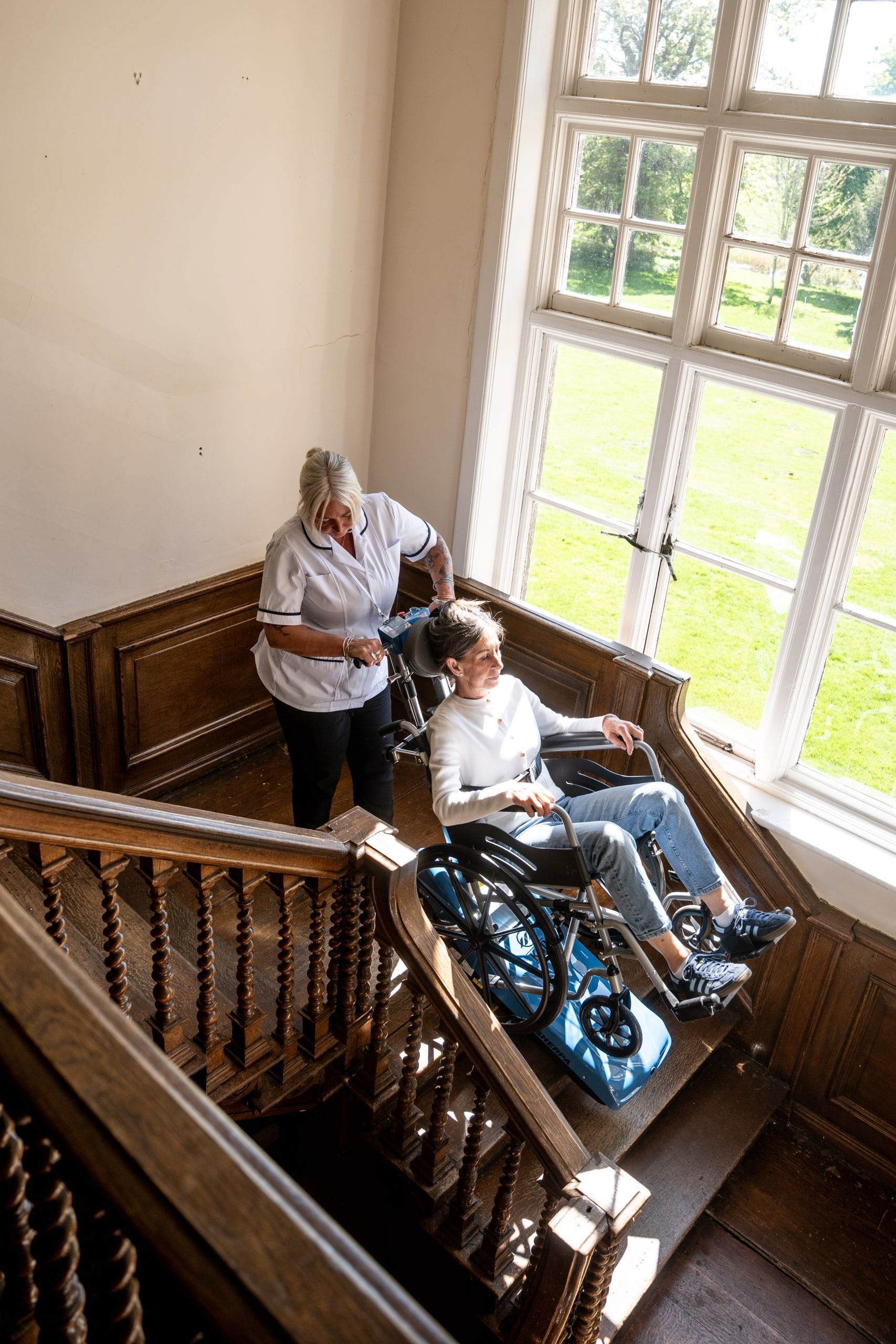
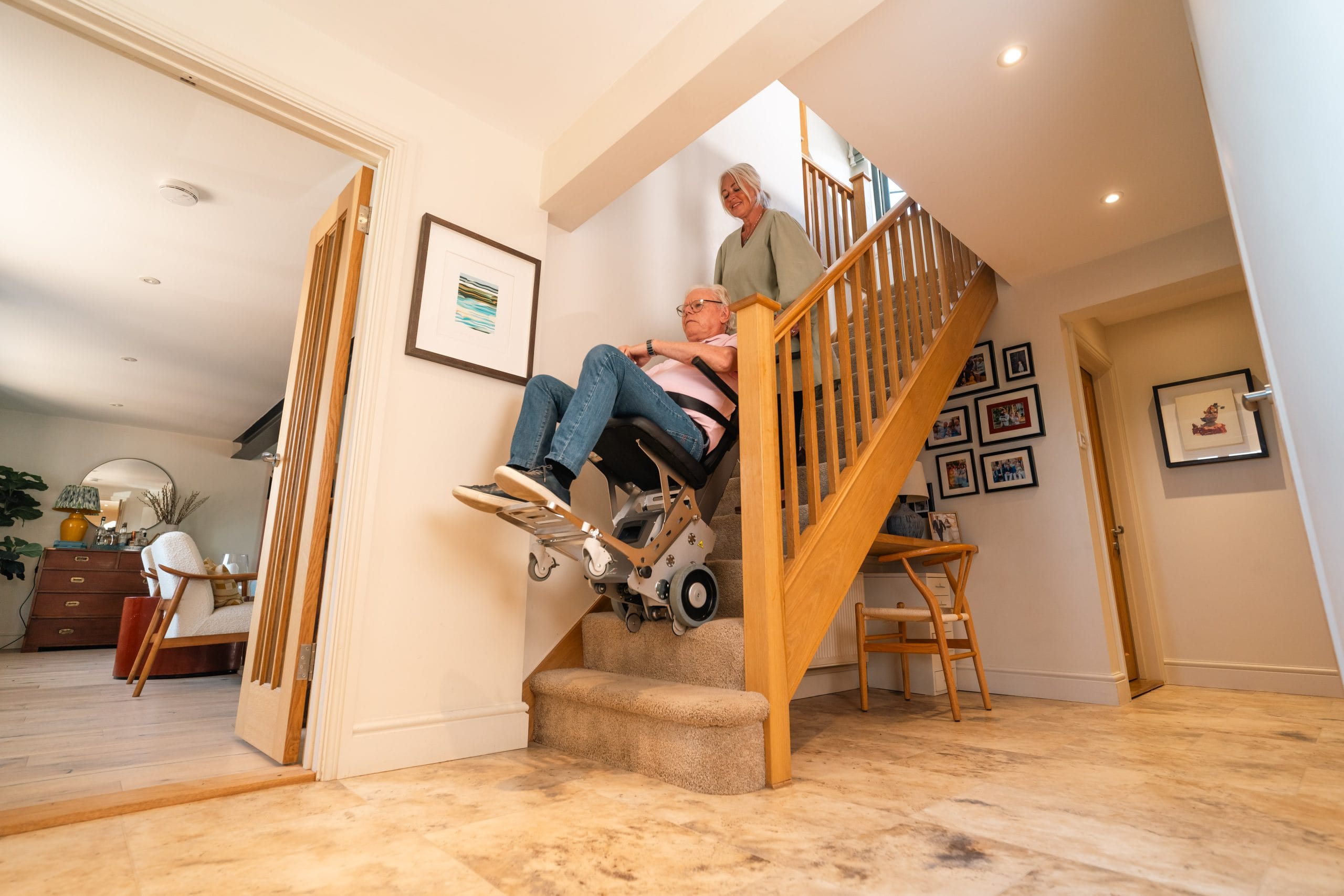
A powered stair climber is a portable mobility device designed to transport a person safely along a staircase with assistance from a trained operator. Wheelchair stair climbers allow many users to remain in their own wheelchair, avoiding the need to transfer into separate seating. This can support comfort, dignity and postural needs.
Tracked models use powered tracks to grip the stair edges and travel in a controlled way. Other designs may use wheels or stepping mechanisms. The correct product depends on the wheelchair, passenger, staircase, landing space, stair profile and direction of travel.
Unlike a permanently installed lift, a portable stair climber does not normally require major structural work. It can be stored when not in use and, following assessment, may support more than one suitable staircase or location. This flexibility can be valuable in heritage buildings, schools, workplaces, hospitality venues, homes, exhibition spaces and properties awaiting longer-term alterations.
Our Powered Stairclimber complete guide explains how this equipment can support safe and flexible access in a wide range of settings.
The most accurate answer is that a stair climber can contribute to an access solution, but the product itself does not confer Part M compliance. Building Regulations apply to building work, and the suitability of a proposal must be considered by the relevant designers, access consultants, building-control professionals and other responsible parties.
A stair climber is generally a managed access solution. The user may need a trained operator to be available, the device must be suitable for their wheelchair and the agreed route must remain clear. This differs from independent access provided by a correctly designed lift or level route.
That distinction is important. In a new building with ample opportunity to create inclusive access, a portable device should not be presented as a convenient substitute for good design. In an existing or constrained building, however, the comparison may be different. The practical choice might be between a professionally assessed stair climber and no usable access to an important space.
The aim should always be the best reasonable outcome. Project teams should consider how frequently the route will be used, how quickly assistance can be provided, whether the proposed operators are available, how the device will be stored and charged, and whether the passenger can use it safely and comfortably. They should also consider privacy, dignity and how a visitor requests assistance without unnecessary delay.
This balanced approach is what makes Part M stair climbers relevant to retrofit planning. They can provide flexibility where the physical environment creates genuine restrictions, while forming part of a wider strategy rather than being treated as a universal answer.
Retrofitting an existing building can be much more complicated than designing access into a new one. Floor levels may have evolved through previous extensions, corridors may be narrow and foundations may limit the location of a lift shaft. In a commercial building, extensive works can disrupt tenants and remove valuable floor area.
Heritage buildings add another layer of difficulty. Historic staircases, façades and internal features may be central to the property’s significance. Alterations can require listed-building consent and detailed discussion with conservation professionals. Even when a permanent solution remains the long-term ambition, design, approval and construction can take considerable time.
Stair climbers for access can support a staged accessibility plan. A portable unit may provide an interim solution while alterations are investigated, or a long-term managed arrangement where permanent work is not reasonably achievable. The equipment can also help address secondary areas that are used occasionally and do not justify a separate fixed lift.
The same thinking applies to temporary spaces. Exhibitions, design installations and pop-up venues may inherit steps that cannot be removed for a short event. Portable ramps can resolve some smaller changes of level, while a stair climber can support wheelchair access where the rise or available space makes a ramp unsuitable.
Every proposed route still requires assessment. A device that works well on one straight staircase may not fit a tight quarter landing. Stair coverings, edges, width, pitch and obstructions all matter. A successful demonstration on the actual stairs is far more valuable than choosing equipment from a specification sheet alone.
NeuroPlaces has been designed as an inclusive experience that considers communication, sensory comfort, movement and participation. Its Accessibility in Action programme provides a practical example of how barriers can be identified and addressed rather than simply acknowledged.
The event takes place at Protein Studios, 31 New Inn Yard, Shoreditch, London, from Tuesday 15 September to Thursday 17 September 2026. It forms part of Shoreditch Design Week, bringing together people interested in workplaces, hospitality, education, healthcare, public spaces and inclusive design.
The Stair Climbing Company is proud to be the Gold Sponsor for Accessibility in Action. We will provide portable ramps and a powered stair climber to help visitors navigate parts of the venue where step-free access is limited. This gives architects, interior designers, access consultants, facilities professionals and building owners an opportunity to see a managed access solution working in a real environment.
The value of the demonstration lies in its practicality. Visitors can understand how the equipment is positioned, how it interacts with the staircase and why an operator assessment and training are essential. They can also discuss the difference between fixed building solutions, portable ramps and powered stair climbers, and where each approach may be appropriate.
For The Stair Climbing Company, Gold sponsorship means more than displaying a product. It supports the principle that inclusive design should be visible, usable and informed by lived experience. Accessibility works best when it is considered as part of the whole visitor journey.
Architects and designers are often asked to balance accessibility with space, cost, planning, conservation and operational requirements. Stair climbers can add another option to that conversation, especially during surveys of existing buildings and early feasibility work.
The most useful time to involve a specialist is before an access solution has been specified. The Stair Climbing Company can review stair dimensions, landings, wheelchair compatibility, likely users and operational requirements. We can demonstrate equipment on site and explain what will be required for storage, charging, operator provision, training and servicing.
This information helps the professional team describe the solution honestly. Drawings and access statements should not simply show a stair climber symbol without explaining how the service will work. A credible strategy identifies who provides assistance, how it is requested, the expected response time, which wheelchairs can be accommodated and what alternative arrangement exists if the equipment is unavailable.
An assessment may also show that a stair climber is not suitable. Tight turns, fragile stairs, unsuitable wheelchairs or the absence of reliable operators can change the recommendation. Clear professional advice at an early stage prevents a project from relying on a solution that will fail in use.
Physical access is only one measure of success. The experience of the disabled person matters equally. A technically possible journey can still be poor if it is slow, highly visible, uncomfortable or dependent on locating an untrained member of staff.
A well-managed stair climber service should be easy to request and delivered by confident operators. The user should receive a clear explanation, be able to ask questions and remain involved throughout. Where the person stays in their own wheelchair, compatibility and secure attachment must be confirmed before travel.
Organisations should consult regular users when developing arrangements. Their experience can reveal issues that drawings and policies miss, including long waiting times, unclear signs, lack of privacy or routes that end in an unsuitable location.
This human perspective is central to Part M stair climber access. The objective is not merely to overcome a set of steps. It is to enable someone to participate in the building with safety, dignity and confidence.
Portable access equipment depends on people and maintenance. Operators must receive practical training on the specific stair climber and understand its limitations. Organisations also need sufficient staff coverage for the hours during which access is offered.
The equipment should be stored in an appropriate, accessible location and kept ready for use. Batteries, tracks, restraints, attachments and other critical components need routine checks and planned servicing. Usage and maintenance records can support consistent management across staff changes.
The Provision and Use of Work Equipment Regulations 1998 may be relevant where a stair climber is supplied for use at work. PUWER covers matters including the suitability, maintenance and inspection of equipment, together with information, instruction and training.
The Stair Climbing Company provides site assessments, equipment demonstrations, operator training and continuing servicing. We support clients after installation so that the solution remains workable rather than becoming unused equipment in a store room.
The Stair Climbing Company has extensive experience helping people access buildings where stairs would otherwise create a barrier. Our work covers homes, education, workplaces, public buildings, hospitality, events and heritage properties throughout the UK.
We understand both the technical and human sides of access. Our specialists assess the staircase, wheelchair, user and proposed operator before recommending equipment. Where appropriate, users can experience a practical demonstration in the real environment before a decision is made.
Our range includes powered wheelchair stair climbers and seating options for different requirements. We can support short-term hire, purchase and longer-term planning, depending on the setting. Training and servicing are built into the process so clients understand how to manage the equipment safely.
This complete approach makes The Stair Climbing Company a valuable partner for architects, designers, occupational therapists, facilities managers and building owners considering stair climbers for access. We provide evidence from a real assessment rather than expecting a generic specification to solve every building.
Inclusive design is strongest when regulation, professional judgement, equipment and user experience work together. Permanent step-free access should be designed wherever it is feasible and appropriate. When an existing building or temporary venue presents genuine constraints, a powered stair climber can provide a flexible and dignified way forward.
Visit The Stair Climbing Company at NeuroPlaces, part of Shoreditch Design Week, from 15 to 17 September 2026. As Gold Sponsor for Accessibility in Action, we will be helping visitors access the venue and demonstrating how portable solutions can address real barriers.
Discover NeuroPlaces and plan your visit or contact The Stair Climbing Company to arrange a Part M stair climber access assessment for your building.
Estimated reading time: 11 minutes
University should be a place where students can learn, participate and build their future. Yet for wheelchair users and people …
A Complete Guide to Powered Stairclimbers Creating accessible places is not always as simple as installing a ramp, passenger lift …

Alternatives to Stairlifts and Platform Lifts for London Universities An accessible university campus is more than an accessible main entrance. …
Alternatives to Stairlifts and Platform Lifts in London Buildings London buildings rarely present a simple access problem. A Georgian townhouse …
Alternatives to Stairlifts and Platform Lifts at Home: A Practical Guide for Community OTs When a person can no longer …