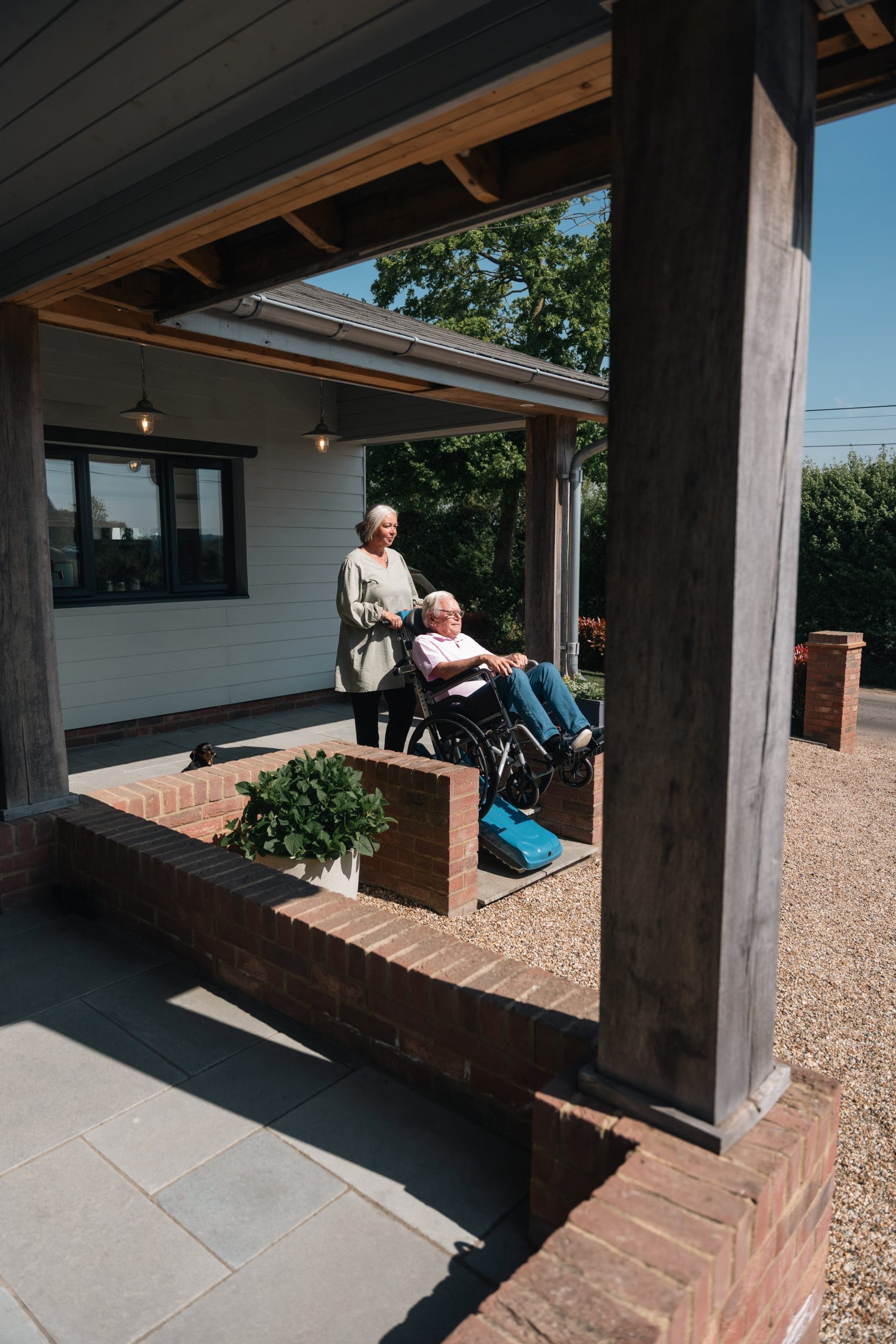
Powered Stairclimbers in UK Universities: Creating More Accessible Campuses
University should be a place where students can learn, participate and build their future. Yet for wheelchair users and people …

When a person can no longer use the stairs safely, the impact reaches far beyond a single flight of steps. A bedroom may become inaccessible. Leaving the house for an appointment may depend on someone being available to help. For a family, carrying a child or supporting an adult on the stairs can become an exhausting daily concern.
If you are a community occupational therapist exploring alternatives to stairlifts or platform lifts for a client, contact The Stair Climbing Company to arrange a home assessment and demonstration. We can look at the person, their wheelchair or seating, the staircase and the people who would operate the equipment before recommending a solution.
There is no single answer for every home. A fixed stairlift may be ideal for someone who can transfer safely and use it independently. A platform lift may give a wheelchair user regular access between levels. But when transfers, space, property restrictions or changing needs make those options difficult, a powered stairclimber may deserve a closer look.
This article focuses on the decisions community OTs face in real homes. For a wider introduction to the equipment and how it works, read our complete guide to powered stairclimbers.
The first question is not which machine will fit on the staircase. It is what the person needs to do on each floor, how often they need to do it and how much help they want or can realistically receive.
Can they get to a suitable toilet and bedroom? Are they able to reach the front door for work, school, healthcare and social activities? Is the barrier a full internal flight, a few outside steps or several changes of level? Could essential activities be moved downstairs without sacrificing something important to the person?
These are familiar questions for an OT, but they can get lost when a household has already decided it needs a stairlift. The NHS guidance on home adaptations describes a home assessment as a way to work out what changes would make daily life safer and easier. A good access plan should reflect the person’s routines, preferences and likely future needs as well as the physical layout of the property.
Community OTs often have to consider the whole household too. A parent may need to help a child upstairs several times a day. A partner may be willing to assist but have their own health limitations. Paid carers may visit only at set times. The most workable option is one the household can use reliably, with trained operators available whenever access is needed.
A fixed stairlift can work very well when the user can sit comfortably, transfer onto and off the seat at both ends, and operate the controls appropriately. It can support frequent journeys and, in suitable circumstances, independent access. The individual staircase, landing space and transfer arrangements still need assessing.
For some wheelchair users, however, a seated stairlift creates an extra transfer at each end. There must also be an appropriate wheelchair or other safe mobility arrangement waiting on the destination floor. If transfers cause pain, are unsafe or require substantial assistance, those practical details may rule out a conventional stairlift even when a rail can be installed.
Some domestic staircases have tight turns, small landings or doors close to the top step. Other families may be in temporary accommodation or expect the person’s needs to change. In these situations, the OT may need to explore alternatives to stairlifts alongside the usual fixed options, rather than judging suitability from a staircase survey alone.
A powered stairclimber is one possible alternative. It uses a motorised climbing mechanism while a trained person guides the equipment. Depending on the model, the passenger may use an integrated seat or remain in a compatible wheelchair. Because the equipment is mobile, it generally does not need a permanent rail fixed to the stairs. That does not make it automatically suitable: each user, wheelchair, route and operator must be assessed.
A platform lift may provide excellent access for a wheelchair user, especially when frequent independent movement between levels is the goal. A through-floor lift can also be transformative in a suitable home. These options need a viable location, appropriate building work and an ongoing plan for use and maintenance.
In a compact house, there may be no practical position for a lift without losing essential living space. A short but awkward set of entrance steps may present a different design problem. Tenure, landlord permissions, structural constraints and the time needed for building work can also affect what is achievable. The OT and the wider adaptations team may therefore need to investigate alternatives to platform lifts that meet the person’s actual access needs.
A powered stairclimber can use an existing staircase without a fixed platform installation, where the stair geometry and manoeuvring areas permit it. It may help with a single entrance flight, an internal staircase or more than one assessed route. Its main trade-off is that it requires a suitable trained operator. If the client needs spontaneous, independent access throughout the day, a fixed lift or another home adaptation may be a better long-term recommendation.
The important distinction is between a machine fitting the stairs and a solution fitting the person’s life. Portability can be valuable, but independence, frequency of use and available support must remain central to the decision.
The choice between a seated model and a wheelchair-compatible model matters enormously in a domestic assessment. A seated stairclimber may suit someone who can transfer safely and comfortably with the planned level of assistance. Some designs can be useful when the staircase or landing is too restricted for larger equipment, although suitability depends on a practical trial.
For a person who uses a supportive wheelchair, transfers may be the central problem. A non-transfer stairclimber can sometimes allow them to remain in their own compatible chair during the journey. That may be particularly relevant for someone who uses specialist seating for posture, comfort or pressure management. Our Skyline range includes wheelchair-carrying options, subject to compatibility and site assessment.
The wheelchair cannot be treated as an afterthought. Its dimensions, weight, attachments, seating position and connection points all matter. The total load must remain within the equipment’s limits, and the combined system must work safely on the actual staircase. For an overview of both seated and wheelchair options, OTs can explore our stairclimber range before arranging a demonstration.
An OT assessment should identify both the access goal and the reasons current arrangements are failing. Are family members carrying someone? Is a wheelchair user confined to one floor? Is a person sleeping downstairs because they cannot reach their bedroom? Is the problem temporary after surgery, or is their condition likely to change?
The physical route then needs careful examination. Stair width alone is not enough. The assessor should consider the angle and dimensions of the steps, the shape of the flights, surface condition, handrails, thresholds, doors and turning space. There must be room at the top and bottom to position and remove the equipment safely. A route that appears straightforward in photographs may behave very differently during an on-site trial.
It is equally important to identify who would operate the stairclimber. Can that person attend training and use the equipment in the circumstances required? Will a second trained operator be available when the usual carer is away? Is there a suitable place to store and charge the machine? What is the plan if the equipment is unavailable or the operator cannot attend?
The person using the equipment should be involved in the discussion and demonstration wherever possible. Comfort, confidence and consent matter. The NHS advice on moving and handling someone recommends seeking professional advice and, for expensive equipment, asking about a trial in the person’s home. A practical trial can reveal questions no brochure can answer.
The Stair Climbing Company offers home and site assessments so the recommendation can be tested against the person and property, with the proposed operator involved. Our OT service page explains how we work with adult and children’s services.
For a child with complex mobility needs, the stairs can affect the entire family’s routine. Parents may start carrying a child because it appears quicker than waiting for an adaptation, but growth can make that arrangement harder and riskier over time. An OT may need to consider access to the child’s bedroom, bathroom, family rooms and the route out of the house.
Seating is particularly important. A child may use a prescribed wheelchair or specialist seat that supports their posture. If a proposed stairclimber requires a transfer, the OT must consider how that transfer would happen and whether the child can remain appropriately supported. If a wheelchair-carrying model is proposed, chair compatibility and the full route must be checked rather than assumed.
We work with paediatric OTs and families on children’s stairclimber solutions. The right answer may be a powered stairclimber, a permanent adaptation, a change to the use of rooms or a combination of measures. The point of an assessment is to make that choice around the child and family, not around a product category.
Sometimes the permanent solution is clear but cannot be installed immediately. A family may be waiting for building work, rehousing decisions or a change in care arrangements. In other cases, the need may itself be temporary, such as a period of rehabilitation or a lift being out of service.
Hiring can provide a way to explore a powered option during that period. Our stairclimber hire service can be considered for suitable home routes, but hire still requires assessment, an appropriate operator and training. It should have a review point, especially where the person’s mobility, seating or care needs may change.
A temporary measure should also be documented honestly. It may maintain access to a particular floor while a major adaptation is arranged, but it should not quietly become a permanent arrangement if the family can no longer operate it reliably or if the person’s needs have changed.
In England, a Disabled Facilities Grant may help fund eligible home adaptations. Government DFG guidance for local authorities places OT assessment and recommendations within the wider adaptations process. Funding decisions depend on the individual case and local authority process; a supplier assessment does not determine grant eligibility. OTs and families should confirm whether a proposed item or scheme can be funded before making commitments.
The government’s Disabled Facilities Grants overview explains the scheme and directs applicants to their local council. A clear record of the person’s goals, assessed barriers, options considered and reasons for the recommendation can help everyone involved understand the decision.
Where significant building work is being considered, the relevant building and housing professionals should assess the proposal. The presence of a powered stairclimber does not by itself establish that a home meets a building regulation or remove the need to consider other accessible facilities.
A stairclimber is only a workable home access solution when the people using it know what to do. Training should cover positioning, securing the passenger or wheelchair, pre-use checks, operation on the assessed route, communication and what to do if something is wrong. The operators should practise with the specific equipment and understand its limits.
Daily arrangements matter just as much. The device needs an agreed storage location, a charging routine and appropriate maintenance. Changes to the staircase, flooring, wheelchair, passenger’s condition or operator availability should trigger a review. A new carer should not be expected to learn by watching someone else perform a journey once.
For community OTs, this is part of evaluating the sustainability of the recommendation. If a partner can operate the equipment today but expects surgery next month, the plan needs another source of support. If access is required several times a day without an operator present, a different arrangement may be necessary. A successful demonstration is the start of a workable plan, not the end of assessment.
When looking at alternatives to stairlifts and alternatives to platform lifts, consider four questions together: can the person travel in a position that is safe and comfortable; does the route physically accommodate the equipment; can access happen as often and as independently as needed; and can the household sustain the arrangement over time?
A fixed stairlift may offer independent use to someone who can transfer. A platform or through-floor lift may preserve wheelchair access without a transfer where the property supports installation. A powered stairclimber may provide flexible, assisted access when fixed work is impractical or while longer-term plans progress. Living downstairs or reconfiguring rooms may be reasonable for some households and unacceptable for others. These choices need discussion with the person, not a generic ranking.
The Stair Climbing Company supports OTs in working through the powered stairclimber option with an assessment and demonstration in the actual home. If it proves unsuitable, that is useful information too. The aim is a route the person can use with dignity and that the household can manage in daily life.
Discuss a home access case with us. Contact The Stair Climbing Company to arrange an assessment, or read our powered stairclimber pillar guide for more on equipment types, stair suitability, training and long-term support.
University should be a place where students can learn, participate and build their future. Yet for wheelchair users and people …
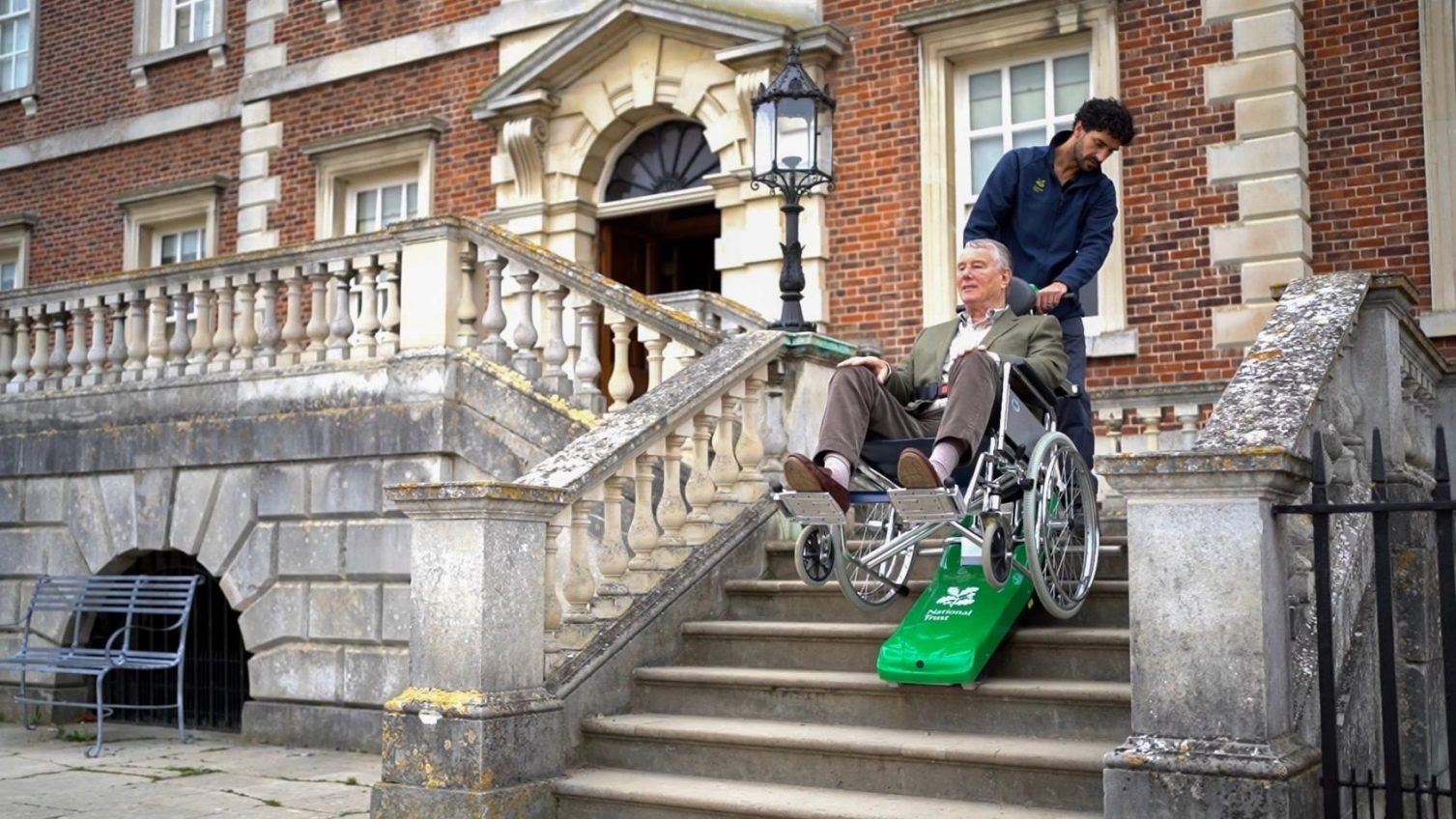
A Complete Guide to Powered Stairclimbers Creating accessible places is not always as simple as installing a ramp, passenger lift …

Alternatives to Stairlifts and Platform Lifts for London Universities An accessible university campus is more than an accessible main entrance. …
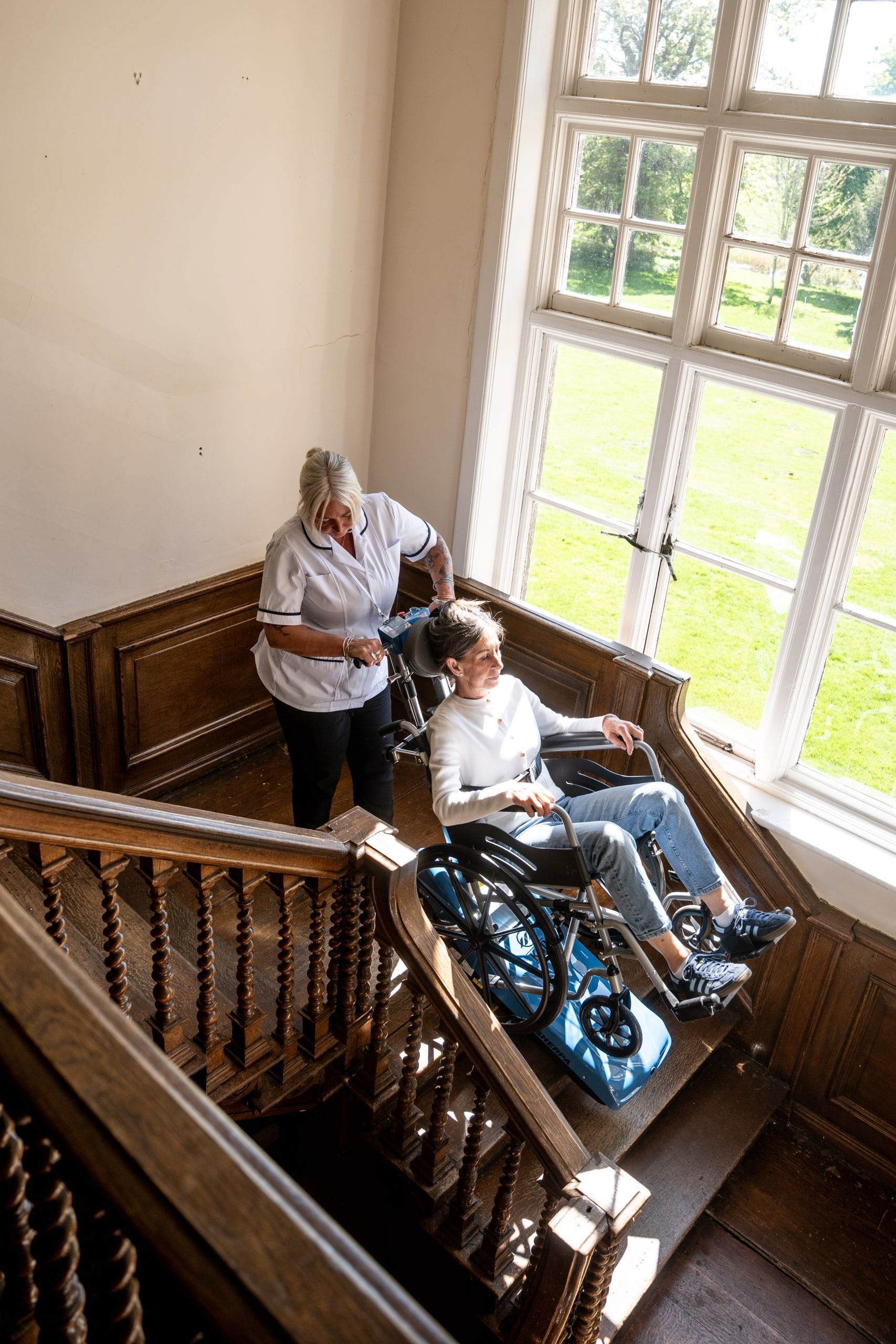
Alternatives to Stairlifts and Platform Lifts in London Buildings London buildings rarely present a simple access problem. A Georgian townhouse …

Powered Stair Climbers for Wheelchair Access: A Flexible Way to Overcome Stairs Need to create wheelchair access where stairs are …