Powered Stairclimbers in UK Universities: Creating More Accessible Campuses
University should be a place where students can learn, participate and build their future. Yet for wheelchair users and people …

An accessible university campus is more than an accessible main entrance. A student must be able to reach the lecture theatre on their timetable, the library collection they need, a practical teaching room and the places where university life happens between classes.
In London, these destinations may be spread across buildings of different ages and layouts. An older teaching block can sit beside a modern facility. A converted townhouse may contain offices or seminar rooms. A lift may serve the main floors but leave a raised entrance, mezzanine or small group room separated by steps.
If your university is exploring alternatives to stairlifts or platform lifts, contact The Stair Climbing Company to arrange an on-site assessment and demonstration. We can look at the exact route, the person who needs access, their wheelchair or seating, and the staff who would operate a powered stairclimber.
This guide is for estates teams, disability services, academic departments and occupational therapists working together to solve a real campus access barrier. Our powered stairclimber pillar guide explains the equipment types in more detail.
It is tempting to begin with a photograph of the troublesome staircase. A better starting point is the student’s day. Where do they arrive? Which entrances are open at the time of their classes? How far is it between buildings? Can they use the toilet, library, laboratory, social spaces and student services on the same terms as their peers?
A route that works at 10 am may fail for a 6 pm seminar if the trained operator has finished their shift. A classroom may be technically reachable but impractical if moving there takes longer than the gap between lectures. Timetabling, building opening hours and the user’s own preferences are therefore part of the access assessment.
The Office for Students’ work on support for disabled students encourages providers to listen to students and plan personalised support. On a campus, that means asking what access actually allows the student to participate, then checking whether the arrangement remains reliable throughout the academic year.
This is also why universities should avoid treating one piece of equipment as a complete inclusion strategy. A powered stairclimber may solve a specific flight of stairs. It does not by itself resolve inaccessible room layouts, unsuitable timetables or a lack of accessible facilities at the destination.
A fixed seated stairlift can be effective for a person who can transfer onto the seat, use it comfortably and make a safe transfer at the destination. For a regular route used by one person, it may offer independent travel if the person can operate the controls.
University buildings have additional pressures. Teaching spaces may be used by many people, and a stairlift rail or parked chair can affect circulation. A wheelchair user who transfers onto a stairlift needs a suitable mobility arrangement on the next level. A student using complex seating may be unable to make repeated transfers safely or comfortably.
The university should therefore compare the entire journey, not just whether a stairlift can be fitted to the flight. If transfers, shared stairs or changing destinations make it impractical, alternatives to stairlifts should be assessed. A powered stairclimber is one possible option where the route and operation are suitable.
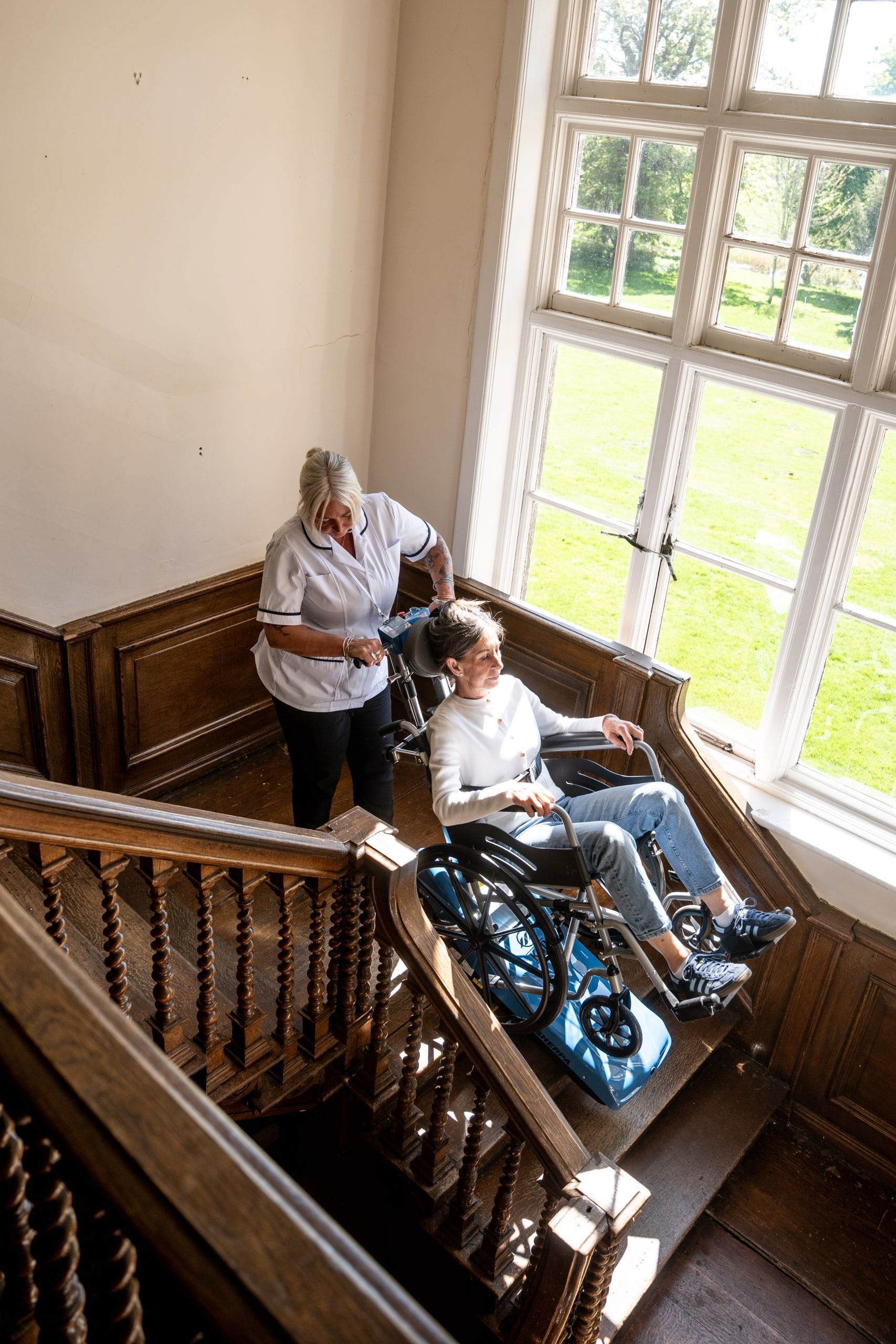
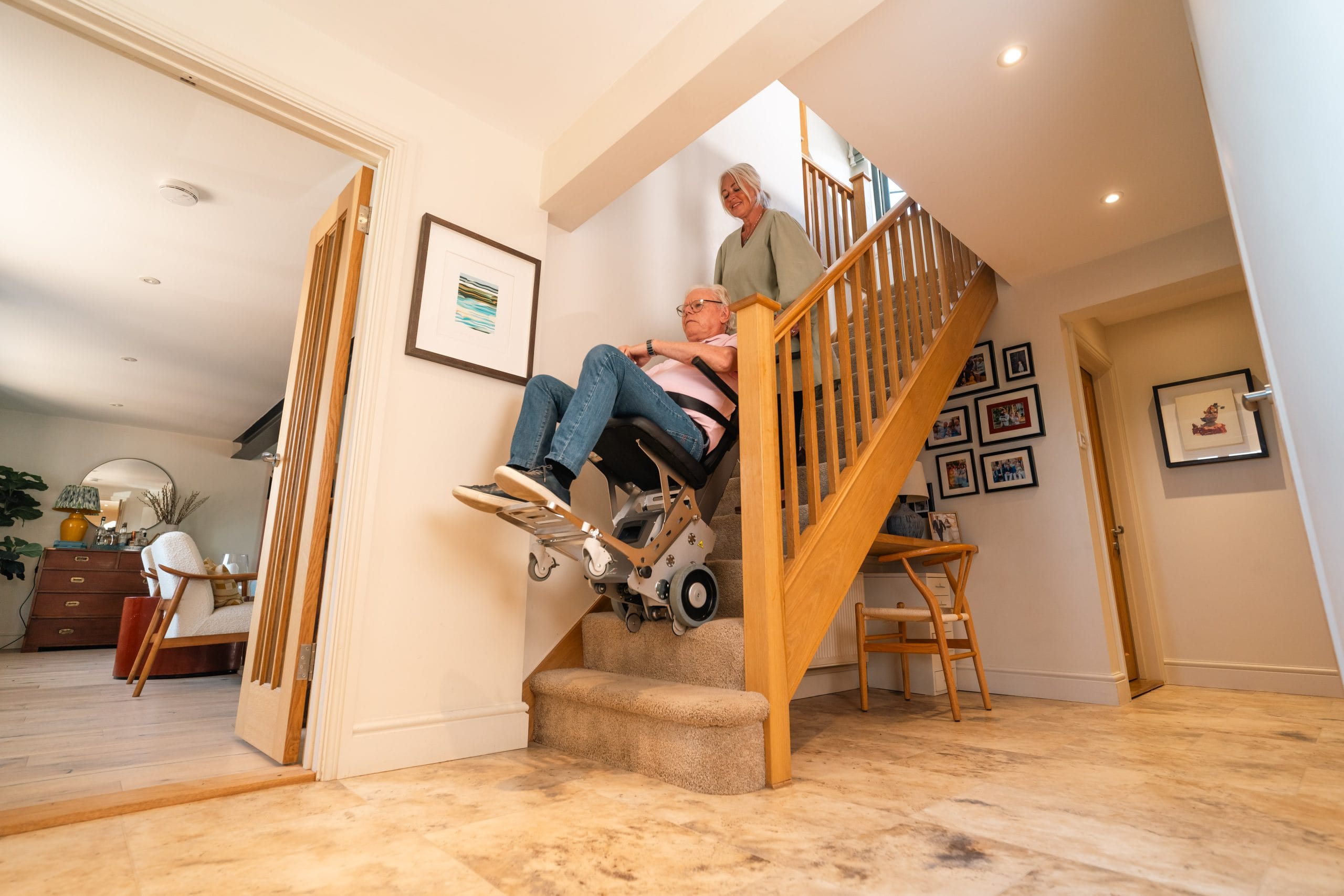
It uses a motorised climbing mechanism under the guidance of a trained operator. Some models carry a person in an integrated seat; others carry a compatible wheelchair so the passenger can remain in their chair. The equipment can be stored after use and may be deployed on more than one assessed route. Its portability is useful across a campus, but each staircase needs its own assessment.
A permanent passenger lift or platform lift may be the strongest solution when many students and staff need frequent, independent access. It should not be dismissed simply because another piece of equipment can negotiate the stairs.
Yet a lift cannot always be placed where a particular barrier occurs. A building may have an awkward split level, a narrow footprint or features that complicate structural alterations. A short staircase into a specialist room may sit outside the main lift route. During refurbishment or a lift outage, the permanent access route may be temporarily unavailable.
In these circumstances, universities may need alternatives to platform lifts for a defined route or period. A powered stairclimber can be considered where it can be used safely on the existing stairs and where trained operators can be available when needed. It may help reach an upper-floor seminar room, raised stage or teaching space while a longer-term adaptation is developed.
The limitation must be stated clearly. An operator-dependent journey is different from independent lift access. The university should establish how often the route will be used, whether the student accepts assistance, how quickly support can arrive and what happens when the equipment or staff are unavailable. If those questions do not have workable answers, a different room allocation or permanent building change may be necessary.
London universities often use buildings designed long before modern access expectations. Protected interiors, irregular landings and limited space can make conventional lift or ramp projects complicated. The correct response is to examine the options with the student, estates team, access specialists and, where necessary, conservation professionals.
Historic England’s advice on access to historic buildings supports thoughtful adaptation. A powered stairclimber may offer access to a specific historic route without fixing equipment to significant fabric, provided the stairs and landings are suitable. Another building may justify a carefully designed permanent lift. Heritage status does not establish which option will work.
A university should also consider the quality of the experience. Does the student enter through the same practical entrance as their classmates? Is access available without lengthy advance notice? Can they attend an event that finishes late? Preserving a building’s character should sit alongside a meaningful assessment of participation.
Access to a lecture theatre is only one part of the campus. A library may have steps to a collection or study space. A laboratory may sit in a block where the available lift does not reach its level. Performance, art and design teaching can involve stages, workshops and temporary layouts that change during the term.
Each destination needs its own assessment. A stairclimber may get a student to the upper level, but can they then reach a suitable workbench, desk or accessible toilet? Is there enough space to leave the stairclimber safely after the journey? Will the route still work when equipment, seating or temporary displays change?
Where a class can be moved to an accessible room without compromising the course, that may be an immediate and sensible adjustment. Where specialist facilities cannot move, the university may need a building solution, assessed equipment or both. A realistic plan can combine near-term access with a funded longer-term project.
Students should be involved before decisions are finalised. No one should discover on the first day of teaching that an apparently accessible timetable depends on a machine they have never tried or a transfer they cannot make.
An OT can bring a detailed understanding of the person’s transfers, posture, fatigue, pain, seating and daily routine. This is especially valuable where a student uses a specialist wheelchair or has changing needs. Estates staff know the fabric and circulation of the building; disability services understand the student’s academic arrangements; the equipment provider can test whether a particular machine is technically suitable.
These perspectives need to meet at the same staircase. An OT may identify that a seated stairlift creates several difficult transfers each day. A non-transfer stairclimber could be worth testing if the wheelchair is compatible and the route has sufficient room. Conversely, an OT may conclude that regular assisted journeys would undermine the student’s independence, pointing the team toward a lift or different teaching location.
The Equality and Human Rights Commission’s advice for higher education providers discusses reasonable adjustments in relation to what an institution knows or should know about a student’s disability. A product demonstration can inform a decision, but the university remains responsible for considering the student’s circumstances and its own arrangements.
Our occupational therapist service supports joint discussions and practical demonstrations. A recommendation should be grounded in the student, wheelchair, route and intended pattern of use.
A seated powered stairclimber may be appropriate for someone who can transfer safely with the agreed level of help and maintain a comfortable position during travel. The size and handling characteristics of the machine still need checking at every landing and doorway.
For a wheelchair user who needs supportive seating, a non-transfer model may allow travel in their own compatible chair. Our Skyline range includes wheelchair-carrying options. Compatibility must be verified for the particular chair, its attachments and the passenger. Wheelchair dimensions, combined load, posture and the method of securing the chair all matter.
The student’s preferences matter too. Some people may welcome an assisted route to a room that would otherwise be inaccessible. Others may find regular operator-dependent journeys intrusive or impractical. A live trial gives the student the chance to experience the travel position and discuss concerns before the university adopts a procedure.
Universities can review our range of stairclimbers as an introduction, then arrange an on-site assessment rather than selecting from specifications alone.
A stairclimber does not operate itself. The university needs a practical way for the student or visitor to request assistance, including during evenings, examinations, open days and events. There should be enough trained operators to cover absences and changes in timetable.
Training should be specific to the equipment and the assessed route. Operators need to understand pre-use checks, safe positioning, wheelchair attachment where applicable, passenger communication, ascent, descent and what to do if something is wrong. The Health and Safety Executive’s guidance on work equipment training explains the importance of adequate training for people who use equipment at work.
Storage and charging require the same attention. The machine should be readily available without blocking circulation or an escape route. A fault reporting process and maintenance plan should be in place. If the student changes wheelchair, the room moves or construction alters the staircase, the university should review the arrangement before continuing to use it.
A lift breakdown can remove access to a building overnight. A campus may also need temporary routes while refurbishment is under way or a new student support plan is being agreed.
Stairclimber hire can be considered for a suitable temporary route following an assessment and operator training. It is not an instant answer for every building: the staircase, passenger, wheelchair and staffing all still have to work together. The university should tell affected students what access is available, when it starts and how long the temporary arrangement is expected to last.
A review date matters. If a temporary measure becomes a routine part of the timetable, the university should check whether it remains the right option or whether a permanent adaptation, room change or other measure would better meet the need.
A stairclimber chosen for daily access should not simply be assumed suitable for emergency evacuation. The building’s fire risk assessment, available routes, trained staff and intended equipment use need separate consideration. A student’s ordinary travel plan and their emergency plan should be coordinated, but they answer different questions.
The government’s fire safety risk assessment guidance for educational premises provides the wider framework for building managers. The university should involve its competent fire safety team in the specific evacuation arrangements.
Similarly, equipment selected for an existing staircase does not automatically satisfy building regulations for proposed construction work. Approved Document M, Volume 2 concerns access to and use of buildings other than dwellings in England. Designers and building control professionals should assess how it applies to a particular project.
The best choice is the one that lets the student take part in university life reliably. A fixed stairlift may suit a person who can transfer and use the same route regularly. A platform lift may give stronger independent access where installation is feasible. A powered stairclimber may open an assessed route when fixed work is difficult or provide a temporary measure during a lift outage or refurbishment.
There is no benefit in choosing an alternative that exists only on paper. Walk the route with the student. Try the proposed equipment. Check the timetable, staffing and destination. Record the limitations and agree what will happen when the plan needs to change.
The Stair Climbing Company provides site assessments and demonstrations for universities considering powered stairclimbers. We work with estates teams, OTs and the people who will use the route so the decision can be made in the building itself.
Discuss a university access challenge with us. Contact The Stair Climbing Company to arrange a campus assessment, and read our powered stairclimber pillar guide for a fuller comparison with stairlifts, platform lifts and ramps.
Alternatives to Stairlifts and Platform Lifts in London Buildings London buildings rarely present a simple access problem. A Georgian townhouse …
Alternatives to Stairlifts and Platform Lifts at Home: A Practical Guide for Community OTs When a person can no longer …

Powered Stair Climbers for Wheelchair Access: A Flexible Way to Overcome Stairs Need to create wheelchair access where stairs are …
Estimated reading time: 11 minutes