
Portable Stair Lift Solutions for OTs: How a Stair Climber Machine Can Support Living at Home
Portable Stair Lift Solutions for OTs: How a Stair Climber Machine Can Support Living at Home For many people with …

For many wheelchair users, overcoming a staircase involves more than simply finding equipment capable of moving between floors. Transferring from a wheelchair into a stair lift or carrying chair can be uncomfortable, difficult or unsafe.
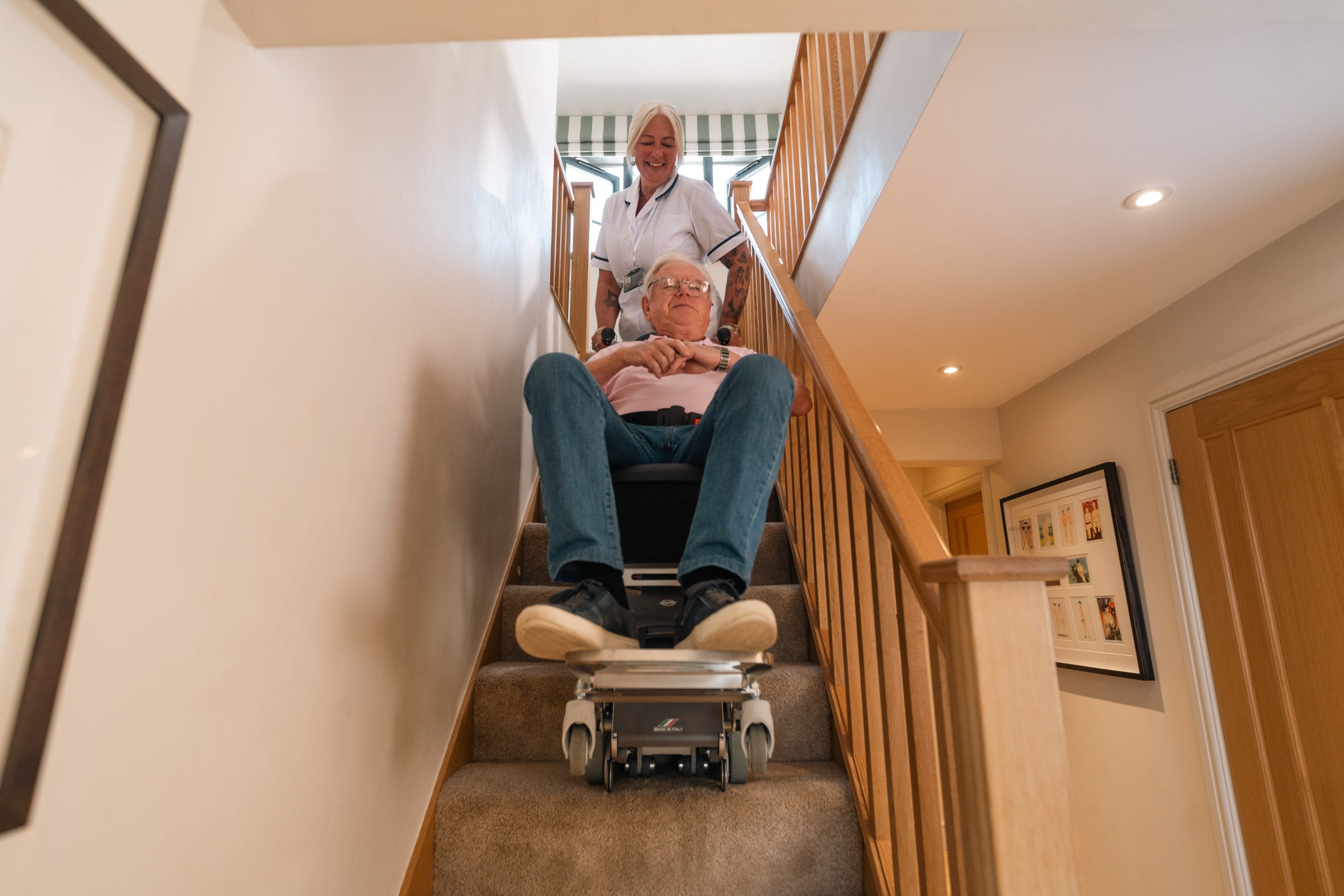
A non-transfer powered stairclimber offers another approach. It allows the person to remain in their own compatible wheelchair while a trained operator transports them up or down a suitable staircase.
This can create a safer, more dignified and more practical access solution.
Wheelchairs are often chosen around an individual’s physical, postural and medical requirements. A specialist chair may include a headrest, lateral supports, pressure-relieving cushions, foot supports or a tilt-in-space seating system.
Moving someone out of this seating can remove the support their wheelchair provides. It may affect posture, comfort, muscle tone or pressure management.
Some wheelchair users can transfer independently, but others require assistance. A transfer may involve a hoist, specialist technique or support from several people. Repeating this process each time the person needs to use the stairs can be physically demanding and disruptive.
A non-transfer powered stair climber can reduce this difficulty by allowing the wheelchair to become part of the access solution.
A non-transfer stairclimber uses a secure attachment system to connect to a compatible wheelchair.
Once the wheelchair is correctly attached, the stairclimber’s battery-powered system controls the movement on the stairs. A trained operator positions and guides the equipment while communicating with the passenger.
Tracked models use powered caterpillar-style tracks that maintain contact with several steps. This creates smooth, controlled movement on a suitable straight staircase.
You can learn more about the different types of equipment in our complete Powered Stairclimber guide.
Non-transfer stairclimbers can be compatible with several types of wheelchair, including transit chairs, self-propelled wheelchairs, tilt-in-space chairs and some paediatric seating systems.
Certain powered stairclimber models may also accommodate compatible electric wheelchairs.
However, not every wheelchair can be connected to every stairclimber. Wheelchair frames, dimensions, weight and attachment points vary considerably.
The assessment must consider the combined weight of the passenger, wheelchair and accessories. It must also confirm that the chair can be secured without damaging the frame or interfering with essential components.
This is why the wheelchair should be available during the assessment and demonstration.
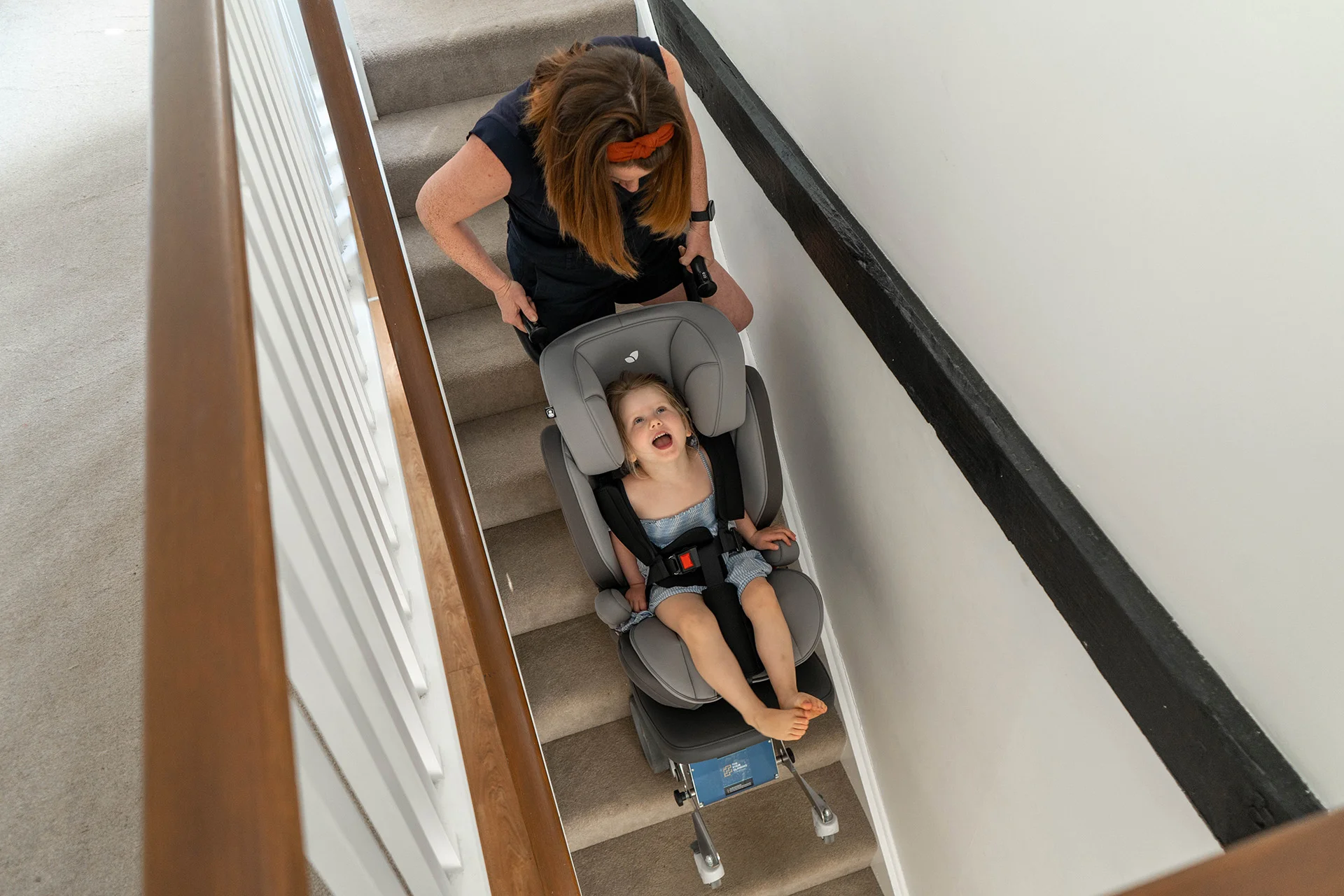
Non-transfer access can be particularly valuable for children and adults who use prescribed specialist seating.
A person may rely on their wheelchair to maintain pelvic position, support their head and trunk or manage fatigue. Transferring into a basic stair lift seat may not provide the same support.
Remaining in their own chair can maintain a familiar seating position throughout the journey. It can also reduce the number of times carers need to reposition or transfer the person.
This does not mean a non-transfer stair climber is automatically suitable. The person’s posture, weight distribution and individual requirements must still be considered by the professionals involved.
The Stair Climbing Company regularly works alongside occupational therapists, families, carers, schools and local authorities to assess these needs.
A wheelchair stairclimber can provide access in homes, schools, universities, hotels, heritage buildings and workplaces.
It can be useful where installing a platform lift is not possible or where the building cannot accommodate a permanent stair lift. Because the equipment is portable, it can normally be stored away when it is not required.
The staircase must have suitable dimensions, surfaces and landing space. Tracked stairclimbers are generally best suited to straight flights with sufficient room at the top and bottom.
Every route should be assessed individually. Equipment approved for one staircase should not automatically be used somewhere else.
A professional assessment should consider the passenger, wheelchair, staircase and intended operators.
The operator must receive practical training on wheelchair attachment, passenger restraints, equipment controls and movement in both directions. Training should take place with the intended equipment and, where possible, on the staircase where it will be used.
The Skyline powered stairclimber range provides non-transfer access options for several types of compatible wheelchair.
A powered stairclimber can offer more than a way to overcome stairs. For someone who cannot transfer easily, it can preserve the support, comfort and familiarity of their own wheelchair.
The correct solution must be based on a professional assessment and practical demonstration. The passenger’s needs and preferences should remain central throughout the process.
To explore non-transfer powered stairclimber options, contact The Stair Climbing Company to arrange an assessment in England.
For more information on Powered Stairclimbers check out our Pillar post below.
Portable Stair Lift Solutions for OTs: How a Stair Climber Machine Can Support Living at Home For many people with …

Stair Climber Machine and Portable Stair Lift Solutions: Supporting Independent Living at Home For Occupational Therapists, helping someone remain safely …
Children’s Stairclimbers for OTs: A Paediatric Access Guide Children’s stairclimbers for OTs can provide a practical access solution …
Stairclimbers for OTs: Supporting Safe and Practical Access at Home For occupational therapists, resolving a client’s difficulty with stairs …

Stairclimbers for OTs: Creating Safer and More Accessible Homes Occupational therapists regularly support people whose independence, safety and daily routines …
Stairclimbers for OTs: Assessing Safe and Practical Access Around the Home Stairs can affect almost every part of life at …
Estimated reading time: 4 minutes