Powered Stairclimbers in UK Universities: Creating More Accessible Campuses
University should be a place where students can learn, participate and build their future. Yet for wheelchair users and people …

Stairs can affect almost every part of life at home. A person may be able to enter the property but remain unable to reach a bedroom, bathroom, garden or front door independently. A family may manage by carrying equipment between floors, supporting difficult transfers or changing routines around a single accessible room. Following illness, injury or a change in mobility, the staircase can also become the main barrier to hospital discharge.
Occupational therapists are often asked to identify a solution that is safe, proportionate and realistic for the household. A fixed stair lift may be suitable for someone who can transfer, sit securely and operate the controls. A through-floor lift, platform lift, ramp, reconfiguration or move to single-level accommodation may provide better long-term access in other cases.
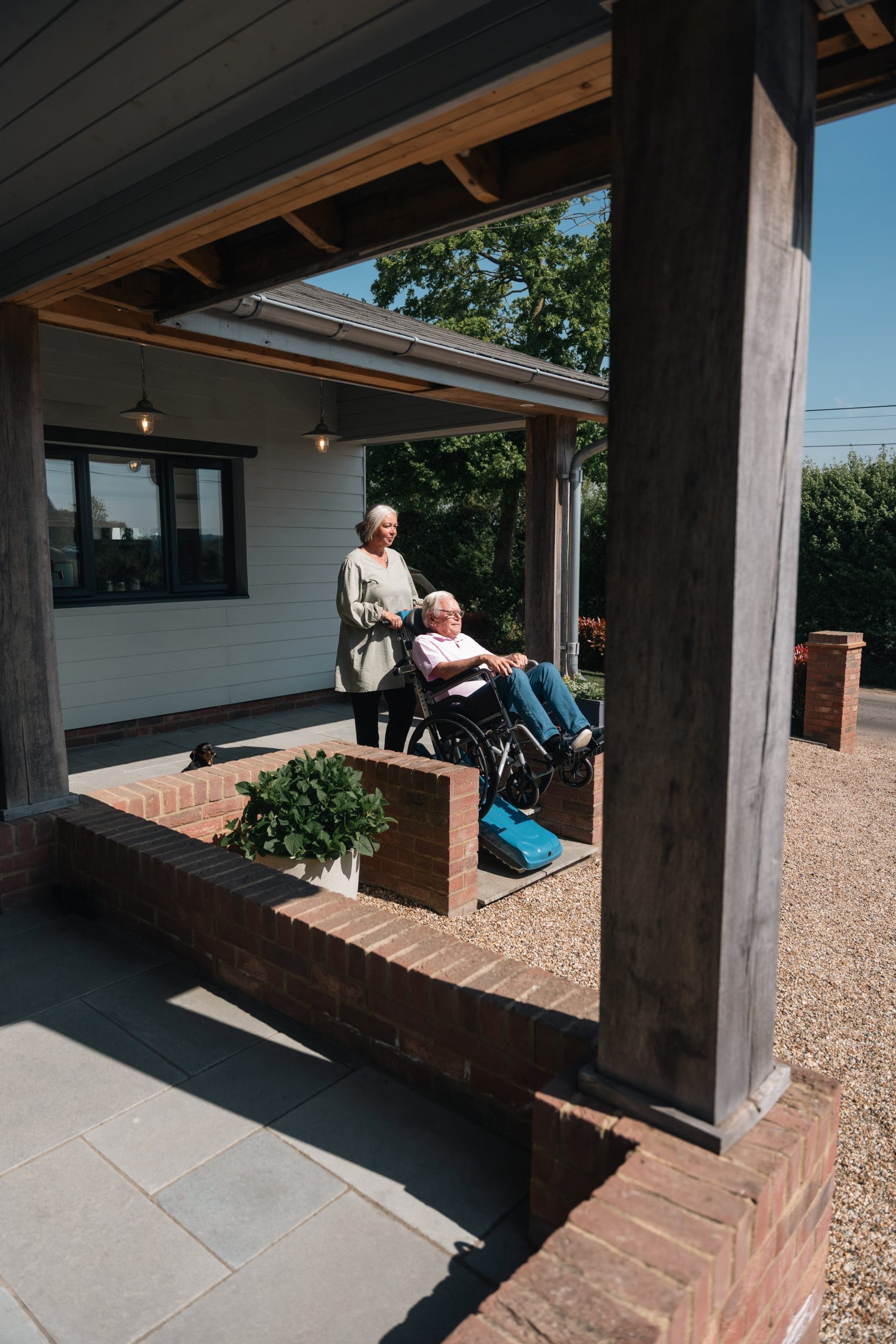
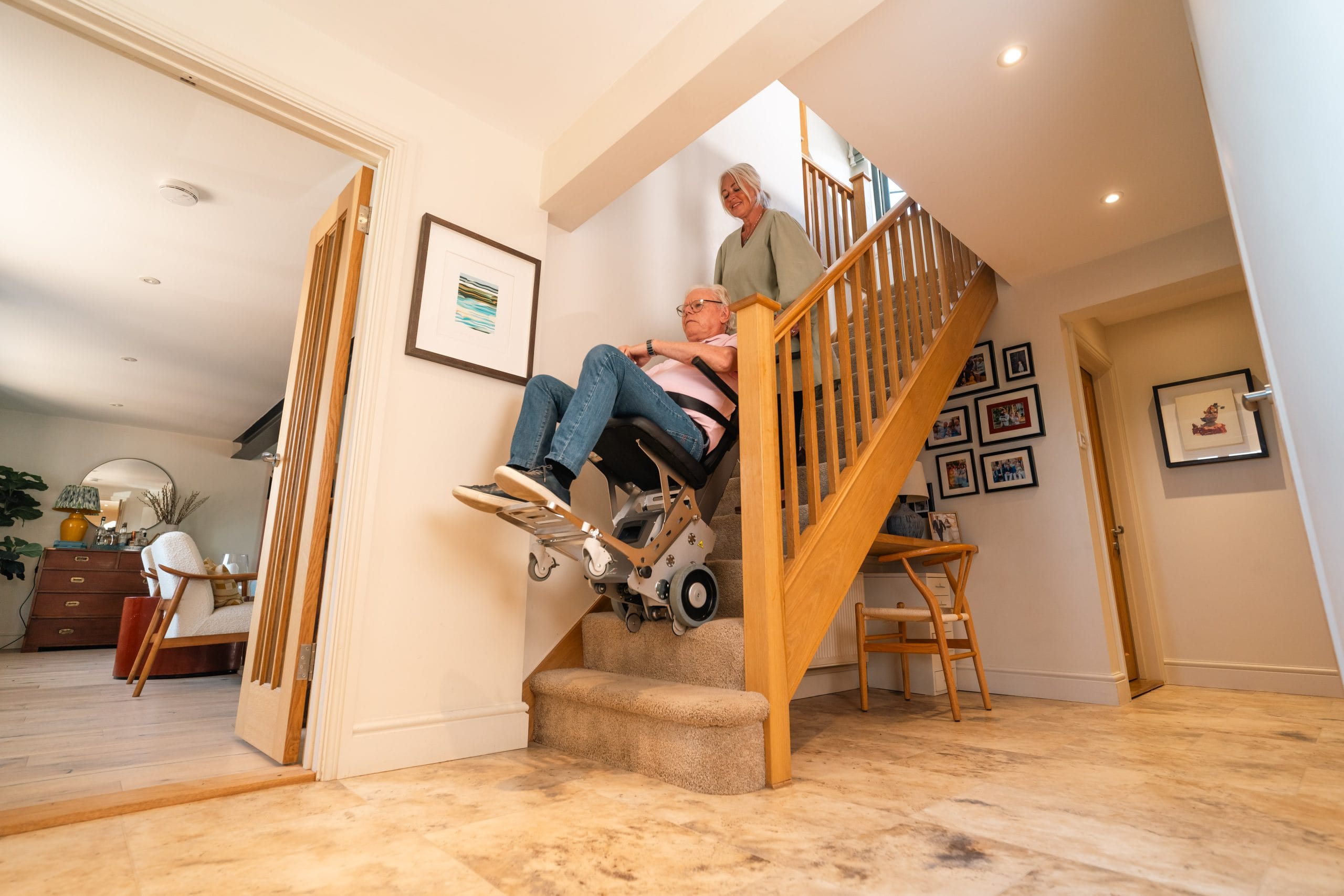
There are also homes where permanent work is not immediately possible or where the person cannot transfer safely from their wheelchair. In these circumstances, powered stairclimbers for OTs to consider may provide another option. These battery-powered devices move a passenger along an assessed staircase with the support of a trained operator. Depending on the model, the person can use an integrated seat or remain in a compatible wheelchair.
A stairclimber should never be selected simply because it fits the stairs or appears less disruptive than building work. The decision must begin with the person’s occupations, preferences and future needs. The wheelchair, staircase, operators and complete route through the home must all work together.
Home access is not limited to moving between floors. Reaching a bedroom supports rest and privacy, while access to a bathroom affects personal care and dignity. The kitchen, garden and entrance influence family life and community participation. An inaccessible staircase can change where a person sleeps, how they wash and how much assistance they require.
The NHS guidance on home adaptations explains that a local council assessment can identify changes that make everyday tasks safer and easier. It describes the occupational therapist working with the person to understand what they find difficult throughout the property. That whole-home approach is essential when considering powered access equipment.
The OT is not simply matching a machine to a flight of stairs. The assessment connects the person’s desired activities with the physical environment, available support and likely changes over time.
A powered stairclimber is portable mobility equipment that uses a rechargeable battery to control movement up and down a suitable staircase. A trained operator positions and guides the equipment while the motor provides the climbing action.
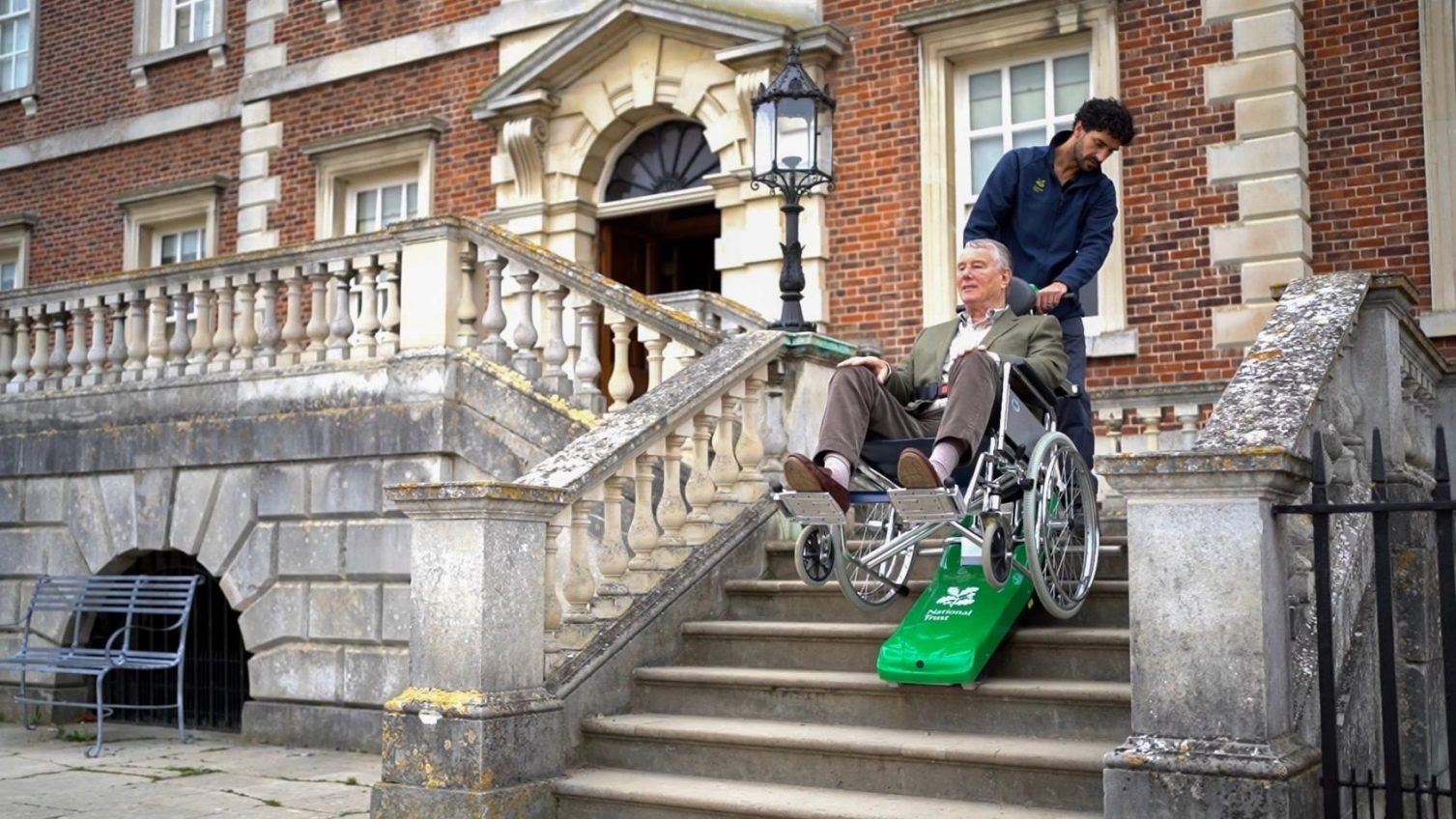
Tracked stairclimbers use powered tracks that remain in contact with several steps. They are often selected for non-transfer access with compatible wheelchairs and usually require a straight flight with adequate landing space. Stepping stairclimbers move from one tread to the next and may suit certain narrower or turning staircases. Some have an integrated seat, while others can attach to a compatible wheelchair.
People searching for Mobile Stairlifts may be describing this type of non-fixed solution. Technically, a powered stairclimber is different from a conventional stair lift. A fixed stair lift travels on a rail and may be operated independently by the passenger. A stairclimber is movable equipment that normally requires a trained operator.
For a full explanation of models, uses, benefits and limitations, The Stair Climbing Company’s complete guide to powered stairclimbers provides the central reference for this topic.
A powered stairclimber may be relevant when a wheelchair user cannot transfer safely onto a fixed stair-lift seat. It may also be explored when a staircase needs to remain clear, major alterations are restricted, access is required across more than one compatible route or a temporary solution is needed while long-term work is planned.
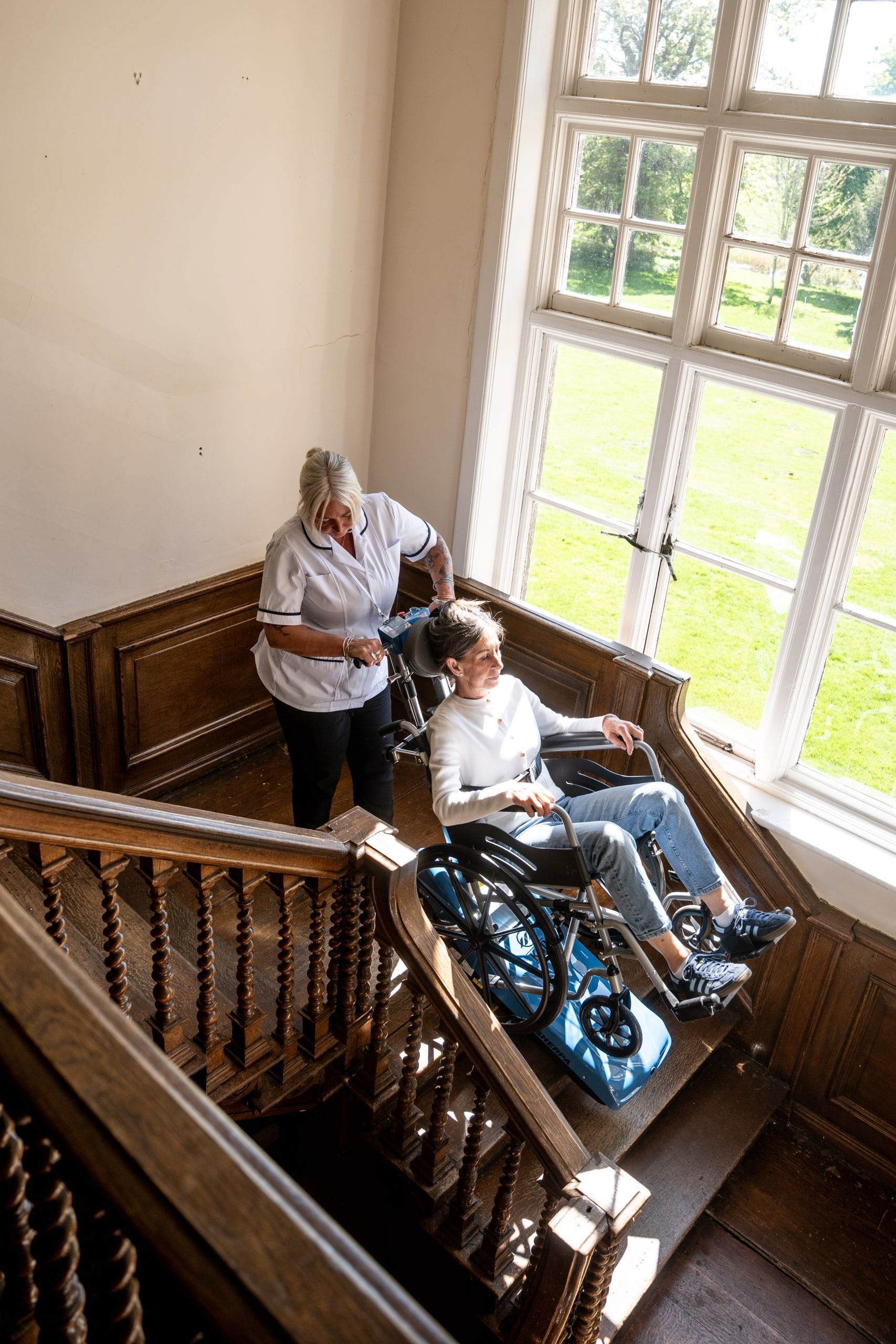
Some people use specialist seating that supports posture, muscle tone, pressure care or respiratory needs. Moving from that system into a basic seat may remove essential support and introduce additional handling. A suitable non-transfer stairclimber can allow the person to remain in a compatible wheelchair, which may reduce the number of transfers associated with the journey.
This advantage should not be assumed. Manual wheelchairs, powered wheelchairs, active-user chairs and tilt-in-space systems have different structures, dimensions and centres of gravity. Headrests, trays, cushions, communication devices and medical equipment can change both the total weight and the space required. Compatibility must be confirmed by the equipment provider.
Stairclimbers may also help when access is urgent. A person could be ready to leave hospital while a major adaptation remains at the design, funding or installation stage. A temporary device may contribute to an interim plan if it has been assessed properly and the necessary operators, storage, training and maintenance can be provided. An interim solution should have a review date and should not quietly become permanent when it no longer meets the person’s needs.
Good clinical reasoning considers the strengths and restrictions of all realistic options. A fixed stair lift can support independent travel for a person who transfers safely, maintains a suitable seated position and can operate the controls. It may be convenient for frequent journeys on one staircase, but it normally requires a permanent rail and does not carry the person’s wheelchair.
A through-floor or platform lift may provide independent wheelchair access and reduce repeated handling. It requires suitable space, structural work, installation time and ongoing maintenance. In some properties, the layout or tenancy arrangements make this difficult.
A permanent ramp can provide independent access across an external change in level, but a safe gradient may require substantial length and landings. Internal ramps can occupy valuable circulation space. Reconfiguring the home to create ground-floor living can be effective, although it may affect family space and may not provide access to every valued room.
Powered stairclimbers offer one of several Stair lift alternatives. They usually require little or no structural work and can be stored when not in use. Their main limitation is the dependence on a trained operator. A person who wants to move between floors spontaneously may find assisted access too restrictive, particularly if support is not available throughout the day.
The best solution is the one that supports the person’s real routine with the least avoidable restriction. Purchase price alone does not reveal the cost of staffing, training, servicing, storage, transfers or a solution that fails to provide access when needed.
An OT assessment should establish what the person wants and needs to do upstairs, downstairs and outside the property. Frequency is important. A journey made twice a day creates different demands from occasional access to a garden or visiting a family member’s room.
The person’s mobility, strength, posture, range of movement, fatigue, pain, cognition, communication and sensory needs can all affect suitability. Their ability to transfer and maintain a secure position must be considered alongside the emotional experience of using powered equipment on stairs.
Choice and consent remain central. A technically feasible journey may still feel unacceptable to the person. A demonstration allows them to experience the position, movement, sound and operator interaction before a decision is made. Communication preferences should be agreed so the passenger knows what will happen and can ask the operator to pause.
Future needs also matter. A progressive condition, anticipated surgery, growth in a child or changing carer arrangements may alter the suitability of the equipment. The assessment rationale should record why the option meets current needs and what changes would trigger review.
For non-transfer access, the wheelchair becomes part of the operating system. The supplier should confirm that the chair can be attached using the intended method and remains within the equipment’s permitted dimensions and load.
The combined weight of the passenger, wheelchair and accessories must be considered. Batteries, motors, oxygen cylinders, trays and communication devices may affect clearance, balance or comfort. Postural support should be reviewed throughout the journey, since the travel angle can affect someone with reduced head control, respiratory difficulty, anxiety or altered tone. Measurements cannot replace a practical trial.
The Skyline powered stairclimber range includes non-transfer options for a range of compatible wheelchairs. Model selection should still follow an individual assessment rather than the wheelchair category alone.
Stair width is only one part of environmental suitability. Tread depth, riser height, pitch, nosings, surfaces, handrails, turns and irregular steps can all affect operation. Clear space at the top and bottom is essential for positioning and manoeuvring.
The assessor should follow the whole journey. Doors, thresholds, floor coverings, tight corridors and furniture may prevent the equipment from reaching the staircase or destination. The upper landing must allow the passenger to move safely into the required room. If the stairclimber is intended for external steps, weather, gradients, drainage and surface condition also require attention.
Storage and charging should be included in the trial. A machine that blocks a hallway or escape route is not appropriately stored. A location on another floor may make deployment impractical. The household needs a simple process for charging the battery and reporting faults.
Where the equipment may travel between homes or serve more than one staircase, every route needs its own assessment. Portable does not mean universally suitable.
Powered movement reduces the physical effort associated with climbing, but it does not remove the need for a capable operator. The person expected to use the machine should participate in the assessment and training. Their physical capacity, confidence, understanding and availability must be considered.
The Health and Safety Executive guidance on moving and handling in health and social care emphasises avoiding hazardous handling where possible, assessing unavoidable tasks and reducing risk. A stairclimber can form part of a handling solution only when the equipment and working method are suitable for everyone involved.
Training should be specific to the model, passenger, wheelchair and home route. It should cover pre-use checks, attachments, restraints, passenger communication, positioning, ascent, descent, landings, charging, storage and action if something does not feel right.
One trained relative may not provide a sustainable plan if that person becomes ill, returns to work or needs respite. The OT should explore who will operate the equipment at the times journeys are required and what happens during absence. A technically suitable device without a reliable operator does not create dependable home access.
Funding routes vary according to the person, property and local arrangements. The government’s Disabled Facilities Grant guidance explains that eligible grants can support changes that improve access to rooms and facilities, including stair lifts, ramps and other adaptations. The local authority determines the application and assessment process.
Tenure can influence the options available. A homeowner may be able to consider structural work that a private tenant cannot authorise. Housing association and council properties bring their own approval and asset-management processes. The OT may need to coordinate with housing officers, landlords, architects, surveyors and equipment providers.
Current RCOT guidance on building health into homes supports closer integration between housing and health. In practice, the best home access outcome often depends on early collaboration rather than a sequence of isolated referrals.
A powered stairclimber may be bought, hired or trialled, depending on the situation. The plan should account for servicing, batteries, refresher training and changing needs, not only the initial supply.
The Stair Climbing Company works with occupational therapists, individuals, families, case managers, housing teams, schools and local authorities. Support includes home site assessments, practical demonstrations, equipment trials, hire or purchase, operator training, servicing and technical advice.
The process begins with the person, wheelchair, staircase and intended operators. This allows the team to test whether a seated or non-transfer model works in the actual home and to identify limitations before equipment is supplied.
For OTs, that evidence supports clear clinical reasoning. It can help document the alternatives considered, the person’s views, the trial outcome, operator arrangements and the reasons for recommending or rejecting a powered stairclimber.
No. Stair dimensions, turns, surfaces, landings and approach space all affect suitability. The passenger, wheelchair and proposed operators must also be assessed.
Certain non-transfer models accommodate compatible wheelchairs. The chair, attachments, accessories, combined weight and passenger position must be confirmed during an assessment and demonstration.
The phrase Mobile Stairlifts is sometimes used for portable stairclimbers, but these devices normally require a trained operator. A fixed stair lift or lift may provide more independent access for a suitable person.
It may contribute to an interim or long-term plan when assessment, operators, training, storage and maintenance are in place. Urgency should not replace a practical trial. The OT can define functional requirements, but final model selection should follow a joint assessment with the person, supplier and operators.
The strongest home access recommendation does more than overcome a staircase. It supports the person’s routines, dignity, relationships and ability to participate in life at home and beyond it.
Powered stairclimbers for OTs can be valuable when a person cannot transfer, permanent work is restricted or access is needed while a larger adaptation is planned. They can reduce the need for structural alterations and, with a compatible model, allow a wheelchair user to remain in their own seating system.
Their limitations are equally important. The route must be suitable, the equipment must be maintained and trained operators must be available whenever access is required. For some people, a permanent lift, fixed stair lift, ramp or reconfigured home will provide greater independence and a better long-term outcome.
The right decision follows assessment, demonstration and honest comparison. To explore powered stairclimbers in more detail, visit our complete Powered Stairclimber guide or contact The Stair Climbing Company to arrange a home assessment and practical demonstration.
University should be a place where students can learn, participate and build their future. Yet for wheelchair users and people …
A Complete Guide to Powered Stairclimbers Creating accessible places is not always as simple as installing a ramp, passenger lift …

Alternatives to Stairlifts and Platform Lifts for London Universities An accessible university campus is more than an accessible main entrance. …
Alternatives to Stairlifts and Platform Lifts in London Buildings London buildings rarely present a simple access problem. A Georgian townhouse …
Alternatives to Stairlifts and Platform Lifts at Home: A Practical Guide for Community OTs When a person can no longer …
Estimated reading time: 11 minutes