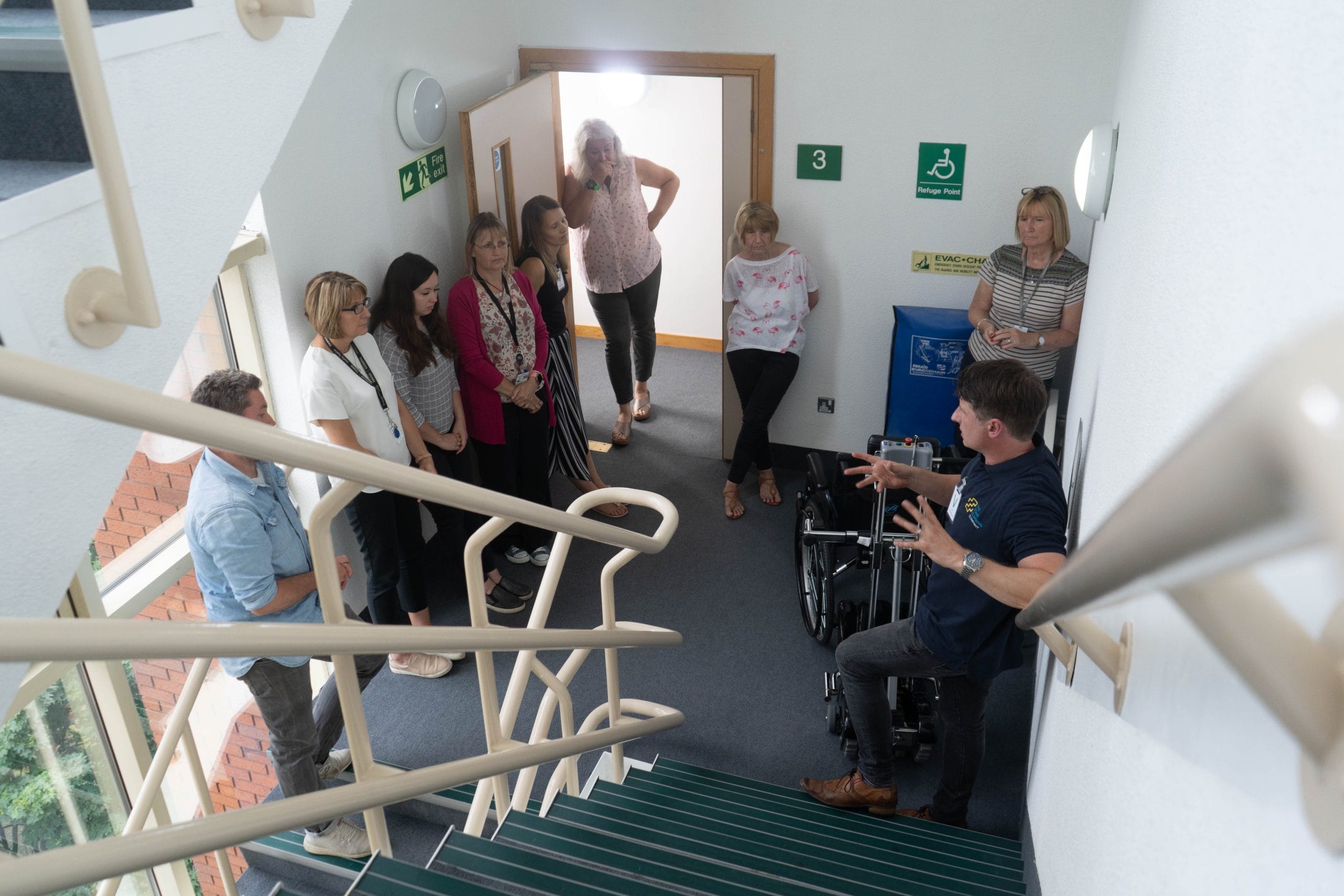
Powered Stair Climbers for Workplace Access: Removing Barriers Without Major Building Work
Powered Stair Climbers for Workplace Access: Removing Barriers Without Major Building Work Need to improve wheelchair access in your workplace? …

For occupational therapists, resolving a client’s difficulty with stairs is rarely just about choosing a piece of equipment. It requires an understanding of the individual, their home, their wheelchair or seating system, their carers and the activities that matter to them.
Stairclimbers for OTs can provide an important option when stairs prevent someone from entering their home, reaching essential rooms or accessing education, healthcare and the wider community. They can be especially valuable when a permanent stairlift, through-floor lift, platform lift or structural alteration is unsuitable, unaffordable or likely to take a considerable amount of time.
A powered stairclimber is a mobile piece of access equipment designed to move a person safely over a staircase with the support of a trained operator. Depending on the model, it may carry a person in an integrated seat or allow them to remain in their own wheelchair.
The Stair Climbing Company works alongside occupational therapists, local authorities, case managers, families, schools and care providers to assess stair access properly. Our aim is not simply to demonstrate that a stairclimber can move on stairs. It is to establish whether the complete solution is safe, realistic and appropriate for the client’s everyday life.
Occupational therapy focuses on enabling people to participate in meaningful daily activities. When stairs become a barrier, the consequences can extend far beyond physical access.
A person may be discharged from hospital but unable to enter their home. A wheelchair user may become restricted to one floor. A child may be unable to visit a family member or access part of their school. Someone living in an upper-floor property may depend on being carried, which can create risks for the individual and those supporting them.
The Royal College of Occupational Therapists’ housing toolkit highlights the close relationship between appropriate housing, health and occupational participation. When a home no longer supports a person’s needs, occupational therapists are often asked to identify adaptations, equipment or alternative ways of completing important activities.
Traditional adaptations remain appropriate for many clients. However, they are not suitable in every property or situation. Planning restrictions, shared entrances, narrow hallways, landlord consent, limited space and the structure of the building can all affect what is possible.
Stair climbers for OTs provide another option within that decision-making process. They can offer mobile access without requiring the scale of structural work associated with a permanent lift.
A powered stairclimber uses a battery-powered climbing mechanism to travel over a staircase under the control of a trained operator. Different designs use tracks, wheels or other controlled climbing systems.
Some stairclimbers incorporate their own seating. These may suit clients who can transfer safely and can maintain an appropriate seated position during use. Other stairclimbers are designed to accommodate a compatible manual wheelchair, allowing the person to remain in their own chair.
This distinction is important for occupational therapists. A client who can transfer independently may require a very different solution from someone who uses a specialist wheelchair, moulded seating or complex postural support.
Powered stairclimbers should not be confused with stairlifts. A stairlift is normally attached permanently to a specific staircase. A stairclimber is mobile and can potentially be transported between locations, stored when not in use and used on more than one suitable staircase.
Our complete guide to powered stairclimbers explains the different applications, assessment considerations and access problems this equipment may help address.
Stairclimbers for OTs may be worth considering when the client has a clear access barrier and conventional alternatives do not provide a timely or workable solution.
A stairclimber may help someone negotiate external entrance steps where there is insufficient space for a compliant ramp. It may provide access within a property where a stairlift is inappropriate because the client cannot transfer or the staircase is used by several other people.
The equipment can also be considered as an interim solution. Major adaptations can take time to assess, approve and install. A suitable stairclimber may provide access while longer-term housing or adaptation decisions are being made.
The government’s Disabled Facilities Grant delivery guidance emphasises the importance of timely and person-centred home adaptation services. It also recognises that delays can affect independence, hospital discharge and pressure on carers.
A stairclimber may also be appropriate when the barrier is not located in the client’s permanent home. Clients may need access to relatives’ properties, community venues, temporary accommodation, schools, hotels or heritage buildings where permanent alterations are not possible.
The presence of stairs alone does not make a stairclimber suitable. The client, wheelchair, operator, environment and intended frequency of use must all be assessed.
Before selecting equipment, it is helpful to establish what the client needs to achieve.
The goal may be to enter and leave the home independently with support from a family member. It may be to reach a first-floor bedroom, attend school or visit relatives. In other cases, the immediate priority may be ensuring that someone can be discharged safely from hospital.
Understanding the required activity helps define the equipment specification. A stairclimber used twice each day on an internal staircase may require different considerations from equipment kept in a vehicle and used occasionally at several locations.
The client’s expectations should also be explored. Some people may initially feel anxious about powered stairclimbers because they are unfamiliar with the movement. A calm demonstration and supervised trial can help them understand what using the equipment feels like.
The assessment should consider the person’s ability to provide informed consent, follow instructions and communicate discomfort. Where a child or person with cognitive impairment is being assessed, family members and relevant professionals may need to contribute.
The equipment should support the client’s life rather than forcing the client to fit a predetermined product.
One of the first clinical questions is whether the client can transfer safely into a stairclimber with an integrated seat.
The OT may need to consider balance, strength, pain, fatigue, joint range, skin integrity and the assistance required. A transfer that is possible in a clinic may not be realistic in a narrow hallway or at the bottom of a staircase.
The client’s posture must remain safe and supported throughout the journey. Head control, trunk stability, pelvic positioning, lower-limb placement and involuntary movement can all influence the type of stairclimber required.
For a client using specialist seating, transferring out of their wheelchair may remove essential postural support. A stairclimber that accommodates the person’s wheelchair may therefore be a more appropriate option.
The Stair Climbing Company’s range includes the Skyclimber, Skyline and Skyclimber Junior. Different configurations can support adult and paediatric applications, including situations where specialist seating needs to be considered. Suitability must always be established through an individual assessment and practical trial.
A wheelchair-carrying stairclimber is not automatically compatible with every wheelchair. Wheelchair dimensions, weight, frame design, attachments, centre of gravity and securing points must be checked.
Powered wheelchairs can introduce additional weight and configuration issues. In some cases, transferring to a compatible manual wheelchair or an integrated stairclimber seat may need to be considered. The final approach should be based on a documented assessment rather than assumption.
A stairclimber assessment must include the actual environment in which the equipment will be used.
The staircase width, pitch, number of steps and condition should be recorded. Landings, turns, doorways and the available space at the top and bottom are equally important. An otherwise suitable staircase may have insufficient room to position or turn the equipment safely.
Floor coverings should also be considered. Loose carpets, damaged step edges, thick mats and uneven surfaces may affect safe operation. The assessor should identify low ceilings, radiators, handrails, windowsills and other features that could restrict movement.
External steps bring additional considerations, including weather exposure, drainage, loose gravel and the condition of the route leading to the steps. The plan must cover the whole journey, not just the staircase.
Storage is another essential part of the assessment. Powered stairclimbers need a secure, accessible location where they can be charged and protected from damage. The operator must be able to move the equipment between storage and the staircase without creating a new manual-handling risk.
The NHS guidance on home adaptations explains that adaptations can include changes and equipment that help people move around their homes safely. A stairclimber assessment should follow the same broader principle by considering how the proposed solution fits into the client’s complete home environment.
Powered stairclimbers require an operator. This is one of the most important differences between a stairclimber and many permanently installed access solutions.
The proposed operator may be a family member, personal assistant, support worker, school employee or care professional. Their ability and availability must be assessed alongside the client.
An operator does not necessarily need exceptional physical strength, but they must be able to control the selected equipment, follow the correct technique and respond appropriately if the client becomes uncomfortable.
The trial should allow the proposed operator to use the stairclimber under professional supervision. They need to demonstrate that they can prepare the equipment, position it correctly, attach the wheelchair or secure the passenger and complete the staircase in a controlled manner.
It is also necessary to consider whether the same operator will always be present. If several carers provide support, more than one person may require training. Staff turnover and changing care arrangements can leave equipment unusable if only one individual has been trained.
The operator must feel confident enough to use the equipment consistently. A solution that is technically possible but rejected by the person expected to operate it is unlikely to succeed in practice.
A stairlift can be an excellent solution for someone who transfers safely and can maintain a supported sitting position. However, it may not work for a full-time wheelchair user who cannot transfer or who needs their own seating system.
Platform lifts can allow wheelchair access, but they require sufficient space, suitable construction and an appropriate power supply. Installation may involve significant cost and building work.
Through-floor lifts can provide access between floors but require space on both levels and alterations to the structure. They may not be possible in rented, listed or shared properties.
Ramps are effective for modest changes in level when sufficient space is available. However, a ramp covering a substantial rise may need to be much longer than expected. This can make it impractical outside many London properties and older homes.
Powered stairclimbers can offer a less intrusive option because they are mobile and do not normally need to be fixed permanently to the staircase. This can make them particularly relevant to rented properties, temporary placements and buildings where consent for structural work is difficult to obtain.
The decision should not be reduced to the cost of individual products. OTs should consider installation, maintenance, timescale, building impact, client outcomes and the support required for long-term use.
Stairs frequently become a problem during hospital discharge. A person may be medically ready to leave but unable to negotiate the entrance to their home or reach essential facilities.
In these cases, a stairclimber may offer an interim or longer-term solution, subject to assessment. The ability to arrange a prompt practical trial can help the discharge team determine whether the home can be accessed safely.
However, urgency should not remove the need for proper clinical reasoning. The assessment must still consider transfers, posture, pain, weight, wheelchair compatibility, the staircase and the proposed operators.
Equipment should not be supplied on measurements alone where the client’s presentation or the environment creates uncertainty. A practical demonstration provides the OT, client and family with clearer evidence about whether the proposed solution works.
This person-centred process may also reduce the risk of equipment being supplied but abandoned because the client feels unsafe or carers cannot operate it.
Stair access for children requires a particularly thoughtful approach. A child’s needs, body size, postural presentation and equipment are likely to change as they grow.
Paediatric stairclimbers for OTs may be considered for access at home, school, respite accommodation or relatives’ properties. They may also support participation in community activities where permanent adaptations are unavailable.
Many disabled children use specialist seating to manage posture, comfort and function. Removing a child from that seating may be unsuitable or may require additional handling. Compatibility with systems such as Special Tomato or X:Panda seating can therefore be relevant during assessment, depending on the individual configuration.
The Skyclimber Junior is designed to help address paediatric stair-access requirements, but the child’s complete presentation must still be reviewed. Growth, weight changes and alterations to seating should trigger reassessment.
The plan should also include the parents, carers, school staff or personal assistants who will operate the equipment. Where the stairclimber is used in an educational setting, adequate operator coverage must be maintained throughout the school day.
The child should be introduced to the equipment sensitively. Time for familiarisation can help reduce anxiety and allow the therapist to observe how the child responds to the seating and movement.
Risk assessment should not become a reason to deny a client meaningful access without exploring workable alternatives.
The purpose of clinical reasoning is to identify risks and reduce them to an acceptable level. This may involve selecting a different stairclimber, providing additional postural support, improving the environment or training more than one operator.
Potential risks can include unsafe transfers, poor positioning, incorrect wheelchair attachment, operator error, unsuitable stairs and a lack of maintenance. These issues are best addressed through assessment, demonstration, training and review.
For older adults, stair access may also form part of wider falls prevention. The current NICE guidance on falls assessment and prevention supports individual assessment and interventions based on the person’s identified risks. A stairclimber should therefore be considered within the client’s wider mobility and falls-management plan.
Positive risk management recognises the impact of doing nothing. Being unable to leave home can contribute to isolation, dependence, reduced activity and pressure on carers. The right stairclimber can support participation while managing the physical barrier presented by stairs.
A product brochure cannot show how a stairclimber will perform with a particular client, wheelchair, operator and staircase.
A practical trial allows the OT to observe transfers, posture, comfort, equipment compatibility and the operator’s technique. It also gives the client an opportunity to express concerns and participate in the decision.
During an assessment, The Stair Climbing Company can review the access problem, take relevant measurements and demonstrate an appropriate model. Where more than one solution is possible, the advantages and limitations can be discussed with the OT and client.
Our assessments are offered free of charge and can support both purchase and hire decisions. Hire may be useful for temporary needs, holidays, short-term accommodation, events or while longer-term adaptations are being arranged.
The outcome should provide clear evidence about suitability rather than relying on a theoretical recommendation.
Even a successful trial is only the beginning of the process. Operators must receive model-specific training before the stairclimber becomes part of the client’s regular routine.
Training should cover preparation, passenger or wheelchair security, correct positioning, movement on the stairs, charging and routine checks. Operators should also understand the limitations of the equipment and what to do if a fault is identified.
Refresher training may be required when operators change or when equipment has not been used for an extended period. In care and education settings, a training plan can help maintain coverage despite staff absence and turnover.
Powered stairclimbers should be serviced in accordance with the manufacturer’s requirements. Batteries, tracks, securing mechanisms and other safety-critical components require appropriate inspection and maintenance.
The OT should also consider when the solution needs to be reviewed. Changes in the client’s weight, mobility, posture, wheelchair or home environment may affect suitability. Paediatric clients will generally require periodic review as they grow.
No. Width, pitch, landings, turns, step condition and space at the top and bottom must be assessed. A practical on-site trial is the best way to establish suitability.
Some powered stairclimbers can accommodate compatible manual wheelchairs. The wheelchair’s dimensions, weight, frame and attachments must be assessed before use.
They can be suitable for some children, including those using specialist seating, but an individual assessment is essential. Growth and changes to seating must also be reviewed.
Powered stairclimbers are designed to control much of the climbing movement, but the operator must still have the ability, confidence and training required to manage the equipment safely.
Yes. Hire can support short-term access, temporary injuries, holidays, events, hospital discharge or the period before a permanent adaptation is completed.
Neither solution is universally better. A stairlift may be appropriate for someone who can transfer safely. A stairclimber may be more suitable where transfers, space, ownership, timescale or the need for portability make a fixed stairlift impractical.
Stairclimbers for OTs should be assessed as part of a complete person-centred access solution.
The Stair Climbing Company works collaboratively with community OTs, paediatric OTs, housing teams, case managers, discharge teams, schools, care providers and families throughout the UK.
We assess the client, their wheelchair or seating, the environment and the proposed operators. We can demonstrate powered stairclimbers on the intended staircase and provide the information required to support clinical decision-making.
Our Skyclimber, Skyline and Skyclimber Junior solutions can address a wide range of adult and paediatric access requirements, including situations where a client needs to remain in their wheelchair or specialist seating.
For occupational therapists, the value of a stairclimber is not simply that it climbs stairs. Its value lies in what the equipment can allow the client to do, whether that means returning home, attending school, visiting family or participating more fully in the community.
Contact The Stair Climbing Company to arrange a free stairclimber assessment and practical demonstration for your client.
Powered Stair Climbers for Workplace Access: Removing Barriers Without Major Building Work Need to improve wheelchair access in your workplace? …

Powered Stair Climbers for Wheelchair Access: A Flexible Way to Overcome Stairs Need to create wheelchair access where stairs are …

Part M Stair Climbers for London Buildings: Accessible Retrofit Without Major Structural Change Improving accessibility in an existing London building? …

Part M Stair Climbers for Retrofit Buildings: Creating Accessible Buildings Without Major Structural Change Retrofitting an existing building and struggling …
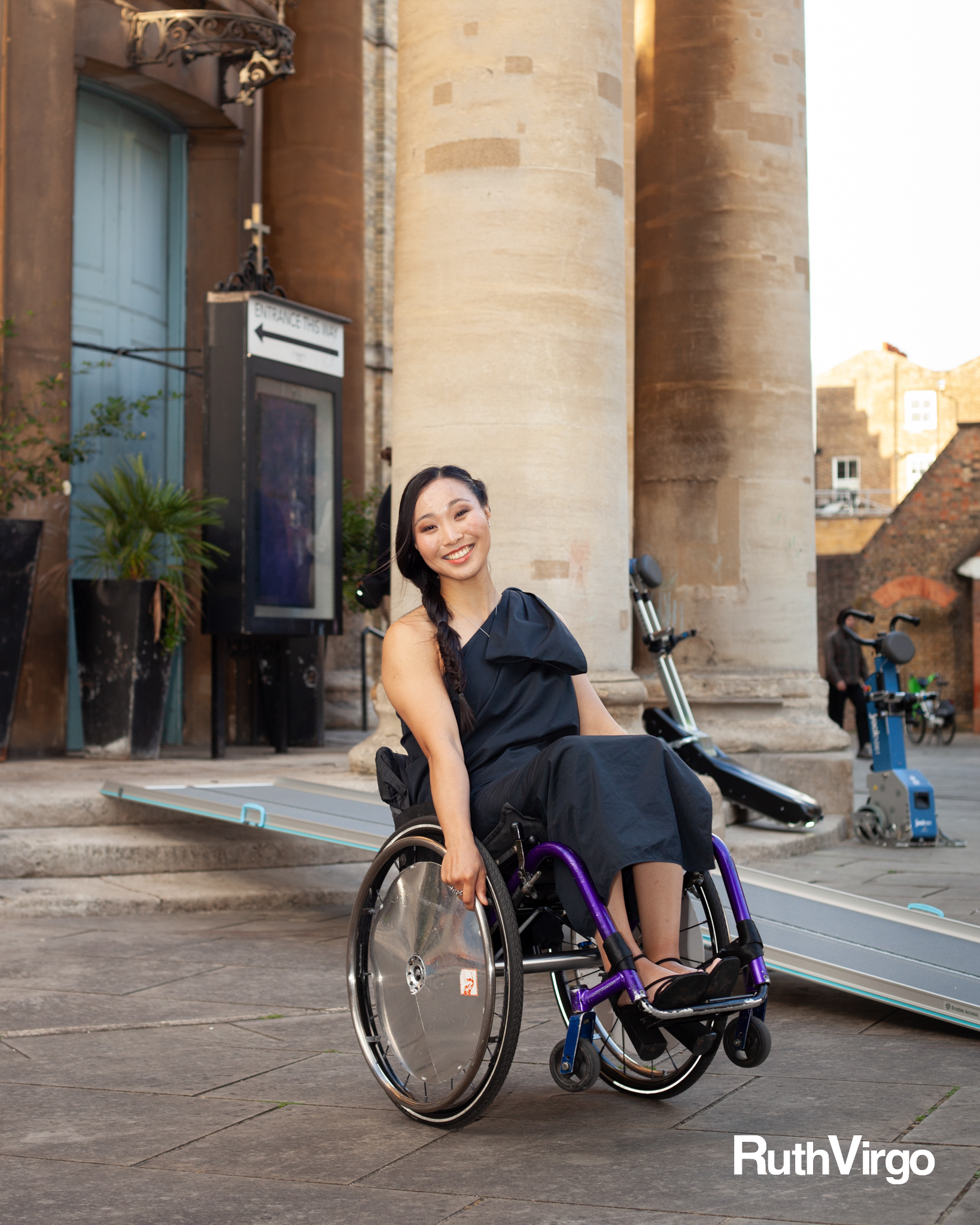
Part M Stair Climbers for London Retrofit Buildings: Practical Access in Constrained Spaces Discuss a London Access Assessment Retrofitting a …

Part M Stair Climber Access: Creating More Inclusive Buildings Without Losing Flexibility Creating an accessible building is rarely about a …
Estimated reading time: 15 minutes