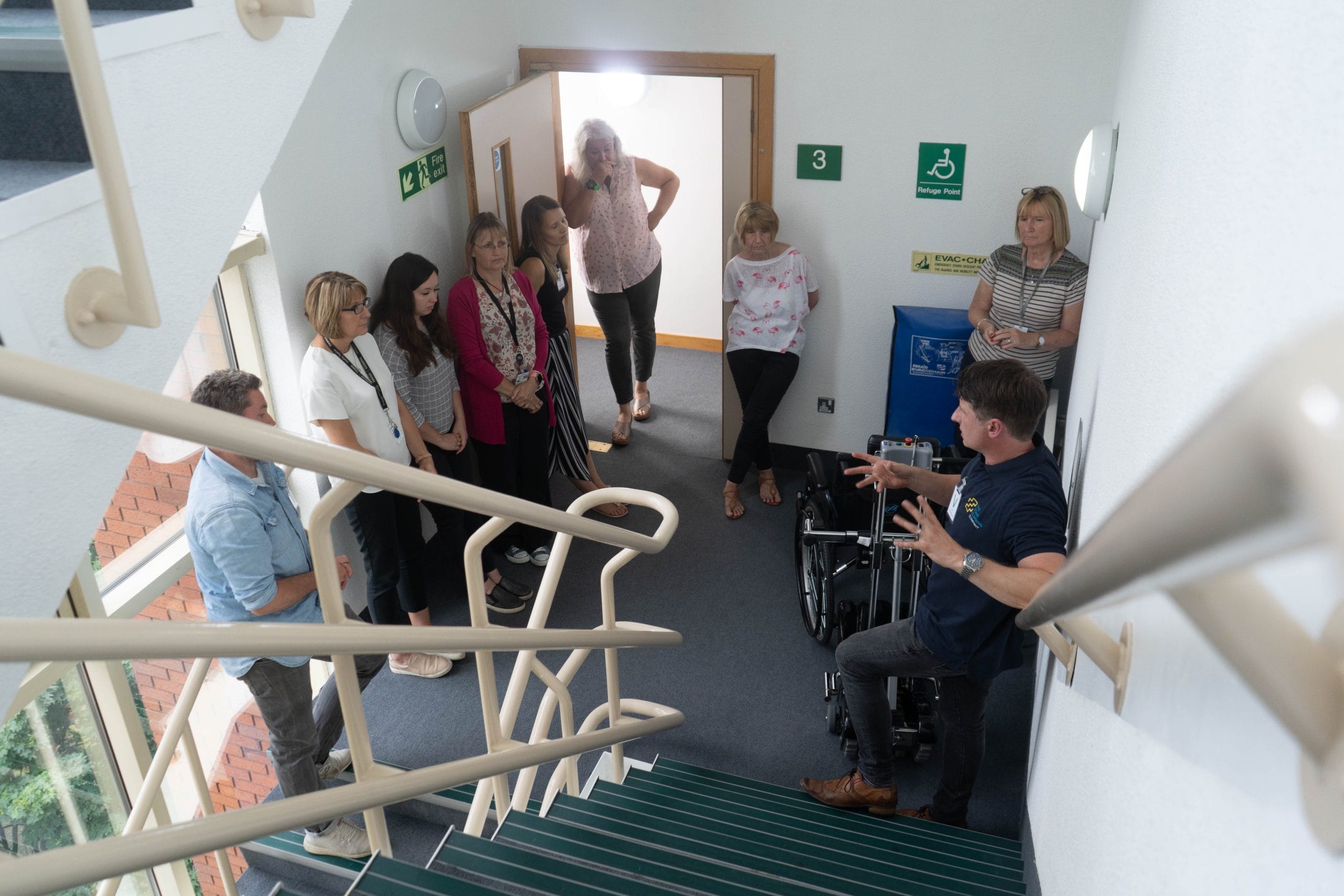
Powered Stair Climbers for Workplace Access: Removing Barriers Without Major Building Work
Powered Stair Climbers for Workplace Access: Removing Barriers Without Major Building Work Need to improve wheelchair access in your workplace? …

Providing accessible routes through London buildings is rarely a simple design exercise. The capital contains Georgian townhouses converted into offices, Victorian schools, listed cultural venues, compact hotels, modern commercial towers and leased workspaces that have evolved through many phases of alteration. A single building may include pavement steps, a raised reception, narrow internal stairs, split-level meeting rooms and a passenger lift that does not reach every floor.
A fixed stair lift, platform lift or permanent ramp can be the right solution when there is enough space, the alterations are permitted and the route will be used frequently. In many London properties, however, the physical and operational constraints are more complicated. A fixed rail may reduce the width of a busy staircase. A platform lift may require structural work and landlord approval. A compliant ramp may need more length and landing space than the entrance can provide.
This is why facilities managers, building owners, schools, universities, hotels and venue operators may need to consider a flexible stair lift alternative. A powered stairclimber can transport a person up or down a suitable staircase with the support of a trained operator. Depending on the model, the passenger may travel in an integrated seat or remain in a compatible wheelchair.
A powered stairclimber is not a universal replacement for independent step-free access. It requires assessment, suitable storage, trained operators and a dependable procedure. Where a permanent installation is not practical, it can nevertheless provide an effective alternative to stair lift equipment and, in certain environments, a space-conscious ramp alternative.
London’s built environment combines architectural significance, intensive use and limited space. These factors can make even a modest change in level difficult to resolve.
Historic properties may have protected interiors, original staircases and entrance details that cannot be altered without careful consideration and consent. Leased offices may need agreement from a landlord or managing agent before a rail, lift or structural adaptation can be installed. Compact commercial premises often open directly onto a busy pavement, leaving little room for an external ramp. Inside, narrow circulation routes and small landings can restrict the equipment that can be accommodated.
Modern buildings can present challenges too. A tower may have accessible main lifts but still contain steps to a roof terrace, conference suite, stage, plant-area meeting room or mezzanine. A building may technically provide a step-free route, but that route might depend on a single lift. When the lift is out of service, access to work, education, appointments or events can disappear immediately.
London City Hall’s guidance on creating a London accessible to all reflects the importance of inclusive design across the capital. For existing buildings, the practical response must consider the whole journey and the way the premises actually operate, not simply whether a piece of equipment can fit beside the stairs.
A powered stairclimber is battery-operated equipment designed to move a passenger along a suitable flight of stairs. The motor controls the climbing movement while a trained operator positions and guides the machine.
Tracked models use powered tracks that remain in contact with several steps. They are often selected for compatible wheelchairs and generally require a straight flight with sufficient space at the top and bottom. Stepping models move from one tread to the next and may suit certain narrow or turning staircases. Some include a passenger seat, while others connect to a compatible wheelchair.
Unlike a conventional stair lift, a powered stairclimber is not fixed to a rail. It can be moved into appropriate storage after use and may potentially serve more than one assessed route. This portability can be valuable in a London building where stairs must remain clear for everyday circulation or where several small changes in level create separate barriers.
The important distinction is that the machine normally requires a trained operator. A fixed lift or well-designed ramp may support independent movement, whereas a powered stairclimber provides assisted access. That difference must be discussed openly with the person who will use the route.
For a detailed explanation of tracked and stepping models, non-transfer access, assessments and training, read The Stair Climbing Company’s complete guide to powered stairclimbers.
London’s listed buildings and conservation areas are part of what makes the city distinctive, but they can present difficult access decisions. Permanent rails, lift shafts and extensive ramps may affect historic fabric, significant interiors or the external appearance of a property.
Historic England’s guidance on easy access to historic buildings addresses the physical access challenges faced by historic shops, offices, civic buildings and visitor attractions. The aim should not be to assume that heritage prevents access. It should be to find a well-considered solution that improves inclusion while respecting significance.
A powered stairclimber may support that balance because it usually requires little or no permanent alteration. It can be brought to an assessed staircase when needed and stored away afterwards. This can make it a useful stair lift alternative for galleries, museums, theatres, churches, professional offices, hotels and education buildings where a permanent rail would be difficult to approve or visually intrusive.
Portability does not remove the need for care. Historic treads, stone surfaces, timber details, turns and landings must be examined. An on-site demonstration is the best way to establish whether the proposed equipment can be positioned and operated without unacceptable risk to the passenger, operator or building.
Many London businesses occupy leased floors rather than owning an entire building. The employer may control the workplace but have limited authority over the entrance, common staircase or passenger lifts. Alterations can involve the landlord, freeholder, managing agent and other tenants, which can extend timescales considerably.
A powered stairclimber may provide an alternative to stair lift installation where landlord consent is unavailable, the lease is short, or access is required while a permanent project is being planned. Because there is normally no rail attached to the staircase, the equipment can avoid some of the physical disruption associated with a fixed system.
The operational plan is as important as the machine. A visitor or employee should know how to request assistance without having to explain their needs repeatedly. Trained operators must be available during the hours the building is occupied. Storage and charging should be close enough to the route for prompt deployment, without blocking circulation or an escape route.
The City of London Corporation’s inclusive design guidance reinforces the need to consider inclusive access within development and planning. For an existing workplace, a portable solution may form part of a broader access strategy, but it should not become an excuse to avoid a more independent permanent solution where one is reasonable and achievable.
A ramp can offer dignified, independent access when it is designed correctly. The difficulty in London is often space. A shallow gradient can require considerable length, together with level landings, handrails, edge protection and room to manoeuvre at doors. On a narrow frontage, a ramp may extend into a busy pavement or conflict with neighbouring entrances.
Inside a building, the same problem can occur around raised receptions, stages and split-level floors. A short set of steps may look straightforward, but there may be no space for a permanent ramp that works safely and preserves circulation.
In these situations, a powered stairclimber may be considered as a ramp alternative because it uses the existing steps rather than requiring a long sloping structure. It can be particularly relevant for occasional access, temporary venues, heritage interiors and secondary areas that cannot accommodate permanent building work.
The trade-off is assistance. A permanent ramp may allow someone to arrive and move independently, while a stairclimber needs an available operator and a compatible route. A genuine ramp alternative must therefore be judged by the quality and reliability of the access it provides, not simply by the amount of floor space it saves.
The government’s Approved Document M provides guidance on access to and use of buildings in England. Building regulations, planning, heritage considerations and the person’s experience should all be addressed before a permanent ramp is ruled out.
Passenger lift failure can have an immediate effect in a London office, hotel, school or venue. A wheelchair user may be unable to reach their desk, room, classroom or appointment. Meetings may need to be relocated and services disrupted. In a busy commercial property, even a short outage can become a significant business continuity and equality issue.
A powered stairclimber may support a planned temporary access arrangement while a lift is repaired, provided the person, wheelchair, staircase and operators have already been assessed. Waiting until the lift fails is too late to discover that the equipment does not fit a landing or that nobody on site has been trained.
Facilities managers should treat lift-failure access as an operational procedure. The suitable route should be identified in advance, the equipment should remain charged and maintained, and enough trained operators should be available across shifts and absences. The person using the arrangement should be consulted about communication, comfort and dignity.
Everyday or temporary access must also be distinguished from emergency evacuation. A stairclimber selected for planned movement should not automatically be used during a fire. Emergency conditions require separate competent assessment, suitable equipment and documented evacuation procedures.
Employers and service providers may have duties to make reasonable adjustments. Section 20 of the Equality Act 2010 addresses situations in which a physical feature places a disabled person at a substantial disadvantage.
The appropriate adjustment depends on the circumstances. In one London building it may be a permanent platform lift. In another it may involve relocating a service to an accessible floor. Elsewhere, a powered stairclimber could contribute to an effective plan when structural changes are not feasible.
Reliability matters. Equipment stored in another building, locked behind an unavailable key holder or left without charge does not provide meaningful access. Nor does a process that depends on one trained employee who may be absent. The adjustment should work at the times people need it and should be reviewed when the building, staffing or user requirements change.
London staircases vary too widely for product choice to be based on photographs or a single width measurement. A professional assessment should consider tread depth, riser height, angle, nosings, surfaces, turns, handrails, doors, obstructions and clear landing space. The approach to the stairs and the destination must also be usable.
The person’s mobility, posture, weight, transfer ability, communication preferences and comfort must be considered. For non-transfer access, the wheelchair type, dimensions, total combined weight, accessories and attachment points all require confirmation.
Potential operators should take part in the assessment and practical demonstration. Training must cover checks, positioning, passenger communication, restraints, wheelchair attachment, ascent, descent, landings, charging and storage. Competence should be recorded and refreshed when staff, routes or equipment change.
The result may show that a stairclimber is suitable. It may also show that a fixed lift, ramp, relocation of the service or another alteration would provide better access. A responsible assessment is designed to find the right solution, not to force the building around a preferred product.
There is no single best option. A powered stairclimber may suit a building with restricted space, occasional access needs or limits on permanent alterations. A platform lift or passenger lift may be better for frequent independent access. The decision should follow a site assessment and consultation with the people who will use the route.
Potentially, because it normally requires little or no permanent alteration. The staircase, historic surfaces, passenger, wheelchair and operator must still be assessed, and any proposed changes should follow appropriate heritage and planning advice.
It can be useful where there is not enough room for a permanent ramp, but it provides assisted rather than independent access. The whole arrival process, pavement interface, weather exposure, storage and operator availability must be considered.
Hire can support suitable temporary access needs, subject to assessment, demonstration and operator training. Planning ahead is essential because not every stairclimber suits every passenger, wheelchair or staircase.
London buildings demand access solutions that respond to the person, the route and the realities of the property. A fixed stair lift, ramp or platform lift may provide the best long-term result where permanent work is possible. Where space, conservation, tenancy or temporary need makes installation impractical, a powered stairclimber can provide a flexible stair lift alternative.
It can help a wheelchair user remain in a compatible chair, keep a busy staircase clear and support access across an assessed change in level. It can also offer a practical ramp alternative in locations where a permanent structure cannot be accommodated. Its success depends on professional assessment, a practical demonstration, trained operators, maintenance and a reliable access procedure.
The Stair Climbing Company provides site assessments, demonstrations, hire, purchase, operator training, servicing and ongoing support for organisations across London. Our approach begins with the person and the building so that the proposed solution can be tested in the environment where it will be used.
Learn more in our Powered Stairclimber complete guide or contact The Stair Climbing Company to discuss access to your London building.
Powered Stair Climbers for Workplace Access: Removing Barriers Without Major Building Work Need to improve wheelchair access in your workplace? …

Powered Stair Climbers for Wheelchair Access: A Flexible Way to Overcome Stairs Need to create wheelchair access where stairs are …

Part M Stair Climbers for London Buildings: Accessible Retrofit Without Major Structural Change Improving accessibility in an existing London building? …

Part M Stair Climbers for Retrofit Buildings: Creating Accessible Buildings Without Major Structural Change Retrofitting an existing building and struggling …
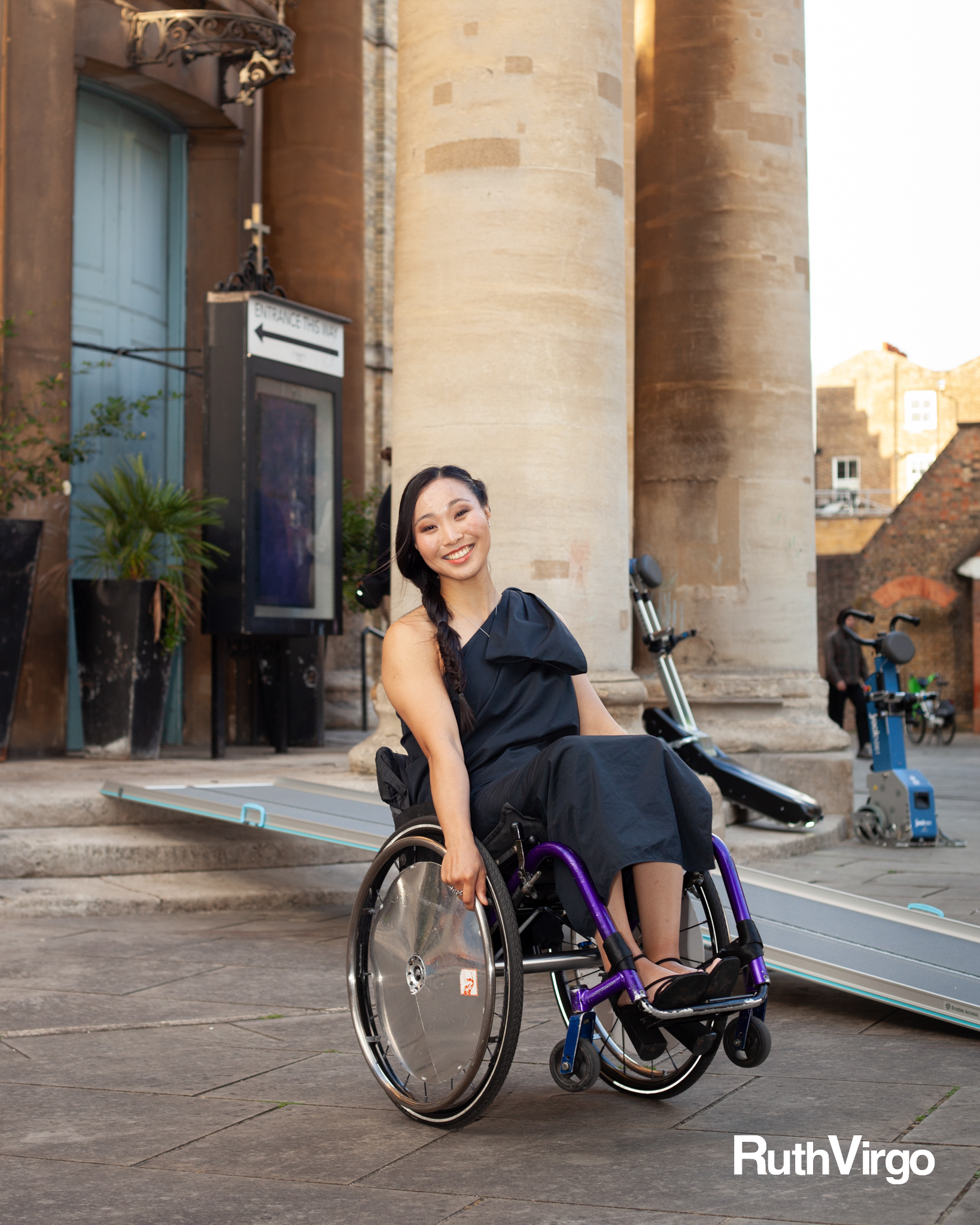
Part M Stair Climbers for London Retrofit Buildings: Practical Access in Constrained Spaces Discuss a London Access Assessment Retrofitting a …

Part M Stair Climber Access: Creating More Inclusive Buildings Without Losing Flexibility Creating an accessible building is rarely about a …
Estimated reading time: 11 minutes