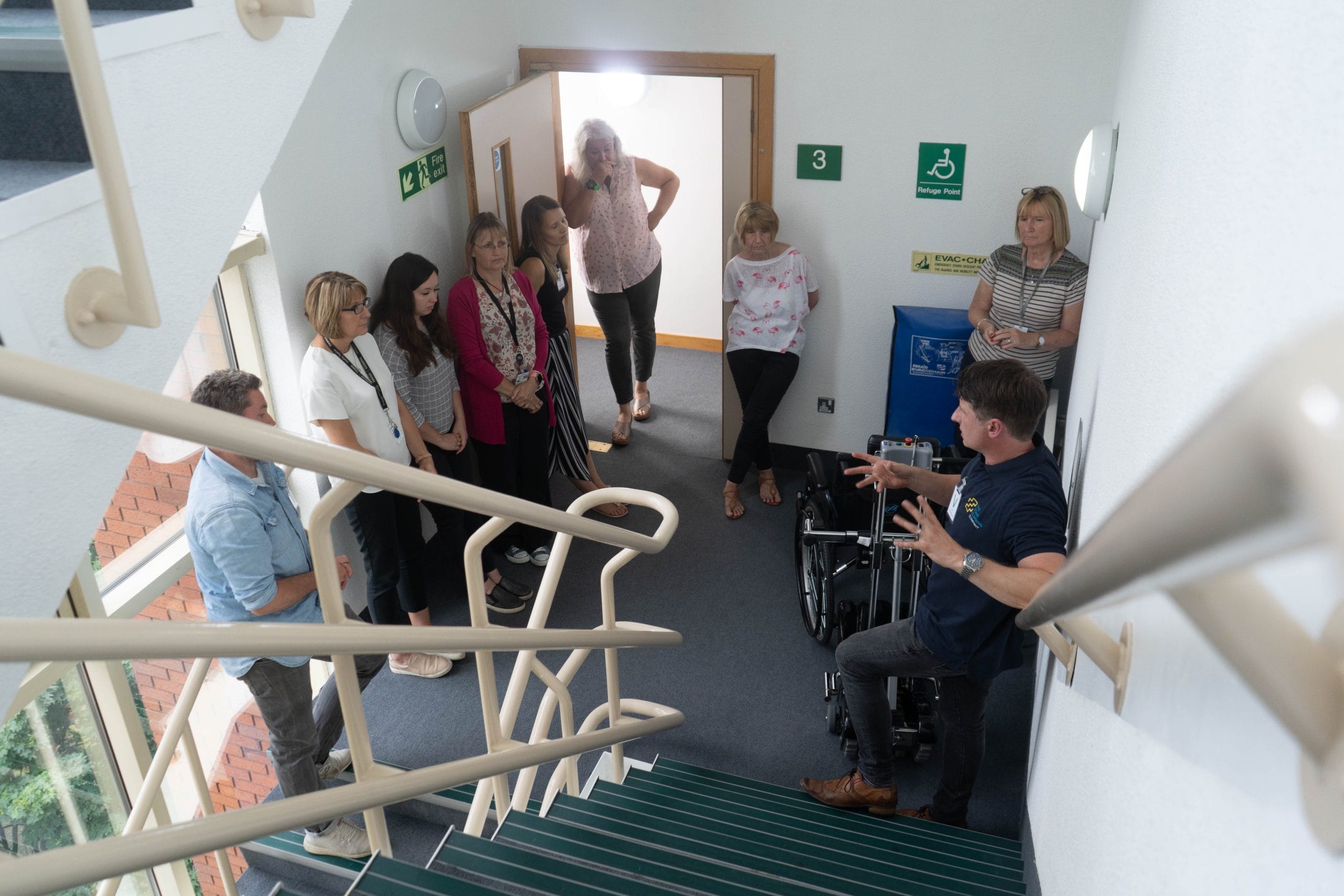
Powered Stair Climbers for Workplace Access: Removing Barriers Without Major Building Work
Powered Stair Climbers for Workplace Access: Removing Barriers Without Major Building Work Need to improve wheelchair access in your workplace? …

London buildings come with unique challenges. From historic townhouses in Kensington to multi storey offices in Canary Wharf, evacuation planning is rarely straightforward. With the introduction of the Fire Safety Regulations (2025), building owners and responsible persons across London are under increasing pressure to ensure safe and inclusive evacuation for everyone.
One of the biggest shifts is the move away from relying on fixed systems like stair lifts. Instead, many organisations are now exploring stair climbers as a practical and compliant alternative to stair lifts and powered evacuation chairs.
This article looks at why stair climbers are becoming the preferred choice in London and how they support compliance with Fire Safety Regulations (2025).
The Fire Safety Regulations (2025) place greater responsibility on building managers to provide clear evacuation strategies for all occupants. This is especially important in London, where building layouts are often complex and space is limited.
Older buildings, in particular, present challenges. Narrow staircases, listed status restrictions, and shared access points make installing fixed evacuation systems difficult.
Official UK guidance highlights the importance of having realistic and adaptable evacuation plans. You can review the latest fire safety guidance here:
https://www.gov.uk/government/collections/fire-safety-guidance
For London based properties, this means choosing solutions that work across different building types without compromising safety or compliance.
Stair lifts may seem like a convenient solution for accessibility, but they are rarely suitable in emergency scenarios, especially in London.
First, stair lifts are not designed for use during fires. In many cases, they must not be used during evacuation due to safety risks and potential obstruction of escape routes.
Second, installing stair lifts in London properties can be complicated. Many buildings are listed or have structural limitations that prevent modifications.
Third, stair lifts are fixed in place. In a city where evacuation routes may change depending on the situation, this lack of flexibility is a serious drawback.
Because of these factors, more organisations are looking for an alternative to stair lifts that aligns with modern fire safety requirements.
A stair climber is a portable mobility device that allows a trained operator to safely move someone up or down stairs. Unlike stair lifts, they do not require installation and can be used across multiple locations within a building.
They are battery powered, easy to store, and ready to deploy when needed. This makes them particularly well suited to London environments where space is at a premium.
If you want to understand the mechanics behind stair climbers, this guide is useful:
https://www.healthandcare.co.uk/blog/how-does-a-stair-climber-work.html
For London buildings, stair climbers offer several clear advantages.
Whether you are managing a hotel in Soho or an office in the City, stair climbers can be used on any staircase. This flexibility is essential in larger or more complex buildings.
With strict planning and heritage regulations in many parts of London, avoiding permanent alterations is a major benefit. Stair climbers can be introduced without impacting the building fabric.
Stair climbers operate independently of mains power. In a fire scenario where electricity may be compromised, this is a critical advantage.
Storage space is limited in many London properties. Stair climbers are compact and can be stored discreetly until required.
Powered evacuation chairs are widely used across London, but they are not always the most practical solution.
Stair climbers are designed to do most of the work. This reduces the physical effort required from staff, which is important in high pressure situations.
Unlike powered evacuation chairs, stair climbers can also be used for day to day mobility support. This makes them a more versatile investment.
Many stair climbers provide a smoother and more controlled descent, improving safety and comfort for the user.
You can explore evacuation equipment standards here:
https://www.fia.uk.com/resources/evacuation-equipment-guidance.html
Compliance in London requires a practical and well documented approach. Stair climbers can support this in several ways.
PEEPs are essential under Fire Safety Regulations (2025). Stair climbers can be incorporated into these plans as the primary evacuation method for individuals with mobility needs.
Guidance on PEEPs is available here:
https://www.equalityhumanrights.com/en/advice-and-guidance/fire-safety-and-evacuation
In busy London environments, staff turnover can be high. Regular training ensures that everyone knows how to use stair climbers effectively during an emergency.
Stair climbers should be located near key stairwells and clearly signposted. In a fast moving situation, accessibility is crucial.
Risk assessments should reflect the realities of your building. Stair climbers provide a flexible solution that can address a wide range of risks.
Across the capital, stair climbers are already being adopted in a variety of settings.
From converted flats to high rise developments, stair climbers offer a practical evacuation solution without requiring major alterations.
Hotels and serviced apartments benefit from having portable evacuation equipment that can be used across multiple floors.
Schools and universities in London need inclusive evacuation plans. Stair climbers help ensure that all students can be evacuated safely.
Businesses in London are under increasing pressure to meet Fire Safety Regulations (2025). Stair climbers provide a cost effective and compliant solution.
Hospitals and clinics often deal with complex evacuation scenarios. Stair climbers support both emergency planning and patient transport.
When selecting a stair climber, it is important to consider the specific needs of your building.
Consider stair width, number of floors, and access points.
Think about weight capacity and the level of support needed.
Reliable battery life is essential for emergency use.
In London, space is always a factor. Choose a model that can be stored efficiently.
For product options, you can explore:
https://www.mobilitysmart.co.uk/stair-climbers.html
The Fire Safety Regulations (2025) are driving change across London. Building managers are moving away from rigid systems and towards more adaptable solutions.
Stair climbers reflect this shift. They provide a practical alternative to stair lifts and powered evacuation chairs, while supporting compliance and improving safety.
For London buildings, finding an effective alternative to stair lifts is no longer optional. It is a requirement under Fire Safety Regulations (2025).
Stair climbers offer a flexible, reliable, and cost effective solution that works across a wide range of property types. They also provide a strong alternative to powered evacuation chairs, particularly where ease of use and versatility are key.
If you are reviewing your fire safety strategy in London, stair climbers are well worth considering. They not only help you meet regulations but also ensure that every occupant has a safe way out when it matters most.
Powered Stair Climbers for Workplace Access: Removing Barriers Without Major Building Work Need to improve wheelchair access in your workplace? …

Powered Stair Climbers for Wheelchair Access: A Flexible Way to Overcome Stairs Need to create wheelchair access where stairs are …

Part M Stair Climbers for London Buildings: Accessible Retrofit Without Major Structural Change Improving accessibility in an existing London building? …

Part M Stair Climbers for Retrofit Buildings: Creating Accessible Buildings Without Major Structural Change Retrofitting an existing building and struggling …
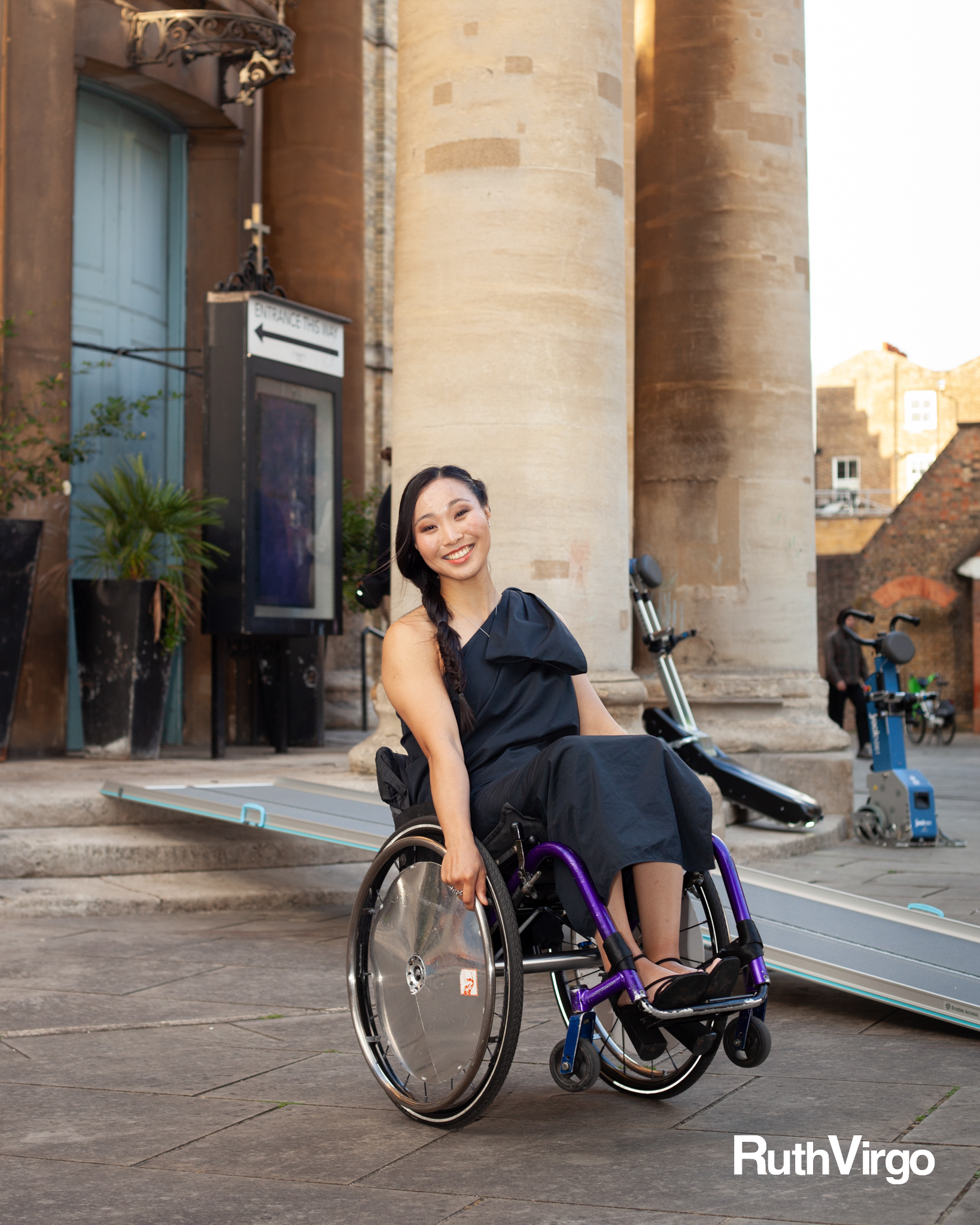
Part M Stair Climbers for London Retrofit Buildings: Practical Access in Constrained Spaces Discuss a London Access Assessment Retrofitting a …

Part M Stair Climber Access: Creating More Inclusive Buildings Without Losing Flexibility Creating an accessible building is rarely about a …
Estimated reading time: 6 minutes