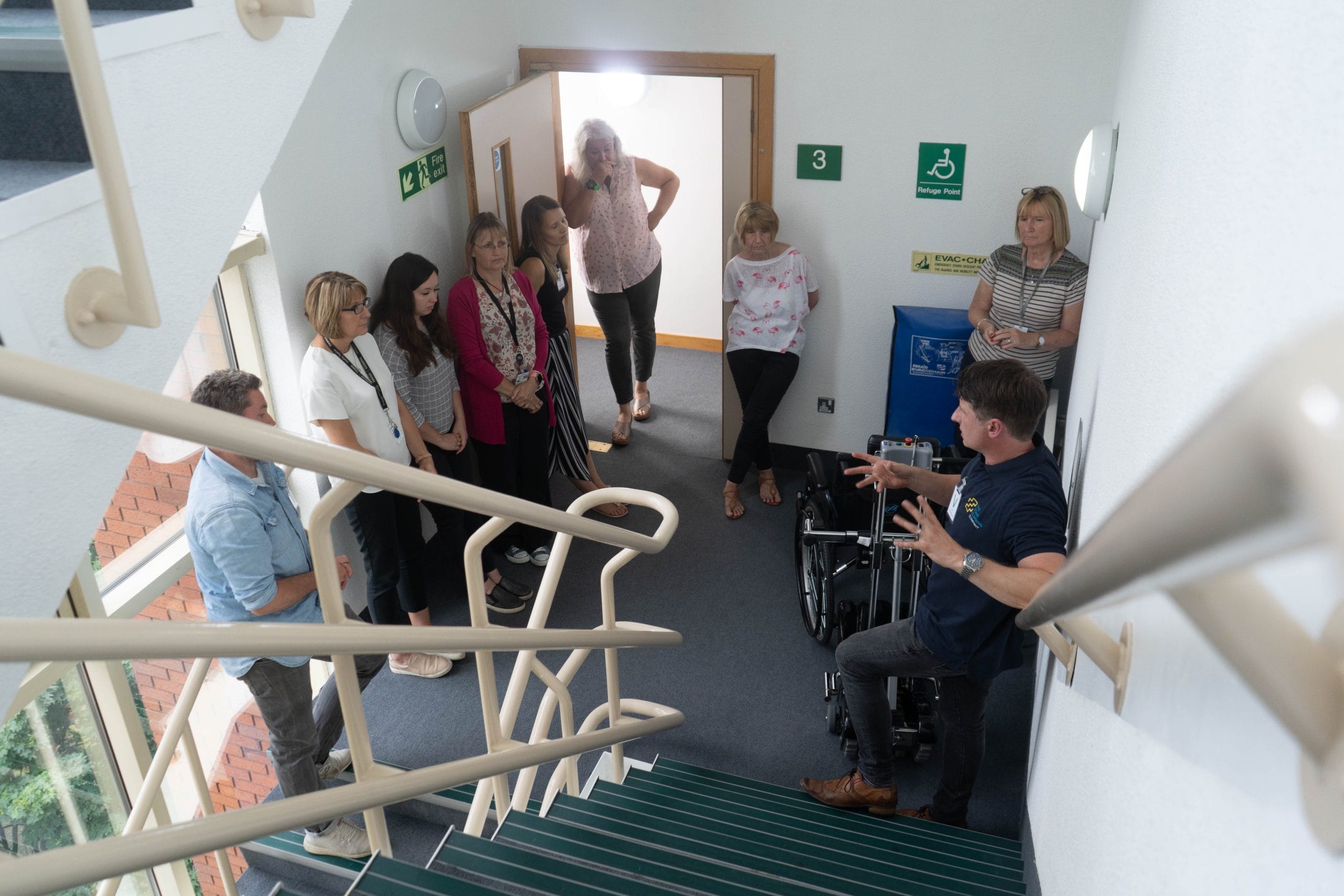
Powered Stair Climbers for Workplace Access: Removing Barriers Without Major Building Work
Powered Stair Climbers for Workplace Access: Removing Barriers Without Major Building Work Need to improve wheelchair access in your workplace? …

Stairclimbers for OTs: Transforming Mobility, Therapy, and Independence for Children
By The Stair Climbing Company
In recent years, the conversation around inclusive mobility has shifted dramatically. Occupational Therapists (OTs) are no longer just adapting environments — they are actively redefining how children engage with them. At the heart of this evolution is a growing interest in stairclimbers for OTs and stair climbers for OTs, particularly in paediatric settings.
For children with mobility challenges, stairs have traditionally been a barrier — something to work around, avoid, or adapt. Today, thanks to innovation in children stairclimbers and children’s stair climbers, those same stairs are becoming opportunities for therapy, independence, and confidence-building.
At The Stair Climbing Company, we’ve seen firsthand how this shift is changing outcomes for therapists, families, and most importantly, children.
Occupational Therapists are increasingly looking for practical, safe, and adaptable tools that bridge the gap between clinical therapy and real-world environments. This is where stairclimbers for OTs are gaining traction.
Traditionally, therapy involving stairs required:
Modern stair climbers for OTs remove many of these constraints. They allow therapists to safely introduce stair navigation earlier in a child’s development plan, with greater consistency and confidence.
From schools and clinics to homes and community settings, stair climbing solutions are becoming essential tools in the OT toolkit.
Stairs are more than just a structural feature — they are a functional milestone.
For children, the ability to navigate stairs impacts:
For OTs, stairs represent a critical developmental goal. But without the right support, they can also present risks.
This is why stairclimbers for OTs are not just mobility aids — they are therapeutic enablers.
The introduction of children stairclimbers has transformed how therapists approach mobility challenges.
Unlike traditional lifting or carrying methods, these systems:
At The Stair Climbing Company, we design solutions that prioritise both safety and engagement. When a child feels secure, they are more likely to participate — and that’s where real progress happens.
One of the most important shifts we’ve observed is the move from assistance to empowerment.
Older approaches often focused on:
Modern children’s stair climbers focus on:
This distinction is crucial.
By integrating stair climbing into therapy:
For OTs, this creates a more meaningful and measurable therapy pathway.
Safety is always at the forefront of occupational therapy, particularly when working with children.
Stairclimbers for OTs are designed with:
This allows therapists to focus on therapy outcomes rather than risk management.
At The Stair Climbing Company, we work closely with therapists to ensure our solutions meet real-world clinical needs — not just technical specifications.
A common misconception is that stair climbing equipment replaces the role of the therapist. In reality, the opposite is true.
Stair climbers for OTs:
Rather than lifting and managing risk, therapists can focus on:
This leads to better outcomes for both therapist and child.
Repetition is fundamental to occupational therapy, especially in paediatric cases.
However, traditional stair training is often limited by:
With children stairclimbers, repetition becomes:
This accelerates learning and helps children build confidence faster.
One of the biggest advantages of modern children’s stair climbers is their versatility.
They can be used in:
For OTs, this means therapy doesn’t stop when the session ends. It becomes part of everyday life.
The ultimate goal of occupational therapy is independence.
Stairclimbers for OTs help bridge the gap between:
Instead of practicing isolated movements, children experience:
This is where meaningful progress happens.
Mobility is not just physical — it’s emotional.
Children who struggle with stairs often experience:
By introducing children stairclimbers, we see:
At The Stair Climbing Company, we believe that every step matters — not just physically, but emotionally.
It’s not just therapists who benefit.
Families often face daily challenges when stairs are involved. Carrying children or avoiding certain environments can be physically and emotionally exhausting.
Stair climbers for OTs also support:
They provide:
The rapid development of children’s stair climbers is driven by:
At The Stair Climbing Company, innovation is guided by one question:
“How can we make mobility more natural, safe, and empowering?”
This approach ensures that our solutions are not just functional, but transformative.
Not all stair climbing solutions are created equal.
When selecting stairclimbers for OTs, it’s important to consider:
Working with experienced providers ensures that therapists get solutions tailored to their requirements.
Looking ahead, the role of stair climbers for OTs will only continue to grow.
We expect to see:
Most importantly, we will see more children gaining access to environments that were once out of reach.
At The Stair Climbing Company, we don’t just provide equipment — we support a movement.
We believe:
Our work with OTs across the UK and beyond has shown us the incredible impact of stairclimbers for OTs and children stairclimbers.
It’s not just about getting up the stairs — it’s about what happens next.
The evolution of stair climbers for OTs marks a significant step forward in occupational therapy.
By transforming stairs from obstacles into opportunities, we are:
As awareness grows around children’s stair climbers, we expect this technology to become a standard part of paediatric therapy.
And from where we stand, that’s a step in the right direction.
Powered Stair Climbers for Workplace Access: Removing Barriers Without Major Building Work Need to improve wheelchair access in your workplace? …

Powered Stair Climbers for Wheelchair Access: A Flexible Way to Overcome Stairs Need to create wheelchair access where stairs are …

Part M Stair Climbers for London Buildings: Accessible Retrofit Without Major Structural Change Improving accessibility in an existing London building? …

Part M Stair Climbers for Retrofit Buildings: Creating Accessible Buildings Without Major Structural Change Retrofitting an existing building and struggling …
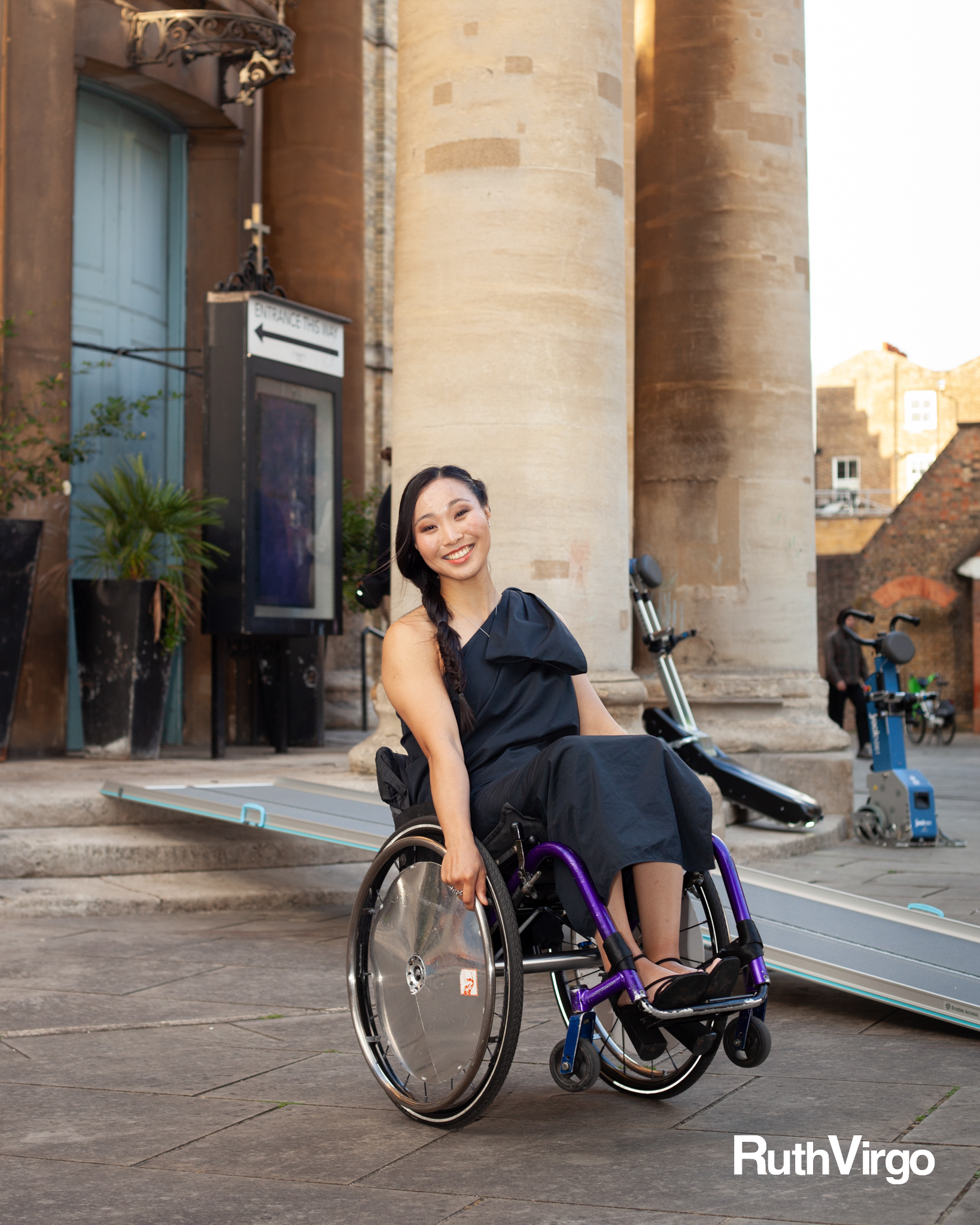
Part M Stair Climbers for London Retrofit Buildings: Practical Access in Constrained Spaces Discuss a London Access Assessment Retrofitting a …

Part M Stair Climber Access: Creating More Inclusive Buildings Without Losing Flexibility Creating an accessible building is rarely about a …
Estimated reading time: 6 minutes