Powered Stairclimbers in UK Universities: Creating More Accessible Campuses
University should be a place where students can learn, participate and build their future. Yet for wheelchair users and people …

Educational buildings in London face increasing pressure to meet the demands of the Fire Safety Regulations (2025). Schools, colleges, and universities must now demonstrate that every student, staff member, and visitor can be evacuated safely, including those with mobility challenges.
Many institutions have traditionally relied on stair lifts or powered evacuation chairs. However, these solutions are not always suitable in emergency situations. As a result, stair climbers are becoming a practical and compliant alternative to stair lifts and powered evacuation chairs across London’s education sector.
This guide explores why stair climbers are gaining traction and how they support fire safety compliance in educational environments.
The Fire Safety Regulations (2025) have strengthened the requirement for inclusive evacuation planning. Educational buildings must ensure that evacuation procedures are clear, efficient, and suitable for all occupants.
This is particularly important in London, where many educational buildings are older, multi storey, and often constrained by space or listed status.
Government fire safety guidance highlights the need for realistic evacuation strategies that can be implemented under pressure. You can review the official guidance here:
https://www.gov.uk/government/collections/fire-safety-guidance
For schools and universities, this means moving beyond fixed systems and adopting flexible evacuation solutions.
Stair lifts are commonly installed to support daily accessibility, but they are rarely suitable for emergency evacuation.
In a fire scenario, stair lifts are typically not safe to use. They depend on electrical systems that may fail and can obstruct escape routes. This creates additional risks rather than reducing them.
In London educational buildings, installation is also a challenge. Many schools and universities operate in historic properties where structural changes are restricted.
Another issue is scalability. A stair lift serves only one staircase, which is not practical in large campuses or multi building sites.
Because of these limitations, institutions are actively seeking an alternative to stair lifts that aligns with Fire Safety Regulations (2025).
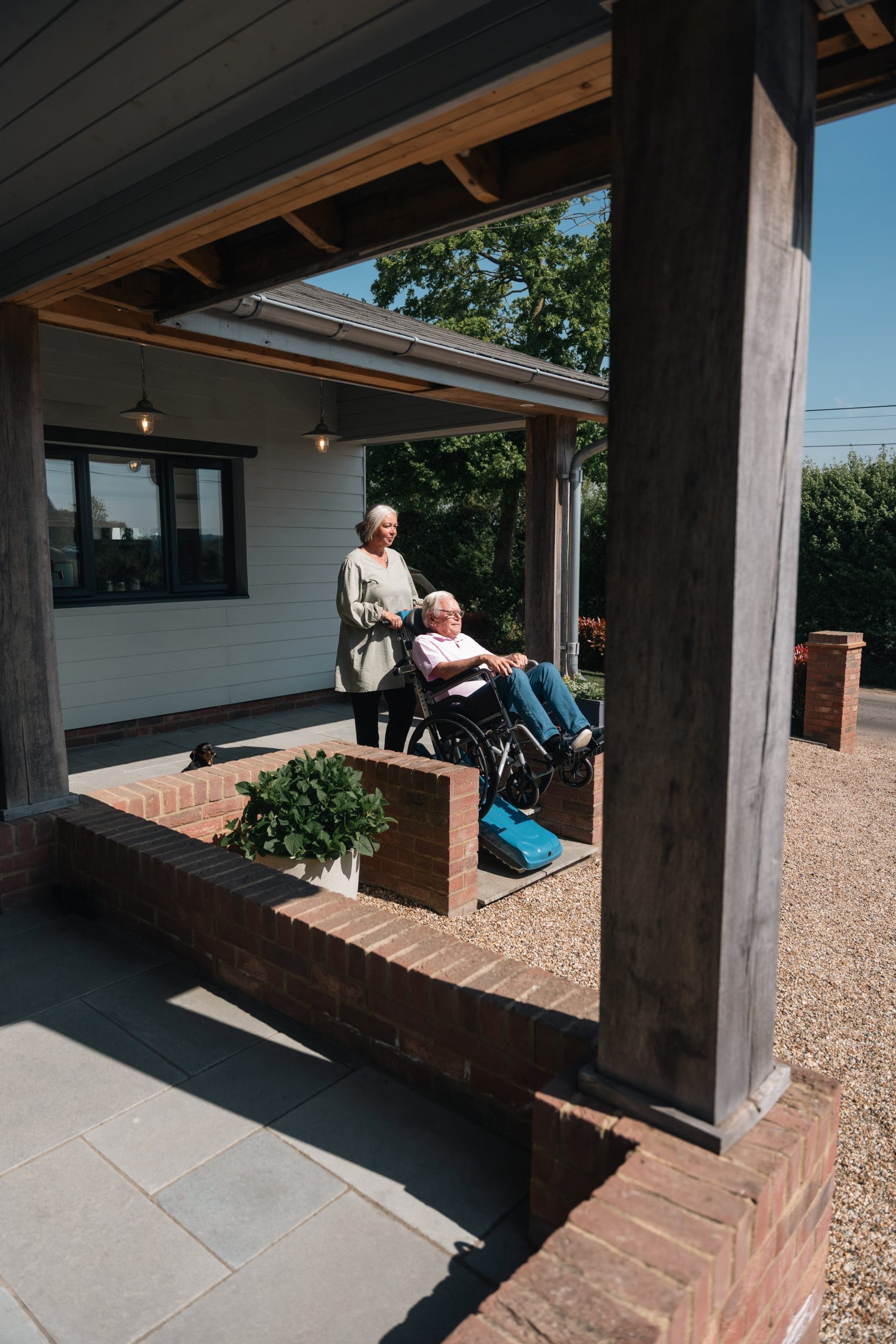
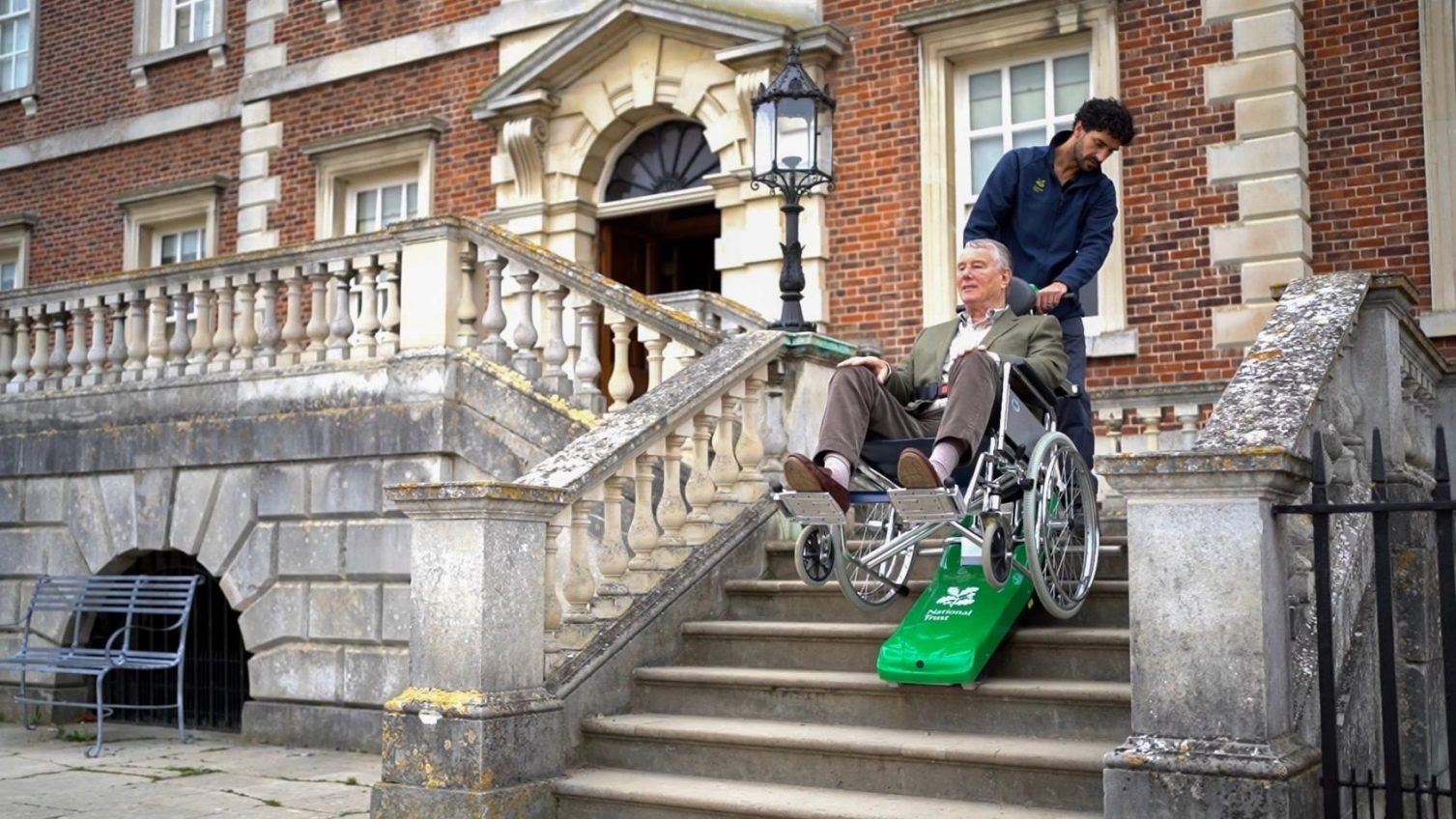
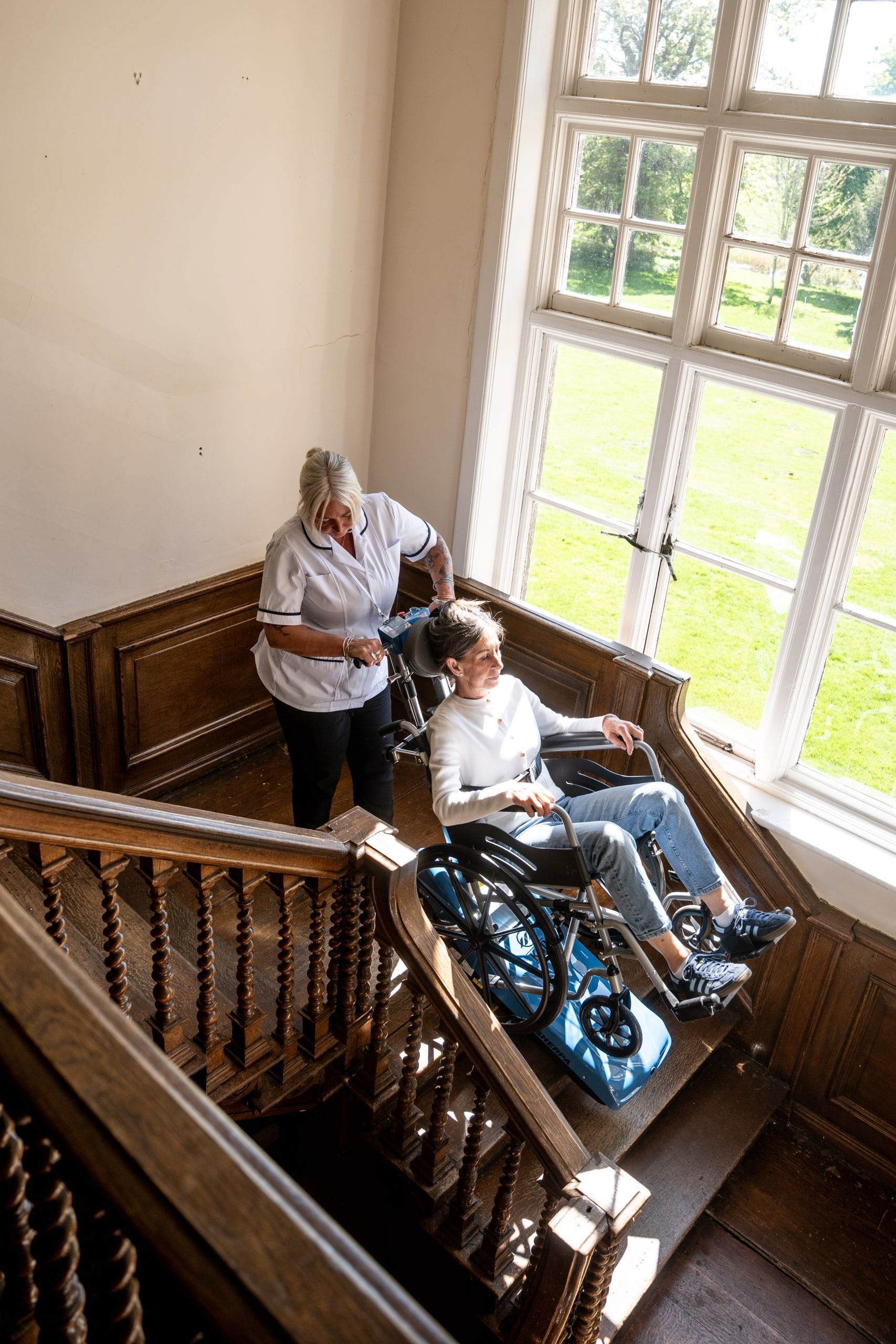
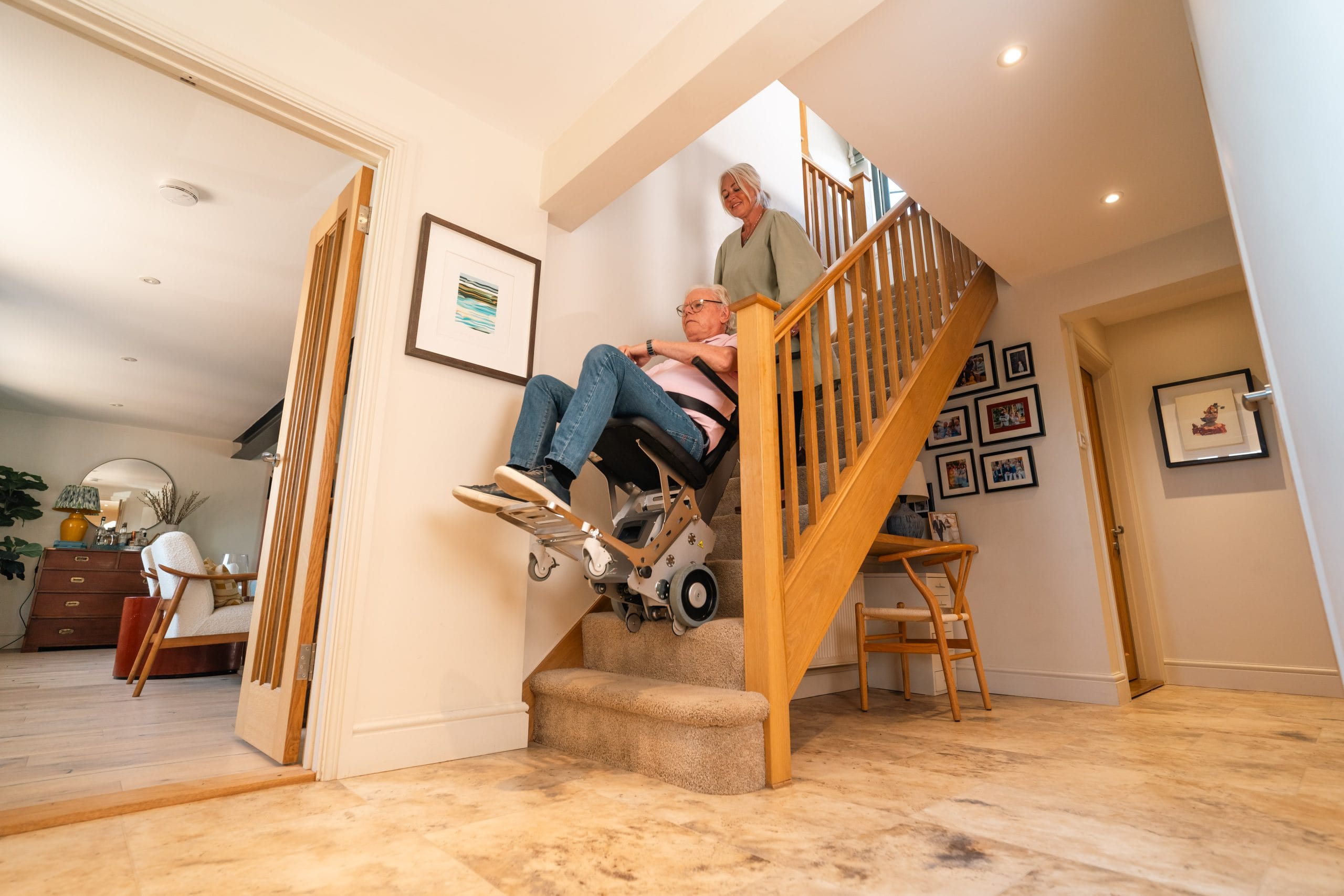
A stair climber is a portable device designed to move individuals safely up or down stairs with the assistance of a trained operator. It is battery powered, compact, and does not require permanent installation.
For educational buildings in London, this offers a clear advantage. Stair climbers can be used across different staircases, buildings, and floors without any structural modifications.
If you want to learn more about how stair climbers operate, this guide provides a useful overview:
https://www.healthandcare.co.uk/blog/how-does-a-stair-climber-work.html
For schools, colleges, and universities, stair climbers provide several benefits that support both safety and compliance.
Educational sites often include multiple buildings and stairwells. Stair climbers can be deployed wherever they are needed, making them ideal for complex layouts.
With many London institutions operating in listed or older buildings, avoiding permanent alterations is essential. Stair climbers require no installation, which simplifies compliance.
Stair climbers are designed to operate independently of mains power. This makes them reliable in fire scenarios where power may be lost.
Budgets in education are often tight. Stair climbers provide a more affordable alternative compared to installing multiple stair lifts across a campus.
Powered evacuation chairs are widely used in educational settings, but stair climbers are increasingly seen as a better option in many cases.
Teachers and support staff are not always trained for physically demanding tasks. Stair climbers reduce the effort required, making them easier to operate during an emergency.
Unlike powered evacuation chairs, stair climbers can also be used for everyday mobility support. This increases their value within the school environment.
Stair climbers often provide a more stable and secure experience, which is important when evacuating students who may already be anxious.
You can review evacuation equipment guidance here:
https://www.fia.uk.com/resources/evacuation-equipment-guidance.html
To meet Fire Safety Regulations (2025), educational institutions must take a structured approach to evacuation planning. Stair climbers can play a central role in this process.
Students and staff who require assistance should have a Personal Emergency Evacuation Plan. Stair climbers can be integrated into these plans as the primary evacuation method.
Guidance on evacuation planning is available here:
https://www.equalityhumanrights.com/en/advice-and-guidance/fire-safety-and-evacuation
In schools and universities, staff must be confident in using evacuation equipment. Regular training ensures that stair climbers can be used safely and effectively.
Stair climbers should be stored in accessible locations near key staircases. Clear signage helps ensure they can be deployed without delay.
Fire risk assessments should consider the needs of all occupants. Stair climbers provide a flexible solution that can adapt to different scenarios.
Across London, stair climbers are already being used in a range of educational settings.
Schools benefit from having a portable evacuation solution that can support younger students with mobility needs.
Further education colleges often operate across multiple floors and buildings. Stair climbers provide a consistent evacuation method across the site.
Large campuses with diverse populations require scalable solutions. Stair climbers can be deployed quickly across different departments and buildings.
Institutions supporting students with additional needs rely on safe and dignified evacuation methods. Stair climbers help achieve this.
Selecting the right equipment is essential for effective implementation.
Ensure the stair climber can support the weight and needs of students and staff.
A strong battery is critical for emergency situations.
Staff should be able to operate the device with minimal complexity.
In busy school environments, equipment must be easy to store without taking up valuable space.
For available options, you can explore:
https://www.mobilitysmart.co.uk/stair-climbers.html
The Fire Safety Regulations (2025) are encouraging schools and universities in London to rethink their approach to evacuation.
Rigid systems like stair lifts are being replaced by more flexible solutions. Stair climbers offer a practical alternative that meets regulatory requirements while improving safety for everyone.
Educational buildings in London must now take a more proactive approach to evacuation planning. Finding an effective alternative to stair lifts is a key part of this process.
Stair climbers provide a reliable, flexible, and cost effective solution. They also serve as a strong alternative to powered evacuation chairs, particularly in environments where ease of use and adaptability are essential.
By incorporating stair climbers into your fire safety strategy, you can meet the requirements of the Fire Safety Regulations (2025) while ensuring that every student and staff member has a safe route to exit during an emergency.
University should be a place where students can learn, participate and build their future. Yet for wheelchair users and people …
A Complete Guide to Powered Stairclimbers Creating accessible places is not always as simple as installing a ramp, passenger lift …

Alternatives to Stairlifts and Platform Lifts for London Universities An accessible university campus is more than an accessible main entrance. …
Alternatives to Stairlifts and Platform Lifts in London Buildings London buildings rarely present a simple access problem. A Georgian townhouse …
Alternatives to Stairlifts and Platform Lifts at Home: A Practical Guide for Community OTs When a person can no longer …
Estimated reading time: 6 minutes