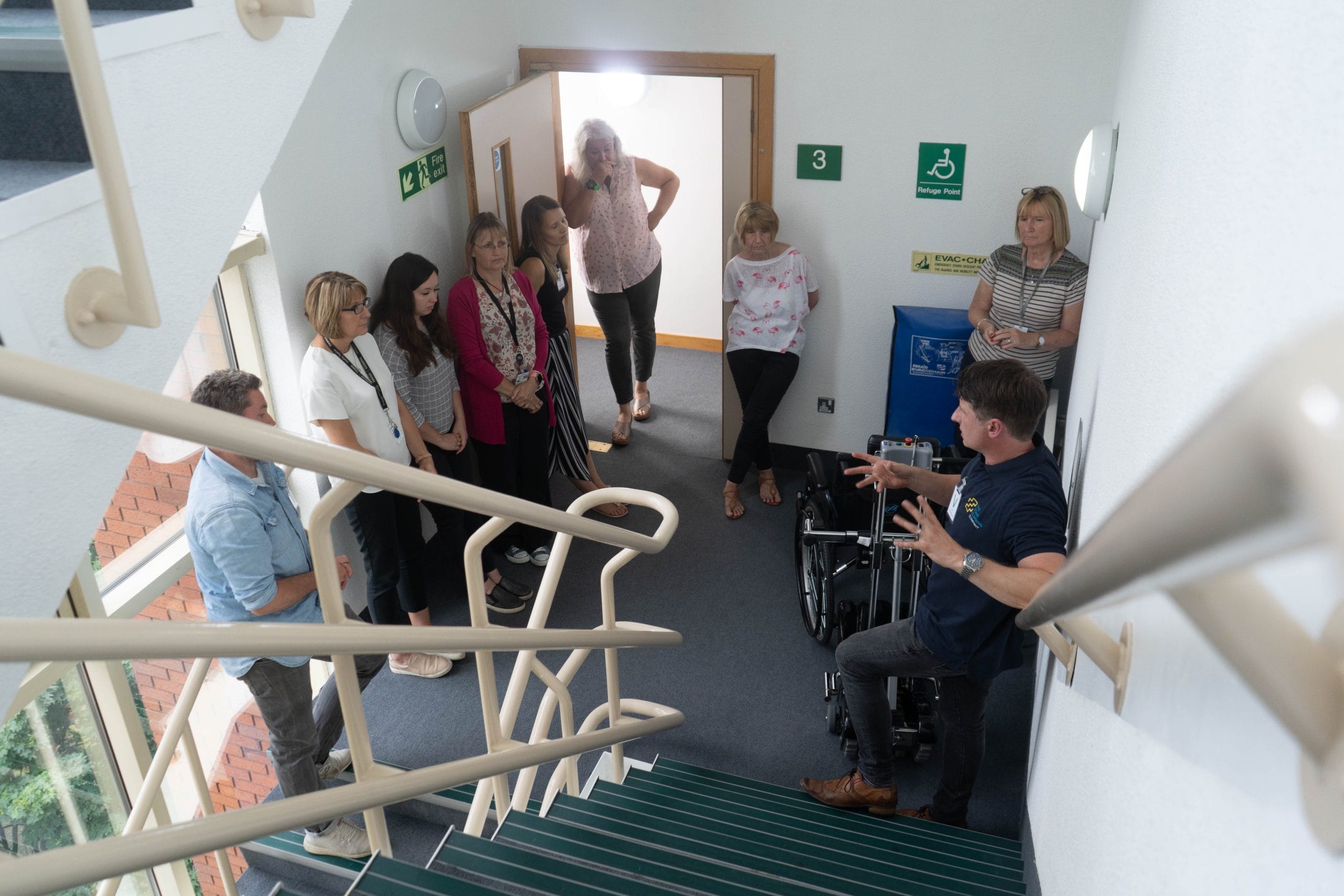
Powered Stair Climbers for Workplace Access: Removing Barriers Without Major Building Work
Powered Stair Climbers for Workplace Access: Removing Barriers Without Major Building Work Need to improve wheelchair access in your workplace? …

Accessibility inside buildings remains a major challenge for many people who use wheelchairs. Across the UK thousands of homes, schools, clinics and public buildings still rely on stairs, which creates barriers for both adults and children with mobility needs. Occupational therapists play a key role in helping individuals live safely and independently, and they often recommend practical solutions that improve everyday access.
One solution gaining significant attention is the stair climber. Stair climbers allow safe and controlled movement of a wheelchair user up and down stairs without the need for costly building adaptations. For occupational therapists working with both adults and children, a stair climber can be a highly effective tool that improves access, safety and quality of life.
This article explores how stair climbers support occupational therapists across the UK and how they benefit adults and children who rely on wheelchairs.
A stair climber is a mobility device designed to transport a wheelchair user safely up and down stairs. A trained operator guides the equipment while the wheelchair remains securely attached to the device. This allows a wheelchair user to remain seated and stable during the stair climbing process.
There are different types of stair climber equipment available including powered models and tracked systems. Many occupational therapists recommend a stair climbing wheelchair solution when installing a stairlift or building a ramp is not practical.
For homes, schools and public buildings that cannot be structurally modified, a stair climber offers a flexible and cost effective alternative.
Occupational therapists focus on helping individuals perform everyday activities safely and independently. Access to buildings is essential for education, healthcare and social participation.
A stair climber can help remove environmental barriers without major construction work. This makes stair climbers particularly valuable for occupational therapists working in community care, schools and local authorities.
Some key reasons OTs recommend stair climbers include improved accessibility, quick installation with no building modifications, portability between locations, safe operation for trained carers and suitability for both adults and children.
Stair climbers also help OTs provide solutions quickly when a person is discharged from hospital and needs immediate access to their home.
Many adults across the UK live in properties where installing a lift or ramp is not possible. Narrow staircases, rented accommodation and listed buildings can all limit adaptation options.
In these situations a stair climber allows wheelchair users to access their homes safely without the need for permanent building work. Occupational therapists frequently assess these environments and identify stair climbers as a practical solution.
A stair climbing wheelchair system allows an adult wheelchair user to remain seated during movement on stairs. This reduces physical strain for carers and improves dignity and comfort for the user.
Stair climbers are also used in workplaces, community centres and healthcare facilities where accessibility needs to be improved quickly.
Accessibility challenges are not limited to adults. Many children with mobility needs attend schools or live in homes with staircases that cannot easily be adapted.
Children stair climbers provide a safe and controlled method for moving young wheelchair users up and down stairs. For occupational therapists working with children, these devices support inclusion in education and daily family life.
When a school building has multiple floors, a stair climber allows staff to move a child safely without lifting the wheelchair manually. This significantly reduces the risk of injury for both the child and the staff member.
Children stair climbers also support participation in school trips, activities and community events where stairs may otherwise create barriers.
Occupational therapists must consider safety, practicality and long term outcomes when recommending equipment. Stair climbers provide several benefits that align with OT assessment goals.
First, stair climbers support safe manual handling practices. Carers and staff avoid lifting heavy wheelchairs which reduces the risk of injury.
Second, a stair climber maintains the dignity and comfort of the wheelchair user. Remaining seated in a familiar wheelchair can reduce anxiety, especially for children.
Third, stair climbers provide flexibility. Many devices are portable and can be used in multiple environments such as homes, schools and community settings.
Finally, stair climbers allow occupational therapists to recommend a solution that can be implemented quickly. This is particularly important during hospital discharge planning.
Local authorities, schools and healthcare providers across the UK continue to look for practical accessibility solutions. Stair climbers play an important role in improving access where structural adaptations are difficult or expensive.
For occupational therapists working in the NHS, education or community services, a stair climber can provide a reliable and safe option for supporting wheelchair users.
Stair climbing wheelchair technology has improved significantly in recent years, with many devices offering enhanced stability, battery powered operation and improved safety features.
As awareness grows, more OTs are considering stair climbers as part of their assessment toolkit.
Selecting the right stair climber depends on several factors including the weight of the wheelchair user, the staircase design, the environment and the experience of the operator.
Occupational therapists typically work with specialist suppliers to identify the most suitable stair climber solution. Demonstrations and risk assessments are often carried out before a recommendation is made.
Key considerations include stability on different stair types, ease of operation for carers, compatibility with wheelchairs and safety features such as braking systems and secure attachments.
When chosen correctly, a stair climber can provide years of reliable support for wheelchair users and those who care for them.
Stair climbers are transforming how occupational therapists address accessibility challenges across the UK. For both adults and children who use wheelchairs, these devices provide a safe and practical method of moving between floors without the need for permanent building adaptations.
From family homes to schools and healthcare settings, stair climbers help remove barriers that limit independence and participation. Occupational therapists play a crucial role in identifying when a stair climber or stair climbing wheelchair solution can provide the greatest benefit.
As demand for accessible environments continues to grow, stair climbers will remain an important tool for OTs working to improve mobility, safety and quality of life for wheelchair users across the UK.
Powered Stair Climbers for Workplace Access: Removing Barriers Without Major Building Work Need to improve wheelchair access in your workplace? …

Powered Stair Climbers for Wheelchair Access: A Flexible Way to Overcome Stairs Need to create wheelchair access where stairs are …

Part M Stair Climbers for London Buildings: Accessible Retrofit Without Major Structural Change Improving accessibility in an existing London building? …

Part M Stair Climbers for Retrofit Buildings: Creating Accessible Buildings Without Major Structural Change Retrofitting an existing building and struggling …
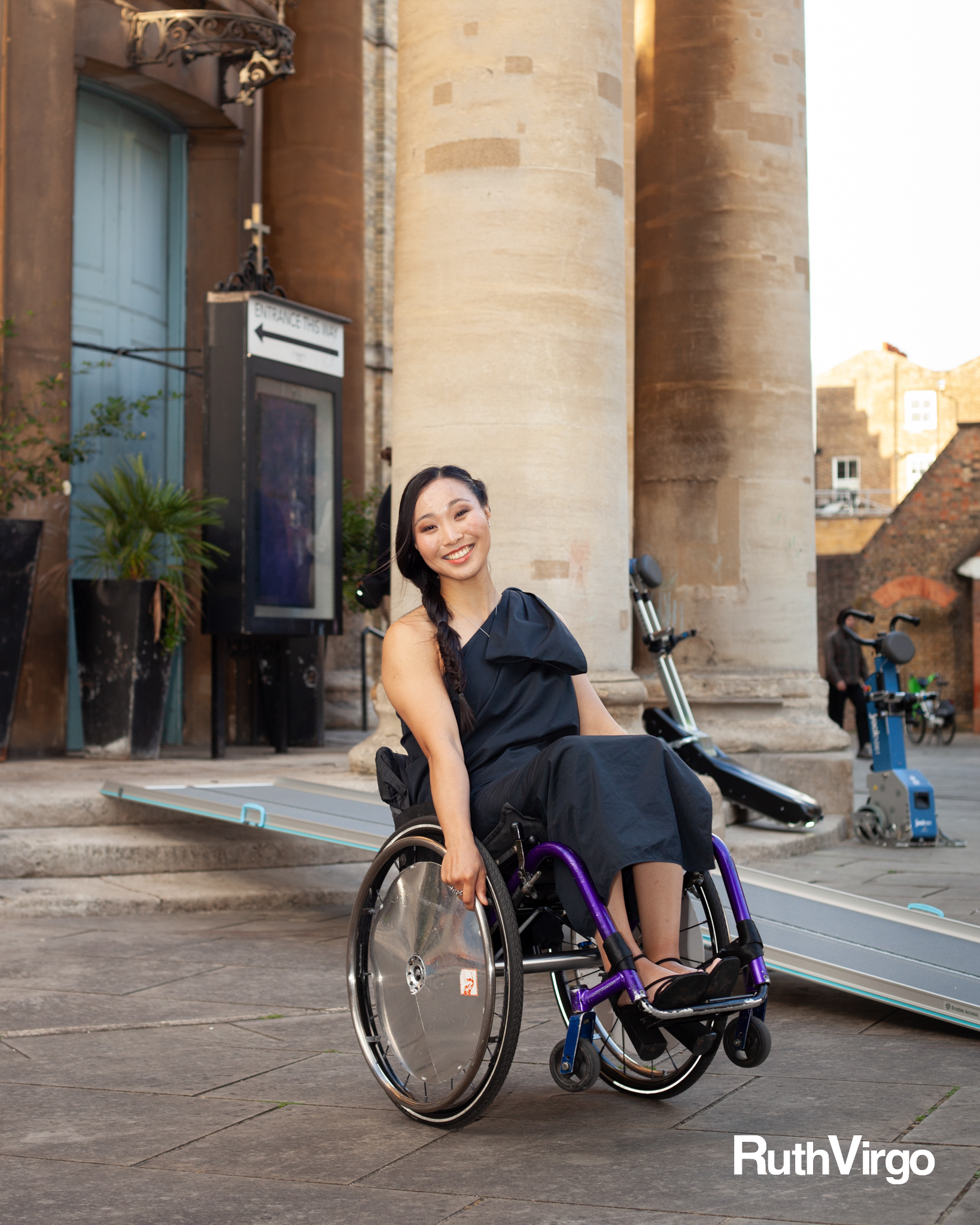
Part M Stair Climbers for London Retrofit Buildings: Practical Access in Constrained Spaces Discuss a London Access Assessment Retrofitting a …

Part M Stair Climber Access: Creating More Inclusive Buildings Without Losing Flexibility Creating an accessible building is rarely about a …
Estimated reading time: 6 minutes