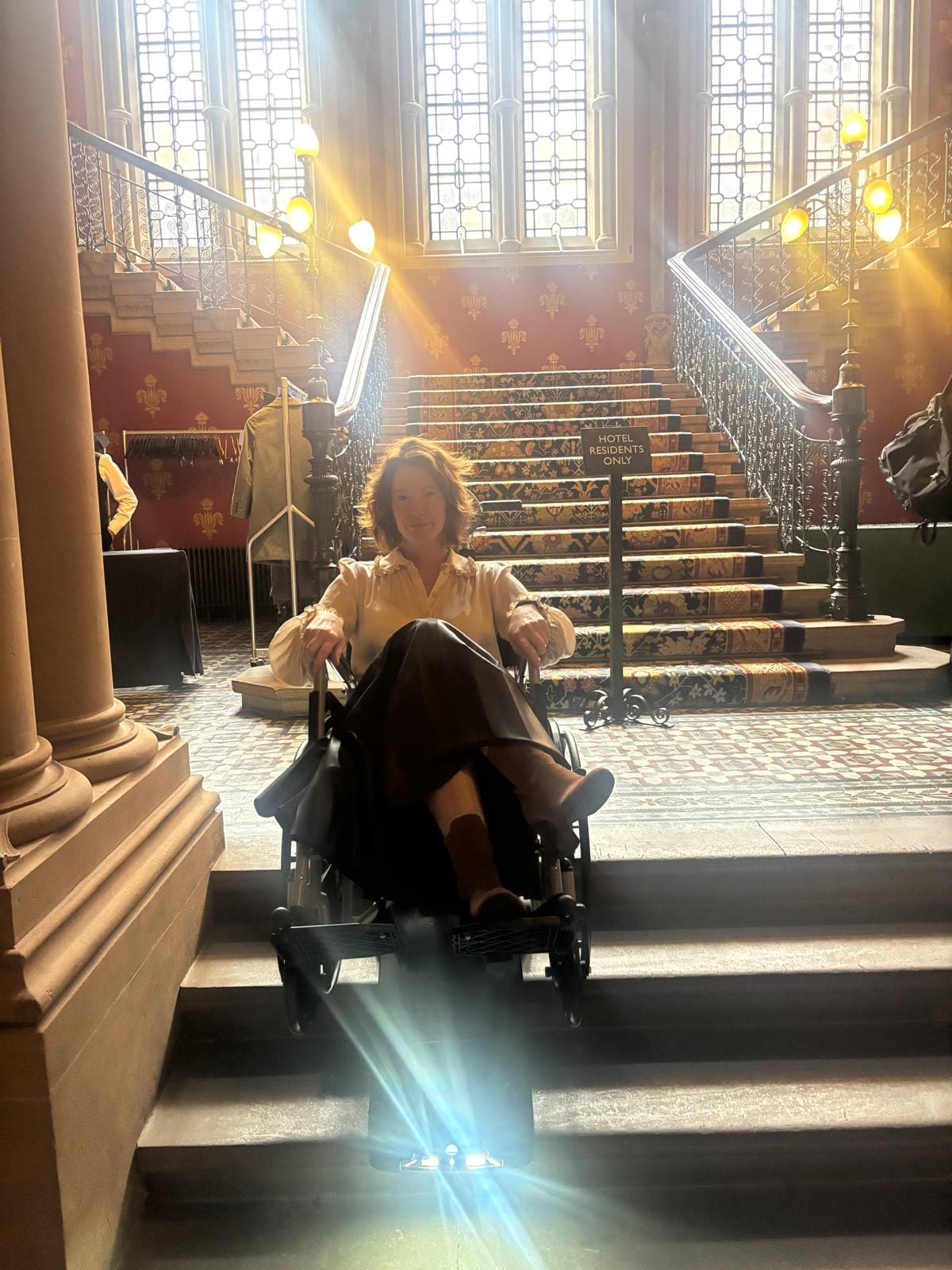
Powered Stair Climbers for Workplace Access in London
Powered Stair Climbers for Workplace Access in London Need to create wheelchair access in a London workplace? Book a free …

Estimated reading time: 10 minutes
Inclusive evacuation planning is becoming one of the most important responsibilities for building owners, facilities managers, health and safety professionals, schools, universities, hospitals, care homes, and commercial organisations. As awareness around accessibility and equality continues to grow, organisations are under increasing pressure to ensure that emergency evacuation procedures protect everyone equally, including non-transferable wheelchair users.
Traditional evacuation procedures often rely on the assumption that wheelchair users can transfer into standard evacuation chairs. However, for many people this is not possible, safe, dignified, or medically appropriate. This is where Powered Stair Climbers and Powered Evac Chairs are transforming emergency evacuation planning.
Powered stair climbers provide a safer, more controlled method of moving wheelchair users up or down stairs during an emergency or planned access situation. They reduce manual handling risks, improve user comfort, and support compliant Personal Emergency Evacuation Plans, also known as PEEPs.
For organisations reviewing their evacuation strategies, Powered Stairclimbers and Powered Evacuation Chairs are quickly becoming essential tools for inclusive safety.
A Personal Emergency Evacuation Plan is an individual plan designed to ensure a person can evacuate safely in an emergency. PEEPs are commonly required for employees, visitors, residents, patients, students, or members of the public who may need assistance during an evacuation.
The challenge many organisations face is creating evacuation procedures that genuinely work for wheelchair users with different needs.
Some wheelchair users may be able to transfer independently into a standard evacuation chair. Others may require assistance transferring. However, many individuals are completely non-transferable. This means they cannot safely leave their wheelchair for medical, physical, sensory, or dignity-related reasons.
Non-transferable wheelchair users can include:
For these individuals, traditional evacuation chairs may not be suitable.
This is why Powered Stair Climbers are becoming increasingly important within evacuation planning.
Powered Stair Climbers are motorised evacuation and access devices designed to transport wheelchair users safely on stairways. Unlike manual evacuation equipment, powered systems use battery-powered tracks or motorised wheel systems to climb or descend stairs smoothly and safely.
Powered stair climbers are designed to reduce physical strain on operators while improving comfort and stability for the wheelchair user.
Some Powered Stairclimbers are designed to transport occupied wheelchairs directly, while others integrate with specialist evacuation seating systems. This flexibility allows organisations to provide safer evacuation solutions for a wider range of mobility needs.
Powered stair climbers can support:
Their growing popularity is linked to both health and safety improvements and the increasing recognition that inclusive evacuation requires more than one standard solution.
Traditional evacuation chairs remain important tools within many buildings. They are widely used and can be highly effective for some individuals. However, there are important limitations when considering non-transferable wheelchair users.
Many standard evacuation chairs require the user to:
For some users this may be uncomfortable. For others it may be impossible.
Manual handling risks can also increase significantly during transfers. Staff may not be appropriately trained to support complex transfers safely under emergency pressure.
This creates several potential concerns:
Powered Evac Chairs and Powered Stair Climbers help address many of these challenges.
One of the biggest advantages of Powered Stair Climbers is their ability to support wheelchair users who cannot transfer.
For many individuals, remaining in their own wheelchair is essential for posture, pressure care, respiratory support, or medical stability. Powered stair climbers allow organisations to create realistic evacuation procedures that account for these needs.
This creates safer and more dignified evacuation plans.
Manual handling remains one of the biggest risks during evacuation procedures.
Moving people on stairs using manual equipment places enormous physical strain on operators. This is especially true in:
Powered Stairclimbers reduce the physical effort required by operators through motorised assistance. This helps reduce:
For employers, this also supports broader workplace safety responsibilities.
Emergency evacuation can be frightening for anyone. For wheelchair users, concerns about safety, dignity, and communication can increase anxiety even further.
Powered stair climbers provide smoother movement and improved stability compared to many manual systems.
This can help users feel:
Many organisations now recognise that inclusive evacuation is not only about compliance. It is also about confidence, reassurance, and equality.
The Equality Act places responsibilities on organisations to make reasonable adjustments for disabled people.
While evacuation is often treated separately from day-to-day access, organisations are increasingly expected to consider how disabled people will evacuate safely and with dignity.
Powered Evacuation Chairs and Powered Stair Climbers help organisations demonstrate a proactive approach to inclusive safety.
This can support:
During an emergency, time matters.
Powered stair climbers can often improve evacuation efficiency by providing more controlled and reliable movement on stairs.
Because they reduce physical strain on operators, staff may also remain more effective during extended incidents.
This can be especially important in:
There is growing interest in Powered Evac Chairs because they bridge the gap between traditional evacuation equipment and more inclusive evacuation needs.
Powered Evac Chairs use battery-powered assistance to help move individuals safely on stairs with reduced operator effort.
Compared to manual evacuation chairs, Powered Evacuation Chairs can offer:
However, organisations should remember that no single evacuation product suits every user.
A complete evacuation strategy may include:
The key is ensuring the equipment matches the user’s actual needs.
Hospitals and healthcare environments often support patients with complex mobility needs. Powered Stair Climbers can provide safer evacuation solutions for non-transferable patients while reducing manual handling risks for staff.
Educational settings increasingly require inclusive evacuation procedures for students, staff, and visitors. Powered stair climbers help schools create more accessible emergency plans.
Care home residents may have varying mobility levels and medical needs. Powered Evacuation Chairs and Powered Stairclimbers can support safer assisted evacuation procedures.
Modern workplaces are focusing more on accessibility and inclusion. Powered stair climbers help employers meet health and safety responsibilities while supporting employee wellbeing.
Sports stadiums, theatres, museums, hotels, and entertainment venues often have large visitor numbers and complex stair access routes. Powered stair climbers can improve evacuation preparedness for wheelchair users.
Every wheelchair user has unique needs.
A proper PEEP should consider:
A one-size-fits-all approach rarely works effectively.
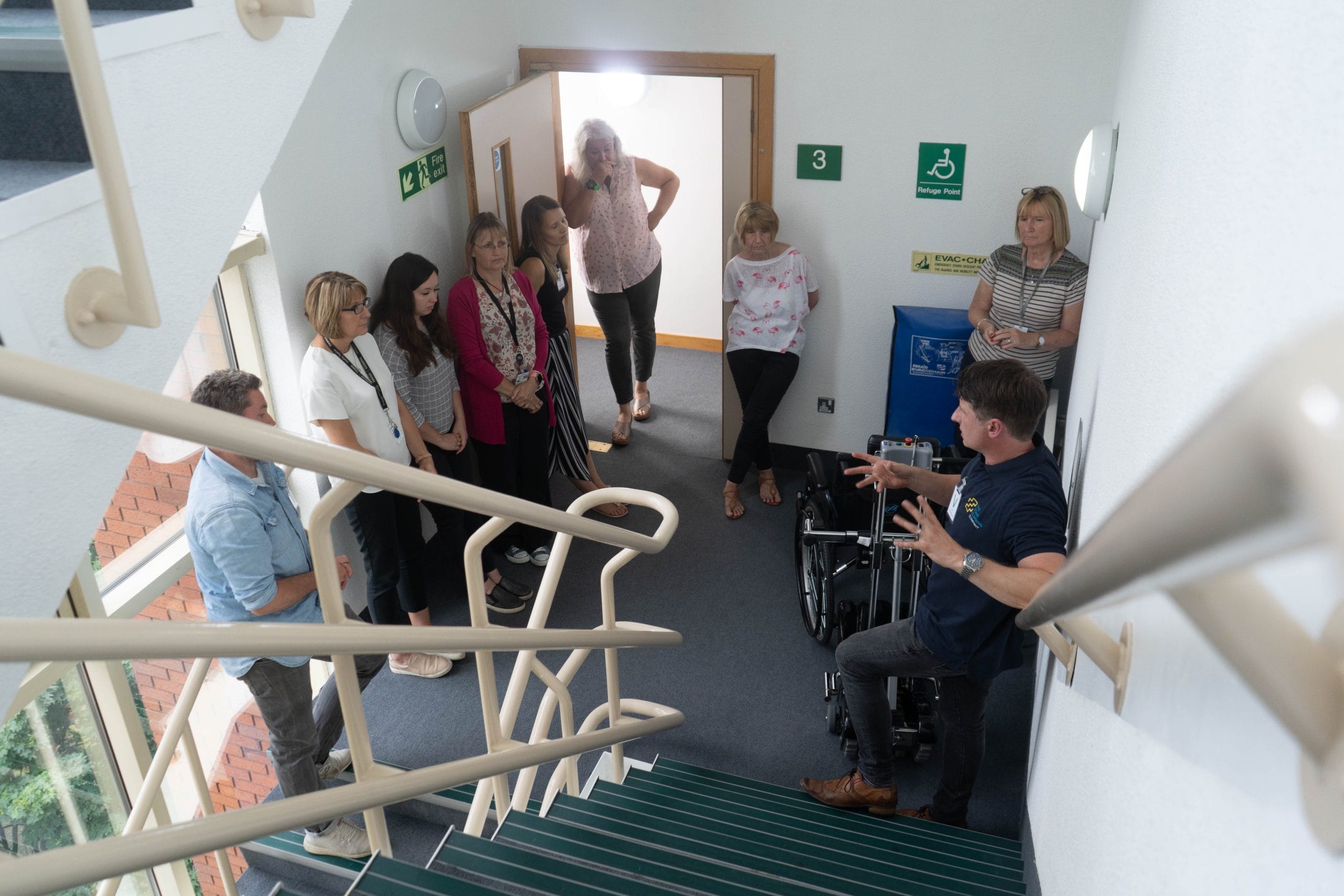
Even the best Powered Stair Climbers require proper training.
Staff should understand:
Regular refresher training and evacuation drills are essential.
Different buildings present different challenges.
Organisations should assess:
This ensures Powered Evac Chairs and Powered Stair Climbers can be deployed effectively during emergencies.
The most effective PEEPs are developed collaboratively.
Wheelchair users should be involved in discussions about:
This helps build more realistic and respectful evacuation procedures.
Inclusive evacuation is evolving rapidly.
Organisations are moving away from minimum compliance approaches and focusing more on practical, user-centred evacuation planning.
Powered Stair Climbers and Powered Evacuation Chairs are becoming increasingly important because they help bridge the gap between accessibility, safety, and dignity.
As technology continues to improve, powered evacuation equipment is becoming:
At the same time, awareness around non-transferable wheelchair evacuation is growing.
Many organisations are now recognising that true accessibility must include safe evacuation.
Many buildings still rely entirely on standard evacuation chairs that may not be suitable for all users.
Reviewing evacuation equipment can help organisations:
Powered stair climbers are no longer viewed as specialist niche products. They are increasingly seen as practical, inclusive evacuation tools.
Creating truly inclusive evacuation procedures means recognising that different wheelchair users have different needs.
For non-transferable wheelchair users, standard evacuation methods may not always provide safe or dignified solutions. Powered Stair Climbers, Powered Stairclimbers, Powered Evac Chairs, and Powered Evacuation Chairs offer organisations a more inclusive approach to emergency planning.
By incorporating powered evacuation equipment into PEEPs, organisations can improve safety, reduce manual handling risks, and create more realistic evacuation procedures that support accessibility and equality.
As awareness continues to grow around inclusive evacuation, Powered Stair Climbers are becoming an increasingly valuable part of modern emergency preparedness.
For organisations reviewing their evacuation strategies, now is the ideal time to assess whether existing evacuation equipment truly meets the needs of all building users.
Powered Stair Climbers are motorised devices designed to transport wheelchair users safely on stairs during emergency evacuation or access situations.
Yes. Many Powered Stair Climbers are specifically designed to support non-transferable wheelchair users who cannot safely transfer into standard evacuation chairs.
Powered Evac Chairs use battery-powered assistance to improve stair movement, reduce operator effort, and provide smoother evacuation compared to manual evacuation chairs.
Powered Stairclimbers help organisations create safer and more inclusive Personal Emergency Evacuation Plans for wheelchair users with complex mobility needs.
Yes. Powered Evacuation Chairs can significantly reduce the physical effort required by operators during stair evacuation procedures.
Powered Stair Climbers for Workplace Access in London Need to create wheelchair access in a London workplace? Book a free …
Powered Stair Climbers for Workplace Access: Removing Barriers Without Major Building Work Need to improve wheelchair access in your workplace? …

Powered Stair Climbers for Wheelchair Access: A Flexible Way to Overcome Stairs Need to create wheelchair access where stairs are …

Part M Stair Climbers for London Buildings: Accessible Retrofit Without Major Structural Change Improving accessibility in an existing London building? …

Part M Stair Climbers for Retrofit Buildings: Creating Accessible Buildings Without Major Structural Change Retrofitting an existing building and struggling …
Part M Stair Climbers for London Retrofit Buildings: Practical Access in Constrained Spaces Discuss a London Access Assessment Retrofitting a …