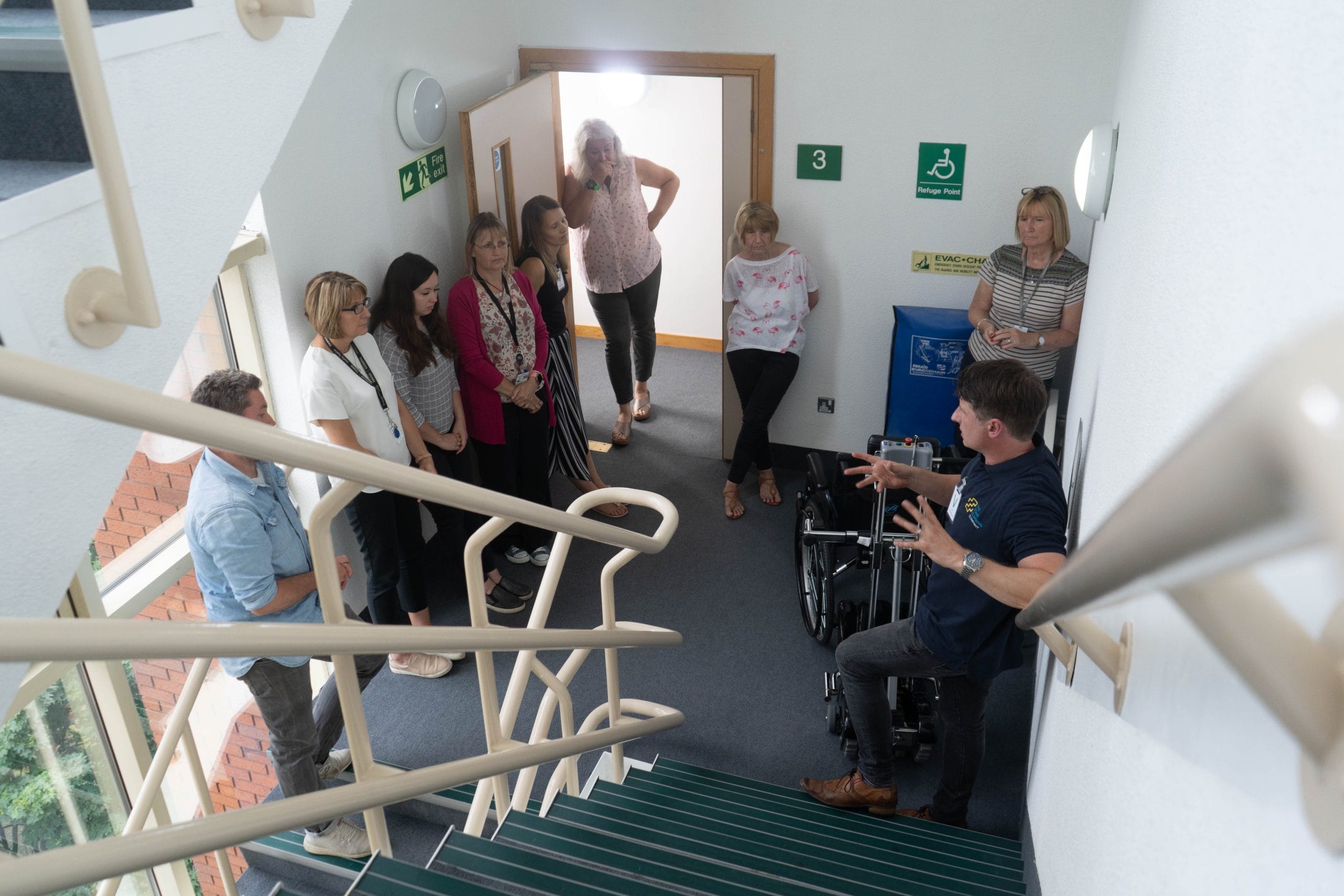
Powered Stair Climbers for Workplace Access: Removing Barriers Without Major Building Work
Powered Stair Climbers for Workplace Access: Removing Barriers Without Major Building Work Need to improve wheelchair access in your workplace? …

Many organisations assume all evacuation chairs perform the same function.
In reality, there is a significant difference between a traditional evacuation chair and a modern Powered Evac Chair solution.
Understanding this difference can dramatically improve emergency preparedness and accessibility compliance.
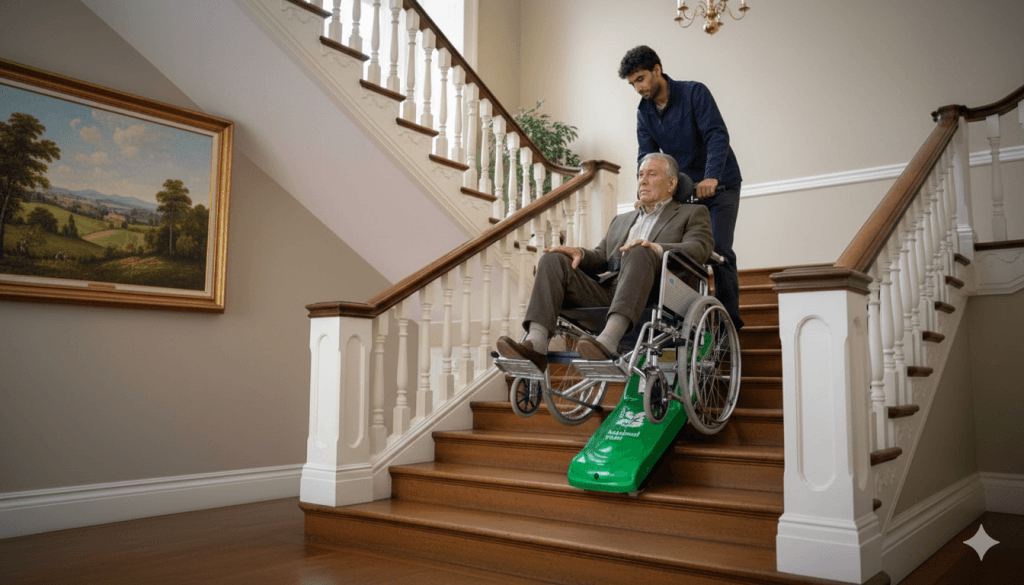
Many organisations assume all evacuation chairs perform the same function.
In reality, there is a significant difference between a traditional evacuation chair and a modern Powered Evac Chair solution.
Understanding this difference can dramatically improve emergency preparedness and accessibility compliance.
Traditional evacuation chairs rely primarily on gravity and manual control.
They typically require:
While they can be effective in certain situations, they may not be suitable for every wheelchair user.
A Powered Evacuation Chair uses advanced motorised technology to assist movement on stairs.
Benefits include:
Powered systems do much of the work, reducing physical strain.
Controlled stair descent helps minimise risk.
Smooth operation reduces sudden movements.
Many powered systems can facilitate non-transfer evacuation.
Every Personal Emergency Evacuation Plan should consider:
A Powered Stair Climber solution often provides greater flexibility than traditional methods.
Increasingly, employers are recognising the benefits of:
These benefits align closely with modern health and safety objectives.
The ability to evacuate someone while they remain in their own wheelchair is one of the biggest advancements in evacuation planning.
The Stair Climbing Company specialises in systems that make this possible.
Employers benefit from:
Not all Powered Evac Chair suppliers understand the complexities of PEEPs.
The Stair Climbing Company focuses specifically on real-world evacuation challenges and provides expert guidance, demonstrations, assessments and training.
This ensures organisations receive a solution that works when it matters most.
When evaluating emergency evacuation equipment, organisations should look beyond basic compliance.
The best solution is one that delivers safety, dignity and practicality.
For many wheelchair users, that means a Powered Evacuation Chair system capable of supporting non-transfer evacuation.
Estimated reading time: 3 minutes
Powered Stair Climbers for Workplace Access: Removing Barriers Without Major Building Work Need to improve wheelchair access in your workplace? …

Powered Stair Climbers for Wheelchair Access: A Flexible Way to Overcome Stairs Need to create wheelchair access where stairs are …

Part M Stair Climbers for London Buildings: Accessible Retrofit Without Major Structural Change Improving accessibility in an existing London building? …

Part M Stair Climbers for Retrofit Buildings: Creating Accessible Buildings Without Major Structural Change Retrofitting an existing building and struggling …
Part M Stair Climbers for London Retrofit Buildings: Practical Access in Constrained Spaces Discuss a London Access Assessment Retrofitting a …

Part M Stair Climber Access: Creating More Inclusive Buildings Without Losing Flexibility Creating an accessible building is rarely about a …