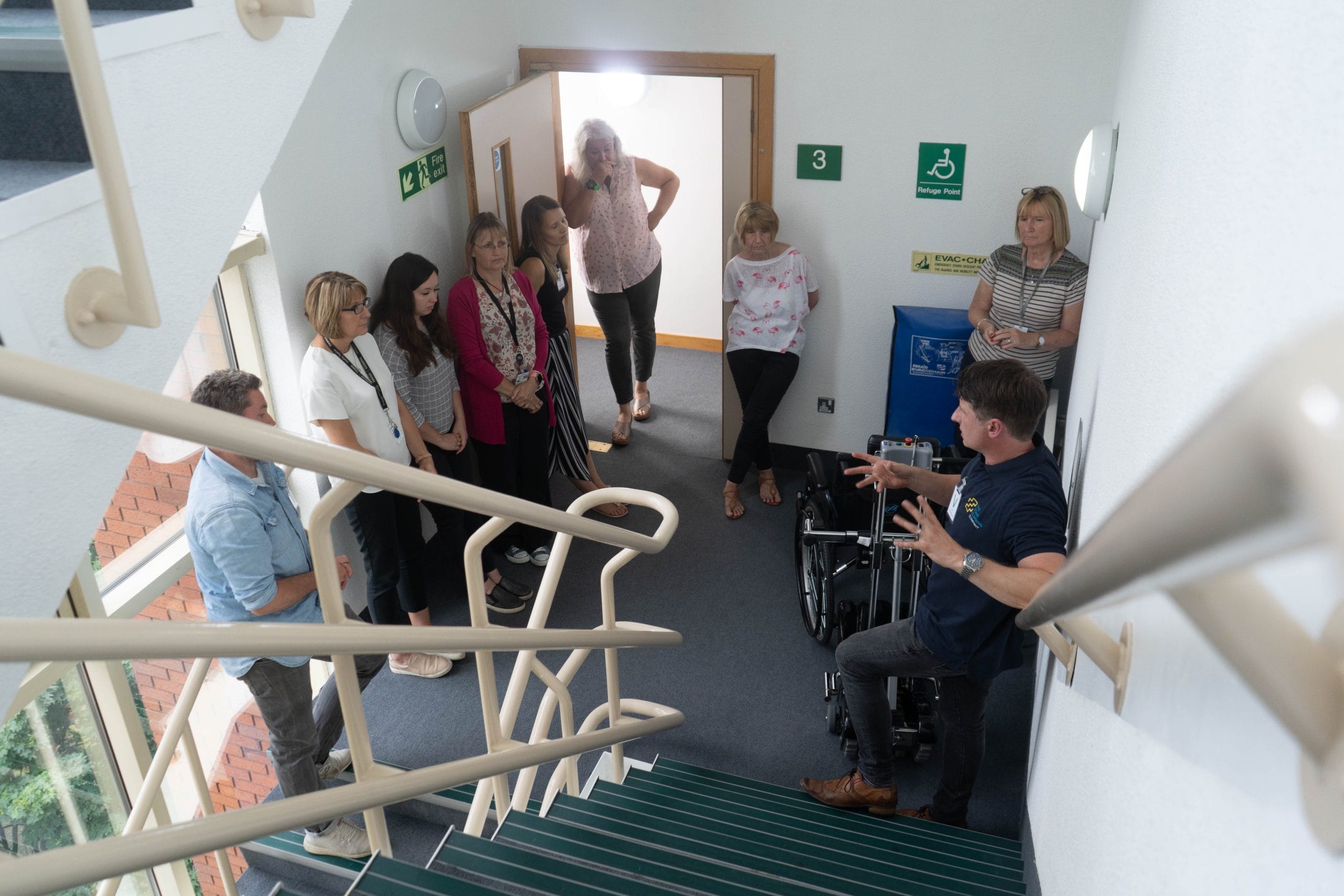
Powered Stair Climbers for Workplace Access: Removing Barriers Without Major Building Work
Powered Stair Climbers for Workplace Access: Removing Barriers Without Major Building Work Need to improve wheelchair access in your workplace? …

As accessibility and independent living continue to rise up the healthcare agenda, stair climbers for OTs are becoming an essential tool in assessment, intervention, and long term care planning. By 2026, Occupational Therapists across the UK will increasingly rely on stair climbing solutions to support service users of all ages in remaining safely at home. From paediatric cases through to elderly individuals, stair climbers provide flexibility, dignity, and measurable outcomes that traditional adaptations cannot always deliver.
This growing reliance highlights why stair climbers for Occupational Therapists are no longer viewed as niche equipment but as a core part of holistic occupational therapy practice.
Occupational Therapists are tasked with enabling people to live meaningful lives within their own environments. Stairs remain one of the biggest barriers to independence in the home. Structural alterations such as lifts or rehousing are not always practical, affordable, or timely.
Stairclimbers for OTs offer a non invasive solution that can be implemented quickly while maintaining flexibility as needs change. Unlike fixed adaptations, stair climbers move with the service user and adapt to different environments, making them ideal for short term intervention, long term support, or progressive conditions.
For OTs, this means improved clinical outcomes, greater choice for families, and reduced pressure on housing stock and social care budgets.
For children with disabilities, remaining at home and engaging in family life is crucial to emotional and developmental wellbeing. Stair climbers for Occupational Therapists enable children to access all areas of the home without compromising safety or dignity.
Paediatric stair climbers can be paired with specialist seating systems to provide postural support, head control, and trunk stability. This ensures that even children with complex physical needs can be transported safely between floors. For parents and carers, this reduces the physical strain of manual handling and lowers the risk of injury.
From an OT perspective, stair climbers for OTs allow therapy goals to be met within the real world home environment. Children can participate fully in bedtime routines, family gatherings, and play without restriction to one level of the house.
Adults living with neurological conditions, spinal injuries, or progressive illnesses often face the challenge of reduced mobility while wanting to remain at home. Stairclimbers for Occupational Therapists provide a practical alternative to moving house or installing major adaptations that may not suit long term prognosis.
For individuals recovering from trauma or surgery, stair climbers can support temporary mobility needs while rehabilitation progresses. For those with degenerative conditions, stair climbers allow Occupational Therapists to adapt care plans as abilities change over time.
The adaptability of stair climbers for OTs makes them particularly valuable in complex cases where future mobility is uncertain.
As the population ages, enabling people to remain safely at home is a key priority for health and social care services. Stairs present a significant fall risk for older adults, yet many live in multi storey homes where downsizing is neither desirable nor feasible.
Stair climbers for Occupational Therapists allow elderly service users to access bedrooms and bathrooms upstairs without fear or dependence on others. This preserves dignity, independence, and quality of life.
For OTs working with older adults, stair climbers offer a solution that reduces hospital admissions, prevents falls, and delays the need for residential care. The result is better outcomes for individuals and cost savings for care providers.
Looking ahead to 2026, the role of stair climbers for OTs will only continue to grow. Increased emphasis on community based care, hospital discharge planning, and inclusive living environments places Occupational Therapists at the centre of decision making.
Stair climbers align perfectly with these priorities. They are adaptable, portable, and suitable for a wide range of users. Importantly, they allow OTs to focus on ability rather than limitation.
By incorporating stair climbers for Occupational Therapists into standard assessment pathways, OTs can offer solutions that are immediate, evidence based, and centred on the individual.
From paediatric care through to elderly support, stair climbers represent one of the most versatile tools available to modern Occupational Therapists. As we move into 2026, their use will become increasingly integral to enabling safe, inclusive, and independent living at home.
By embracing stairclimbers for OTs, Occupational Therapists can deliver meaningful change, reduce environmental barriers, and support service users to live life without being limited by stairs.
Stair climbers are not simply equipment. They are a pathway to independence for people of all ages.
Powered Stair Climbers for Workplace Access: Removing Barriers Without Major Building Work Need to improve wheelchair access in your workplace? …

Powered Stair Climbers for Wheelchair Access: A Flexible Way to Overcome Stairs Need to create wheelchair access where stairs are …

Part M Stair Climbers for London Buildings: Accessible Retrofit Without Major Structural Change Improving accessibility in an existing London building? …

Part M Stair Climbers for Retrofit Buildings: Creating Accessible Buildings Without Major Structural Change Retrofitting an existing building and struggling …
Part M Stair Climbers for London Retrofit Buildings: Practical Access in Constrained Spaces Discuss a London Access Assessment Retrofitting a …

Part M Stair Climber Access: Creating More Inclusive Buildings Without Losing Flexibility Creating an accessible building is rarely about a …
Estimated reading time: 5 minutes