Powered Stair Climbers for Workplace Access: Removing Barriers Without Major Building Work
Powered Stair Climbers for Workplace Access: Removing Barriers Without Major Building Work Need to improve wheelchair access in your workplace? …

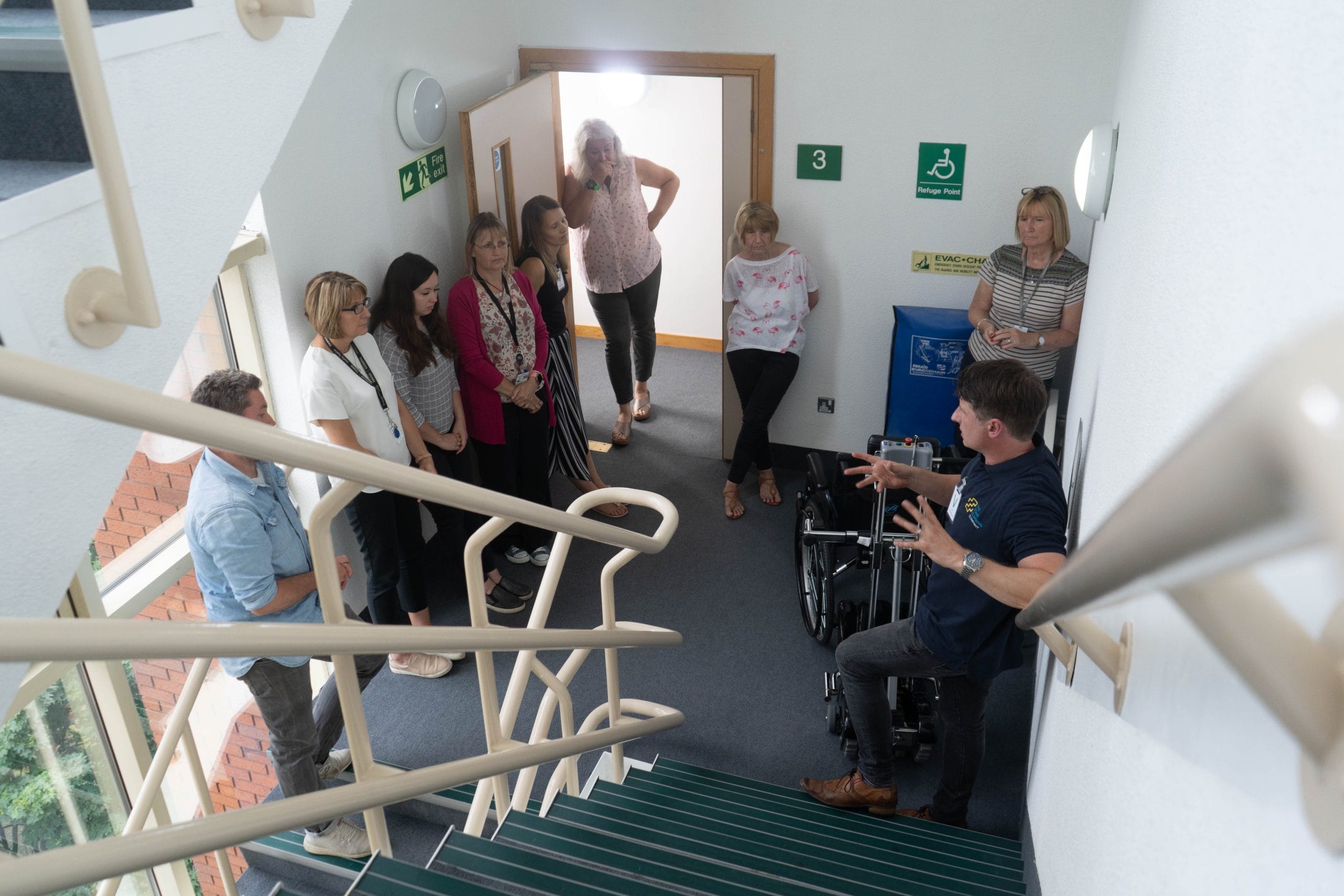
Stair climbers are playing an increasingly important role in improving access for wheelchair users and less able people. In community healthcare, speed and safety are critical. For Occupational Therapists, gaining quick access to upper floors in residential and public buildings can significantly impact assessment quality, discharge timelines, and overall patient outcomes. Stairclimbers provide a practical, portable solution where lifts or permanent adaptations are not yet available.
This blog explores how Stair climbers for Wheelchair users enhance independence, how Stairclimbers for Occupational Therapists improve field efficiency, and why stair climbers for OTs are becoming essential tools in modern community practice.
Despite improvements in accessibility standards, many homes and community buildings remain difficult to navigate. Common barriers include:
For wheelchair users and less able individuals, stairs often prevent full access to their own homes. This can delay therapy assessments, hospital discharge, and equipment provision.
While long term solutions such as stairlifts or through floor lifts are valuable, they require funding approval and installation time. Stair climbers provide an immediate, mobile solution that supports both clients and clinicians during this interim period.
Stair climbers are powered mobility devices designed to safely transport wheelchair users or seated individuals up and down stairs. Modern Stairclimbers are engineered with safety and control in mind and typically include:
Some Stair climbers attach directly to a manual wheelchair, while others use an integrated seat system. For Occupational Therapists working in varied environments, this flexibility is key.
Occupational Therapists frequently work in clients’ homes to assess function, safety, and environmental suitability. However, when bedrooms or bathrooms are located upstairs, access can be restricted.
Stair climbers for Occupational Therapists enable safe access without waiting for permanent adaptations. This provides immediate benefits to both therapists and clients.
Stairclimbers for Occupational Therapists allow clinicians to assess the entire property during the first visit. This means:
By using stair climbers for OTs, therapists can gather essential information efficiently and reduce service delays.
Manual handling on stairs presents a high risk of injury. Attempting to assist a wheelchair user without appropriate equipment increases strain and compromises safety.
Stair climbers significantly reduce physical demand by providing powered assistance and stability. For Occupational Therapists, this protects:
Stairclimbers for Occupational Therapists are designed to prioritise operator safety alongside patient security.
Delayed discharge is often linked to concerns about home access. Stair climbers allow OTs to test real world stair access safely before permanent adaptations are installed.
Benefits include:
Stair climbers for Occupational Therapists act as an effective bridge between hospital and home.
For wheelchair users, the ability to access upper floors restores more than mobility. It supports:
Stairclimbers offer a solution that maintains independence when relocation is not feasible. In rehabilitation settings, Stair climbers may provide temporary access during recovery, reducing the need for immediate structural changes.
When selecting Stair climbers for Occupational Therapists, several features should be considered.
High quality Stairclimbers include advanced braking systems, anti slip tracks, and secure fastening points. Compliance with relevant safety standards is essential.
Therapists working in the community require equipment that can be transported easily. Lightweight components and foldable frames increase usability.
Some stair climbers attach directly to existing wheelchairs, which may reduce transfer needs. Others require transfer to a dedicated seat. OTs should consider posture support, cognitive ability, and transfer safety.
Professional training ensures safe operation. Reputable providers of Stair climbers for Occupational Therapists offer demonstrations and certification to maintain best practice.
Domestic stairs vary in width, steepness, and landing space. Versatile Stairclimbers that perform well in tight spaces provide greater clinical value.
Investing in stair climbers for OTs delivers broader organisational benefits:
Stairclimbers for Occupational Therapists support efficient service delivery while maintaining high safety standards.
Yes, when used following proper assessment and training. OTs must evaluate each individual’s physical stability and medical suitability before use.
Modern Stair climbers are designed with intuitive controls and powered assistance. With appropriate training, therapists can operate them confidently and safely.
Many Stairclimbers are specifically engineered for typical UK domestic staircases, making them highly suitable for community practice.
As healthcare continues to shift towards home based services, the demand for rapid, flexible access solutions will grow. Stair climbers for Occupational Therapists align with modern care priorities, including:
Stair climbers for Wheelchair users provide immediate, practical access where permanent solutions are delayed or impractical.
Stair climbers are an essential mobility solution for wheelchair users and less able individuals facing stair access barriers. For Occupational Therapists, Stairclimbers for Occupational Therapists enhance efficiency, protect staff safety, and improve patient outcomes.
By integrating stair climbers for OTs into community services, organisations can deliver quicker assessments, safer manual handling practices, and smoother discharge pathways. As accessibility demands continue to rise, Stair climbers and Stairclimbers will remain vital tools in supporting inclusive, responsive care.
Powered Stair Climbers for Workplace Access: Removing Barriers Without Major Building Work Need to improve wheelchair access in your workplace? …

Powered Stair Climbers for Wheelchair Access: A Flexible Way to Overcome Stairs Need to create wheelchair access where stairs are …

Part M Stair Climbers for London Buildings: Accessible Retrofit Without Major Structural Change Improving accessibility in an existing London building? …

Part M Stair Climbers for Retrofit Buildings: Creating Accessible Buildings Without Major Structural Change Retrofitting an existing building and struggling …
Part M Stair Climbers for London Retrofit Buildings: Practical Access in Constrained Spaces Discuss a London Access Assessment Retrofitting a …

Part M Stair Climber Access: Creating More Inclusive Buildings Without Losing Flexibility Creating an accessible building is rarely about a …
Estimated reading time: 6 minutes