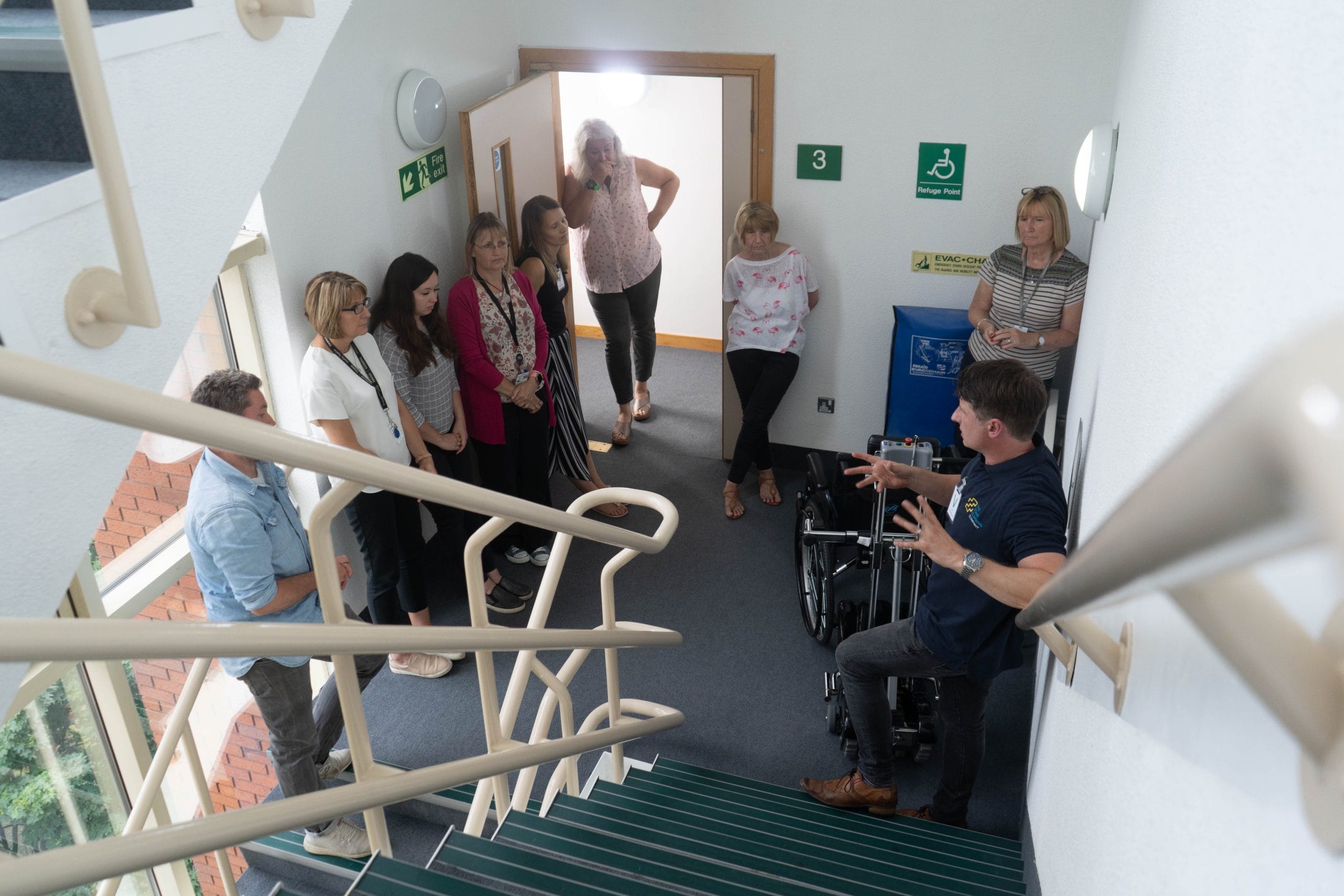
Powered Stair Climbers for Workplace Access: Removing Barriers Without Major Building Work
Powered Stair Climbers for Workplace Access: Removing Barriers Without Major Building Work Need to improve wheelchair access in your workplace? …

Stair climbers for OTs are becoming an essential access solution for enabling service users to live safely and independently in their own homes. For occupational therapists, the challenge of managing stair access is one of the most common and complex barriers to independence. Many homes in the UK and beyond are built across multiple levels, yet reduced mobility, injury, or long term conditions can make stairs inaccessible.
Stairclimbers for OTs provide a practical, flexible, and cost effective way to overcome this barrier without major home adaptations. By enabling safe stair access, these devices can have a profound impact on a service user’s quality of life, confidence, and ability to engage in everyday activities.
This article explores how stair climbers for OTs support service users in the home, the benefits they bring, and why they are becoming a key part of modern access solutions.
For many service users, stairs represent more than just a physical obstacle. They can become a dividing line between independence and restriction. Bedrooms, bathrooms, and essential living spaces are often located upstairs, making stair access critical for maintaining a normal routine.
When stair access is compromised, service users may face:
Occupational therapists are often tasked with finding solutions that balance safety, independence, and practicality. Traditional options such as stairlifts or structural adaptations are not always suitable due to cost, time, or property limitations.
This is where stair climbers for OTs offer a highly effective alternative.
Stair climbers are portable devices designed to transport individuals safely up and down stairs while seated in a wheelchair or transfer chair. They are typically operated by a trained assistant and use advanced technology to maintain stability and control during movement.
For occupational therapists, stairclimbers for OTs provide a versatile tool that can be used across a wide range of environments, including:
Unlike fixed installations, stair climbers require no structural changes, making them ideal for both short term and long term use.
One of the most significant impacts of stair climbers is restoring access to all areas of the home. Service users can return to sleeping in their own bedroom, using their preferred bathroom, and accessing personal belongings.
This simple change can dramatically improve wellbeing and a sense of normality.
Independence is a core goal of occupational therapy. Stair climbers for OTs support this by reducing the need for intrusive adaptations or constant assistance.
Service users can remain in familiar surroundings while maintaining dignity and control over their daily routines.
Falls on stairs are a major concern for both service users and healthcare professionals. Stair climbers provide a controlled and secure method of stair access, significantly reducing risk.
For OTs, this aligns with key safety objectives and risk management strategies.
Access to stairs is closely linked to social participation within the home. Without it, individuals may become confined to a single room or floor.
By enabling movement throughout the home, stairclimbers for OTs help service users stay connected with family and daily activities.
Manual handling on stairs is physically demanding and potentially hazardous. Stair climbers reduce the strain on carers by providing a safe and ergonomic solution.
This can help prevent injury and improve the sustainability of care arrangements.
One of the key advantages of stair climbers is that they do not require permanent installation. This makes them suitable for:
For occupational therapists, this flexibility is invaluable when working within constraints.
Stairlifts and home adaptations can involve significant expense and long waiting times. Stair climbers offer a more immediate and often more affordable access solution.
This allows OTs to implement timely interventions that deliver real impact.
Service users’ needs can evolve over time. Stair climbers can adapt to different levels of mobility and can be used across multiple settings.
This makes them a future proof option within a broader care plan.
When assessing stair access solutions, occupational therapists must consider a range of factors:
Understanding the service user’s physical capabilities is essential. Stair climbers can accommodate a wide range of needs, but proper assessment ensures safe and effective use.
The design and condition of the staircase play a crucial role. Stair climbers are compatible with many stair types, including straight and curved designs, but each case should be evaluated individually.
A thorough risk assessment is key to determining suitability. This includes evaluating transfer techniques, operator training, and overall safety.
Proper training for carers and staff is essential to maximise the benefits of stair climbers. Many providers offer comprehensive training to ensure safe operation.
Consider a service user recovering from a stroke who is unable to safely navigate stairs. Without a solution, they may be confined to a downstairs living space, relying heavily on carers.
With the introduction of a stair climber, the individual can access their bedroom and bathroom upstairs. This restores routine, improves sleep quality, and enhances overall wellbeing.
For the occupational therapist, this intervention supports key goals such as independence, safety, and quality of life.
As healthcare continues to shift towards community based care, the importance of effective home access solutions is growing. Stair climbers for OTs align perfectly with this trend by enabling individuals to remain in their own homes.
They support:
This makes them a valuable addition to the occupational therapy toolkit.
When selecting stairclimbers for OTs, it is important to consider:
Working with a specialist provider can help ensure the right solution is chosen for each service user.
Stair Climbers for OTs and Stair Access Solutions
From an industry perspective, stair climbers for OTs are increasingly recognised as a key component of stair access and broader access solutions.
Search terms such as stair climbers for OTs, stairclimbers for OTs, access solutions, and stair access are becoming more relevant as awareness grows.
For organisations and professionals, understanding these solutions is essential for delivering effective care.
Advancements in technology are continuing to improve the performance and usability of stair climbers. Innovations include enhanced safety features, improved battery life, and more intuitive controls.
As these developments continue, stairclimbers for OTs will play an even greater role in enabling independence at home.
Stair climbers for OTs are transforming the way occupational therapists approach stair access challenges in the home. By providing a flexible, safe, and effective access solution, they enable service users to regain independence and engage fully in everyday life.
For occupational therapists, stairclimbers for OTs offer a practical tool that aligns with core professional goals. They support safety, dignity, and participation while reducing the need for costly and disruptive adaptations.
As demand for community based care continues to grow, stair climbers will remain a vital part of modern access solutions and a key enabler of stair access for service users across a wide range of needs.
Powered Stair Climbers for Workplace Access: Removing Barriers Without Major Building Work Need to improve wheelchair access in your workplace? …

Powered Stair Climbers for Wheelchair Access: A Flexible Way to Overcome Stairs Need to create wheelchair access where stairs are …

Part M Stair Climbers for London Buildings: Accessible Retrofit Without Major Structural Change Improving accessibility in an existing London building? …

Part M Stair Climbers for Retrofit Buildings: Creating Accessible Buildings Without Major Structural Change Retrofitting an existing building and struggling …
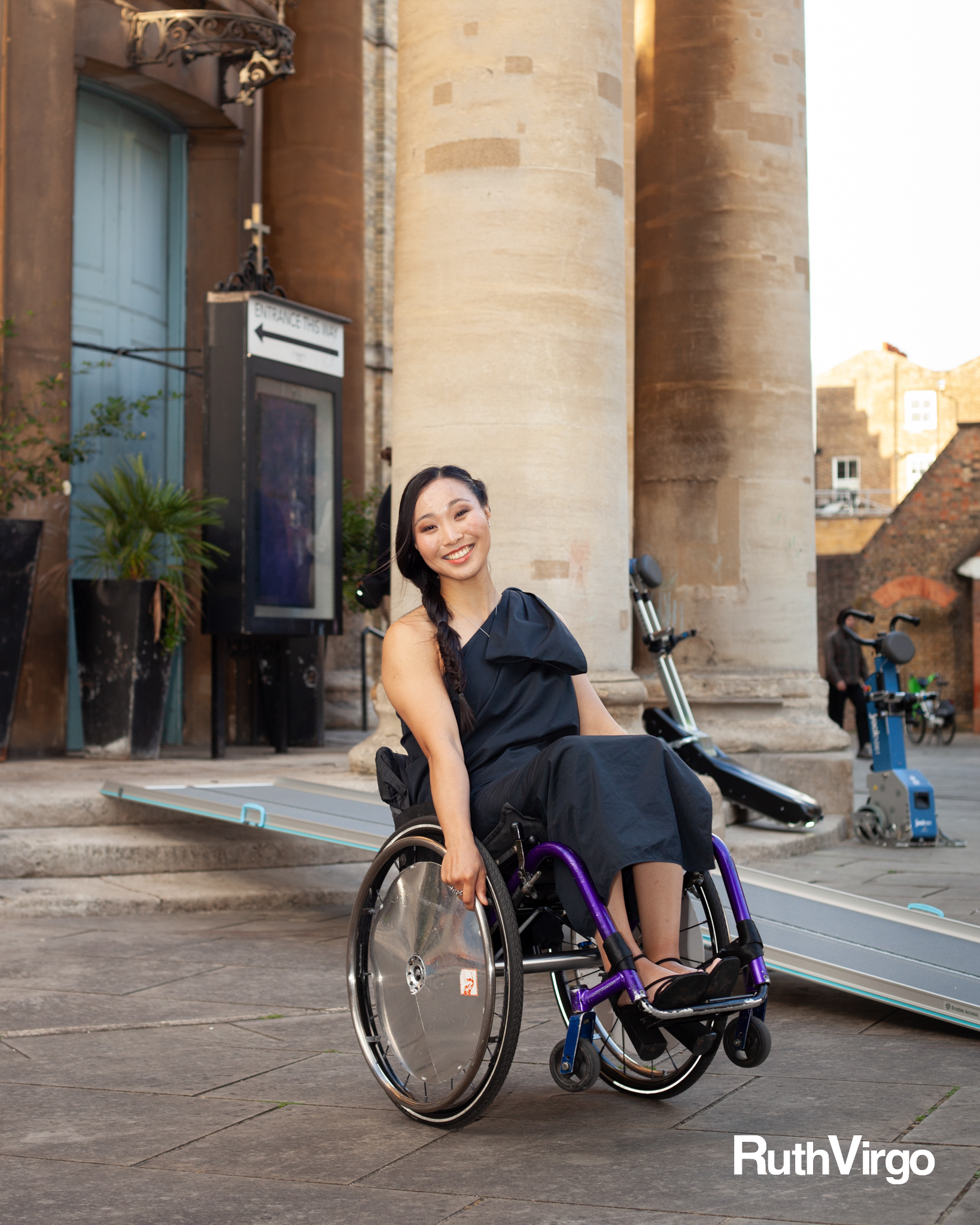
Part M Stair Climbers for London Retrofit Buildings: Practical Access in Constrained Spaces Discuss a London Access Assessment Retrofitting a …

Part M Stair Climber Access: Creating More Inclusive Buildings Without Losing Flexibility Creating an accessible building is rarely about a …
Estimated reading time: 7 minutes