Powered Stair Climbers for Workplace Access: Removing Barriers Without Major Building Work
Powered Stair Climbers for Workplace Access: Removing Barriers Without Major Building Work Need to improve wheelchair access in your workplace? …

Need to create wheelchair access in a London workplace? Book a free site assessment with The Stair Climbing Company or contact our access specialists. We assess the wheelchair user, staircase and proposed operator before recommending a suitable powered stair climber for hire or purchase.
London workplaces are found in almost every type of building. Modern towers stand beside Georgian townhouses, Victorian warehouses, listed offices, converted shops, hotels and mixed-use developments. Many have been adapted several times, leaving internal steps, basement rooms, mezzanines and upper floors that are difficult for wheelchair users to reach.
Installing a passenger lift, platform lift or permanent ramp may be the ideal solution, but it is not always practical. Space can be extremely limited, structural work may be restricted, the employer may occupy rented premises or access may be needed while a larger retrofit is planned.
A powered stair climber for workplace access in London can offer a flexible alternative. These battery-powered machines move a person up and down a suitable staircase with assistance from a trained operator. Non-transfer models attach to compatible wheelchairs, allowing the user to remain in their own chair throughout the journey.
This can help employers and facilities managers remove a real access barrier without waiting for major construction. The solution still requires careful assessment, consultation with the wheelchair user, trained operator cover and planned maintenance.
For a wider overview of the technology and comparisons with stair lifts, ramps and platform lifts, read our complete guide to stair climbers and stair-climbing wheelchairs.
London’s commercial buildings often make access more complicated than it first appears. A building may have a step-free main entrance and passenger lift but still contain an inaccessible meeting suite, basement dining area or raised event space. In a multi-tenanted property, lifts may not serve every section or may require a long route through another occupier’s area.
Older offices in Westminster, Kensington or the City may have narrow staircases and small landings. Converted industrial buildings in Shoreditch, Clerkenwell or Bermondsey can include mezzanines and changes in level. Hotels, galleries and private members’ venues may need to protect historic features while improving access for staff and guests.
A ground-floor alternative may help immediately, but it can leave an employee excluded from team spaces, training and facilities. A practical adjustment should support participation in the workplace as it is genuinely used.
The Equality Act 2010 duty to make reasonable adjustments is an important part of workplace accessibility. An adjustment should remove or reduce the disadvantage experienced by the individual, and the employee should be involved in deciding what will work.
Acas guidance on reasonable adjustments explains that employers may need to change a workplace, alter working arrangements or provide suitable equipment and support. What is reasonable depends on the person and the circumstances.
A powered stair climber may be appropriate when it gives a wheelchair user dependable access and can be operated safely. It should not be chosen simply because it costs less than a lift. The employer must consider independence, frequency of use, operator availability and whether the person finds the proposed method acceptable.
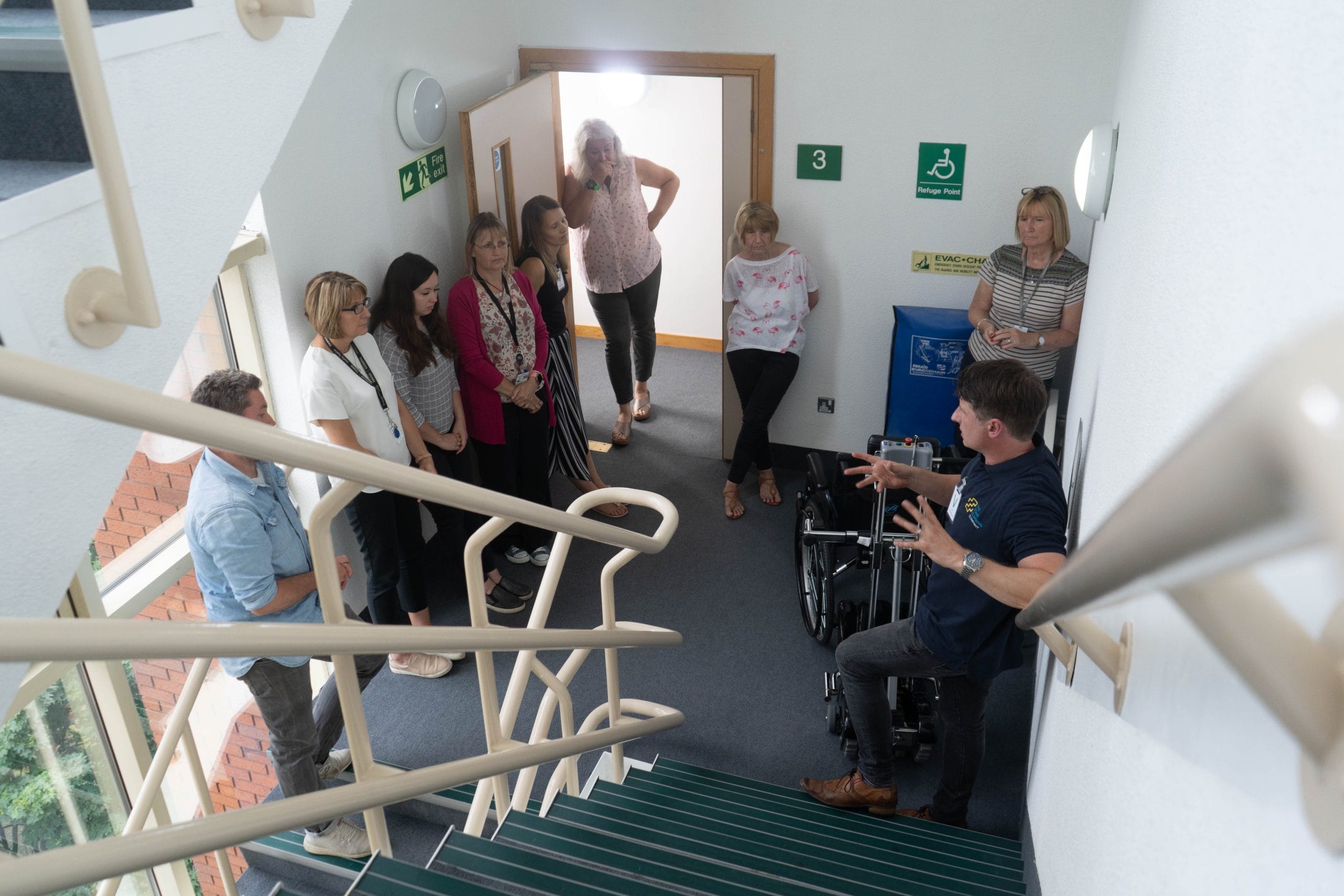
A powered stair climber uses a rechargeable battery to drive a tracked or stepping climbing system. The motor supplies the movement, while a trained operator positions and guides the equipment.
Tracked stair climbers maintain contact across several stair edges and are often used for non-transfer access on suitable straight flights. The wheelchair is secured to the machine using the approved attachment system so the passenger stays in their own seat.
The Skyline powered stair climber can accommodate a range of compatible wheelchairs. This may be particularly valuable for employees who use specialist seating for posture, pain or pressure management and cannot transfer easily into a standard seat.
Stepping stair climbers move between individual steps using a powered mechanism. Their compact design may suit some narrower or turning staircases. Models can include an integrated seat or wheelchair attachment, depending on the user and building.
The Skyclimber range provides powered options for varied access requirements. The right choice can only be confirmed after examining the whole route and trialling the machine in the real environment.
Transferring out of a wheelchair may be uncomfortable, undignified or unsafe. A person may use a highly supportive seating system, require a hoist or be unable to maintain a suitable position in a basic seat.
A non-transfer powered stair climber can remove this additional movement where the wheelchair is compatible. It may also reduce manual handling demands on colleagues because the electric motor controls the climbing action.
Compatibility must never be assumed. The assessment must consider the wheelchair frame, dimensions, weight, accessories, attachment points and combined load. A powered chair can be heavier and shaped differently from a manual wheelchair, so model selection is critical.
Large London offices often involve landlords, managing agents, facilities teams and individual employers. Each party may control a different part of the route. A tenant can agree to provide a stair climber but still need permission for storage, charging or access through a shared area.
Responsibilities should identify who owns the equipment, arranges servicing, operates it and manages requests. Reception, security and facilities staff may all need to understand the arrangement.
Operator availability is particularly important in hybrid workplaces. A system that depends on one trained facilities manager may fail during leave, early starts, evening events or days when that person works elsewhere. Several suitable staff members may need training to provide dependable coverage.
London contains thousands of listed buildings and many more properties within conservation areas. These buildings are a major part of the capital’s character, but steps, narrow stairs and protected interiors can make permanent access alterations difficult.
Historic England’s guidance on improving access to historic buildings encourages owners and designers to understand both user needs and the significance of the property. Effective access often requires creative consideration of several options.
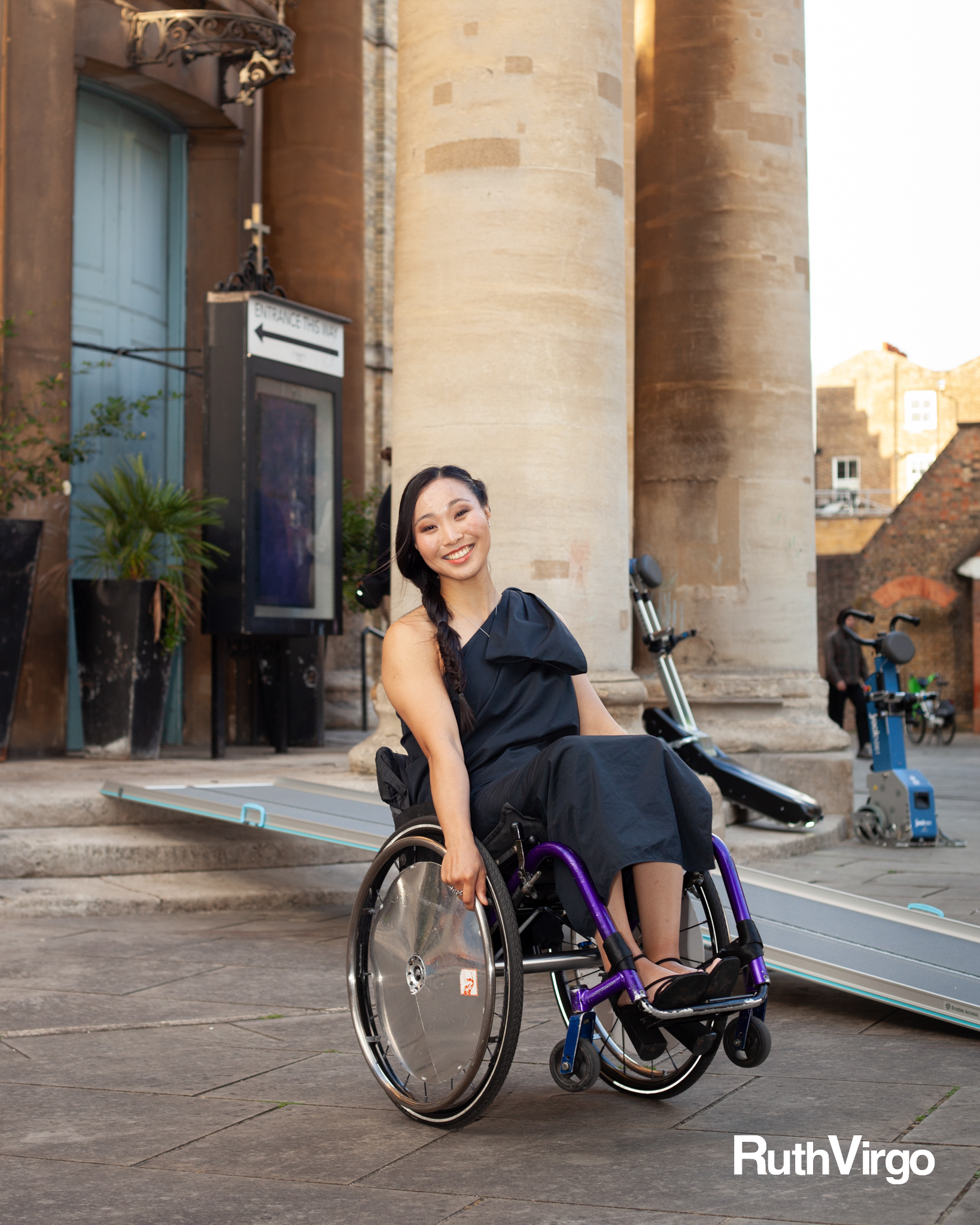
A portable powered stair climber can sometimes provide access without fixing a rail to the staircase or altering historic fabric. It can be stored away and brought into use by trained staff when needed. This may suit listed offices, hotels, galleries, cultural buildings and venues where physical intervention must be limited.
The machine still needs to be trialled on the actual route. Historic stair nosings, delicate surfaces, tight turns and small landings all require attention. The objective is to protect the passenger and operator while avoiding damage to the building.
The London Plan places inclusive design within the capital’s planning framework. In the Square Mile, the City of London’s inclusive-design guidance also supports environments that can be used safely, easily and with dignity.
For new developments and major refurbishments, accessibility should be integrated from the beginning. A powered stair climber is not a replacement for an inclusive entrance or step-free route where these are feasible and required. Its strength lies in existing buildings, temporary situations and lift failures.
Government guidance in Approved Document M provides the baseline approach to access and use for building work in England. Employers, owners and designers should examine the wider legal and planning context rather than treating any single item of equipment as complete compliance.
A platform lift may provide frequent and potentially independent wheelchair access. It is often preferable when demand is high, sufficient space exists and permanent installation is realistic. The challenges include construction, planning, electrical work, maintenance and disruption.
A permanent ramp can also support independence. In dense London sites, however, achieving a suitable gradient may require more length and landing space than the boundary or pavement allows.
A fixed stair lift can suit a user who transfers safely and regularly uses one staircase. It requires a rail and remains tied to that flight. A wheelchair user may need a second chair at the destination level.
A powered stair climber normally requires little structural work and may be used on more than one compatible staircase. Non-transfer models allow the person to remain in their wheelchair. The main limitation is dependence on a trained operator.
The right answer depends on the person, frequency, building and long-term strategy. A stair climber may be an interim measure or the most proportionate solution for occasional access.
The Government’s Access to Work scheme may help an eligible disabled person obtain practical support to get or stay in work. Depending on individual circumstances, this can include specialist equipment, support workers or help with some workplace adaptations.
Access to Work does not replace the employer’s legal responsibility for reasonable adjustments. The employee and employer should establish eligibility and responsibilities early. The Stair Climbing Company can provide an assessment, demonstration and quotation based on the actual barrier.
Photographs and measurements are useful, but they cannot confirm the entire solution. A professional site assessment considers the approach, stair angle, width, treads, turns, handrails, doors, surfaces and landing space.
Furniture, reception desks, security gates and busy shared routes can affect safe positioning. Storage and charging space may also be scarce.
The assessment must consider the person and wheelchair as carefully as the staircase. Weight, posture, transfer ability, chair dimensions and attachment points are all relevant. The availability and capability of proposed operators must also be realistic.
A practical trial shows whether the equipment can be manoeuvred at every stage and gives the wheelchair user direct experience before a decision is made.
The Stair Climbing Company provides operator training on the selected model and intended route wherever possible. Training covers pre-use checks, positioning, wheelchair attachment, passenger communication, restraints and controlled operation.
Operators should initially practise without a passenger before progressing under supervision. Refresher sessions may be needed when trained staff leave, equipment changes or the machine is used infrequently.
The Health and Safety Executive’s PUWER guidance is relevant to the suitability, maintenance, inspection and operation of workplace equipment. Organisations should keep records, report defects and stop using a machine when its safety is uncertain.
Storage, battery charging and servicing must have named owners. Our aftercare support helps London organisations maintain their stair climber and keep it ready for use.
A powered stair climber supplied for normal workplace access should not automatically be included in a fire evacuation plan. Emergency conditions, unavailable routes and time pressures can change which method and equipment are appropriate.
The responsible person must assess evacuation separately. A disabled employee may need a Personal Emergency Evacuation Plan, supported by equipment and trained people suitable for the building’s fire strategy.
Keeping the two functions distinct prevents the unsafe assumption that any powered machine used on stairs is automatically suitable during an emergency.
Purchasing generally suits regular, long-term access. The employer or building manager controls availability but must manage charging, storage, operator cover, maintenance and refresher training.
Hire can support temporary injuries, short-term employees, conferences, events or passenger-lift failures. Our stair climber hire service can provide suitable temporary access following assessment and training.
For some London organisations, hire also creates a useful bridge while planning permission, landlord consent or construction work is being progressed.
The Stair Climbing Company has more than a decade of experience helping wheelchair users overcome stairs. We support employers, facilities managers, occupational therapists, hotels, heritage venues and public organisations across London and throughout England.
Our service begins with the individual and the environment. We assess the wheelchair, route and proposed operator, then demonstrate suitable seated or non-transfer equipment in the real building. Clients can choose hire or purchase with professional training and continued aftercare.
This complete process is particularly valuable in London, where buildings are complex, space is expensive and standard access solutions do not always fit. We focus on creating an arrangement that is safe, dignified and dependable rather than simply supplying a machine.
An inaccessible staircase should not prevent a wheelchair user from working, attending a meeting or taking part in an event. Where permanent changes are difficult or cannot be delivered immediately, a powered stair climber may provide a practical route forward.
The right result depends on professional assessment, consultation with the user, enough trained operators and reliable maintenance. When those elements are in place, portable powered equipment can help London employers open challenging spaces without unnecessary structural alteration.
Book a free London workplace assessment or contact The Stair Climbing Company today. We can demonstrate a suitable powered stair climber and help you create an access solution for the person, wheelchair and building.
Powered Stair Climbers for Workplace Access: Removing Barriers Without Major Building Work Need to improve wheelchair access in your workplace? …

Powered Stair Climbers for Wheelchair Access: A Flexible Way to Overcome Stairs Need to create wheelchair access where stairs are …

Part M Stair Climbers for London Buildings: Accessible Retrofit Without Major Structural Change Improving accessibility in an existing London building? …

Part M Stair Climbers for Retrofit Buildings: Creating Accessible Buildings Without Major Structural Change Retrofitting an existing building and struggling …
Part M Stair Climbers for London Retrofit Buildings: Practical Access in Constrained Spaces Discuss a London Access Assessment Retrofitting a …

Part M Stair Climber Access: Creating More Inclusive Buildings Without Losing Flexibility Creating an accessible building is rarely about a …
Estimated reading time: 10 minutes