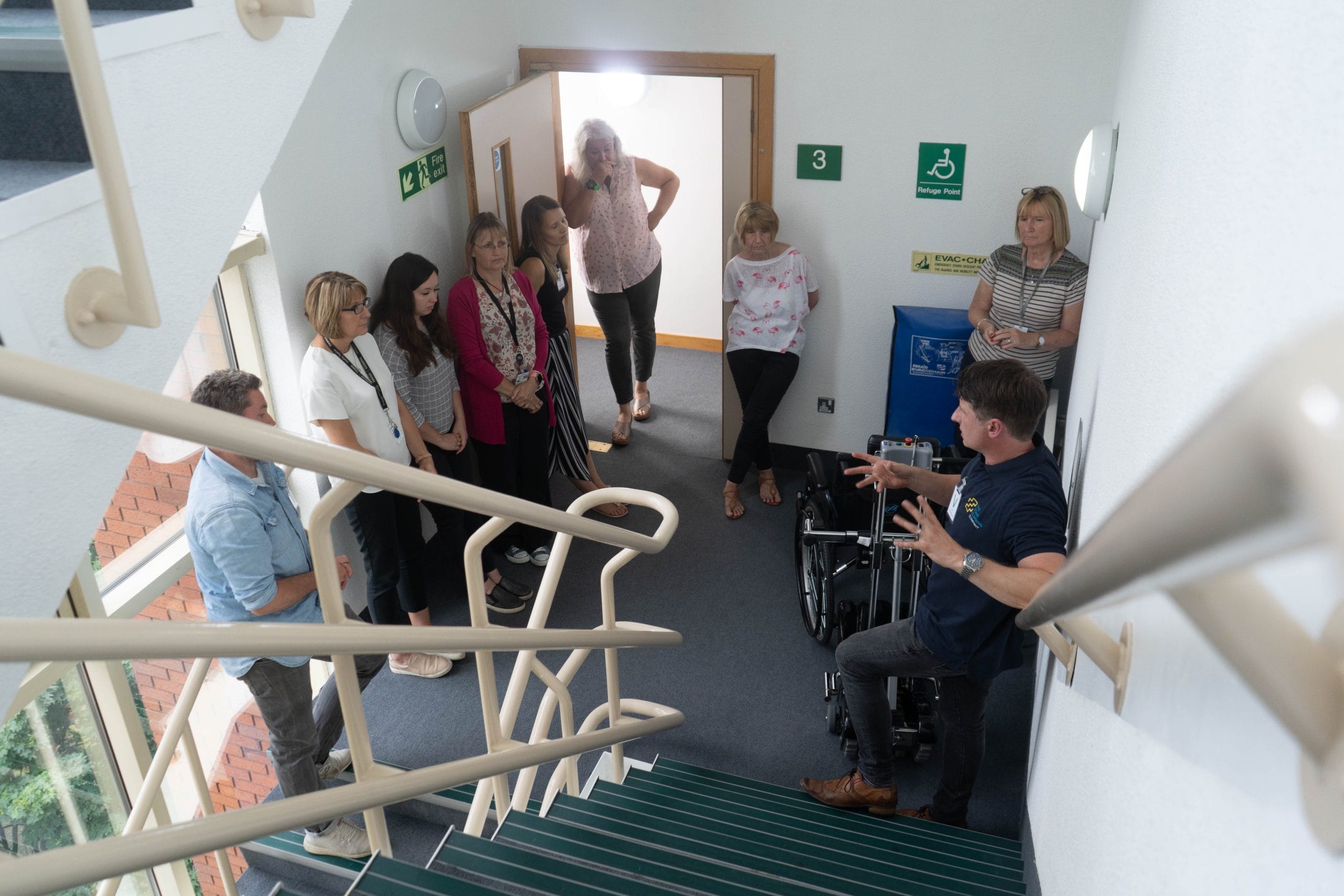
Powered Stair Climbers for Workplace Access: Removing Barriers Without Major Building Work
Powered Stair Climbers for Workplace Access: Removing Barriers Without Major Building Work Need to improve wheelchair access in your workplace? …

Access to buildings and homes should be safe, inclusive and practical for everyone, including children with mobility challenges. Across the UK, families, Occupational Therapists and healthcare providers are increasingly seeking solutions that enable children to move safely between levels without compromising comfort or dignity.
This is where childrens stair climber, childrens stairclimbers, paediatric stair climbers, and paediatric stairclimbers are making a significant impact. These specialist powered devices are designed specifically to support children, offering safe stair navigation without the need for permanent structural adaptations.
As awareness grows around inclusive design and child-centred care, paediatric stair climbers are becoming an essential solution across homes, schools and healthcare environments.
A childrens stair climber is a powered device that safely transports a child up and down stairs. These devices are specifically adapted for paediatric use, with features that prioritise safety, comfort and support.
Paediatric stair climbers typically include:
Unlike adult models, paediatric stairclimbers are designed with smaller body sizes, clinical needs and caregiver handling in mind.
According to guidance from the NHS on supporting children with additional needs, providing safe and appropriate equipment is essential for improving quality of life (https://www.nhs.uk/conditions/social-care-and-support-guide/support-and-benefits-for-carers/).
Stairs are one of the most significant barriers for children with mobility challenges. Many homes and schools are not adapted, and installing permanent solutions such as lifts is often not feasible.
Childrens stair climbers provide:
The Equality Act 2010 reinforces the importance of making reasonable adjustments for accessibility (https://www.legislation.gov.uk/ukpga/2010/15/contents).
For families, daily routines can become difficult when stairs are involved. Carrying a child manually can be unsafe and physically demanding.
Paediatric stair climbers help by:
Many UK homes were not designed with accessibility in mind. Narrow staircases, steep angles and limited space can make adaptations difficult.
Childrens stairclimbers allow families to:
This is particularly important for families living in rented or shared accommodation.
Simple activities such as going to bed, accessing a bathroom or moving between living spaces can become challenging without the right equipment.
Paediatric stair climbers support:
Providing consistent access helps children feel more included and supported.
Schools and educational settings must ensure that all students can access facilities safely. However, many older buildings have limited accessibility.
Childrens stair climbers provide a practical solution by:
The Department for Education highlights the importance of inclusive environments for all pupils (https://www.gov.uk/government/organisations/department-for-education).
Manual handling on stairs is not only unsafe for children but also for staff. Paediatric stair climbers reduce risk by:
The Health and Safety Executive emphasises reducing manual handling risks in schools and workplaces (https://www.hse.gov.uk/msd/manual-handling.htm).
Occupational Therapists play a key role in helping children achieve independence and participate in daily activities.
Paediatric stair climbers support therapy goals by:
The Royal College of Occupational Therapists promotes interventions that improve participation and independence (https://www.rcot.co.uk).
Childrens stairclimbers can contribute to:
They also allow therapists to assess real-world environments and provide tailored recommendations.
Safety is a critical consideration when selecting a childrens stair climber.
Key features include:
Modern paediatric stair climbers are designed to meet strict safety standards, ensuring both child and operator are protected.
The British Standards Institution provides guidance on safety and quality standards for mobility equipment (https://www.bsigroup.com/en-GB).
When selecting a childrens stair climber, several factors should be considered:
Working with experienced providers ensures the correct solution is chosen and implemented safely.
Guidance from Disabled Living Foundation highlights the importance of selecting appropriate equipment for individual needs (https://www.dlf.org.uk).
As awareness of inclusive design grows, demand for childrens stairclimbers and paediatric stair climbers is expected to increase across the UK.
Future developments may include:
Paediatric stair climbers are becoming a standard consideration in:
Childrens stair climbers, childrens stairclimbers, paediatric stair climbers and paediatric stairclimbers are transforming access for children with mobility challenges across the UK.
They provide a safe, flexible and cost-effective alternative to traditional adaptations, enabling children to access their homes, schools and communities with confidence.
For families, they reduce physical strain and improve daily life. For professionals, they support safer handling and better outcomes. For organisations, they offer a practical solution to accessibility challenges.
As the UK continues to prioritise inclusive environments, paediatric stair climbers will play an increasingly important role in ensuring that no child is limited by stairs.
Powered Stair Climbers for Workplace Access: Removing Barriers Without Major Building Work Need to improve wheelchair access in your workplace? …

Powered Stair Climbers for Wheelchair Access: A Flexible Way to Overcome Stairs Need to create wheelchair access where stairs are …

Part M Stair Climbers for London Buildings: Accessible Retrofit Without Major Structural Change Improving accessibility in an existing London building? …

Part M Stair Climbers for Retrofit Buildings: Creating Accessible Buildings Without Major Structural Change Retrofitting an existing building and struggling …
Part M Stair Climbers for London Retrofit Buildings: Practical Access in Constrained Spaces Discuss a London Access Assessment Retrofitting a …

Part M Stair Climber Access: Creating More Inclusive Buildings Without Losing Flexibility Creating an accessible building is rarely about a …
Estimated reading time: 6 minutes