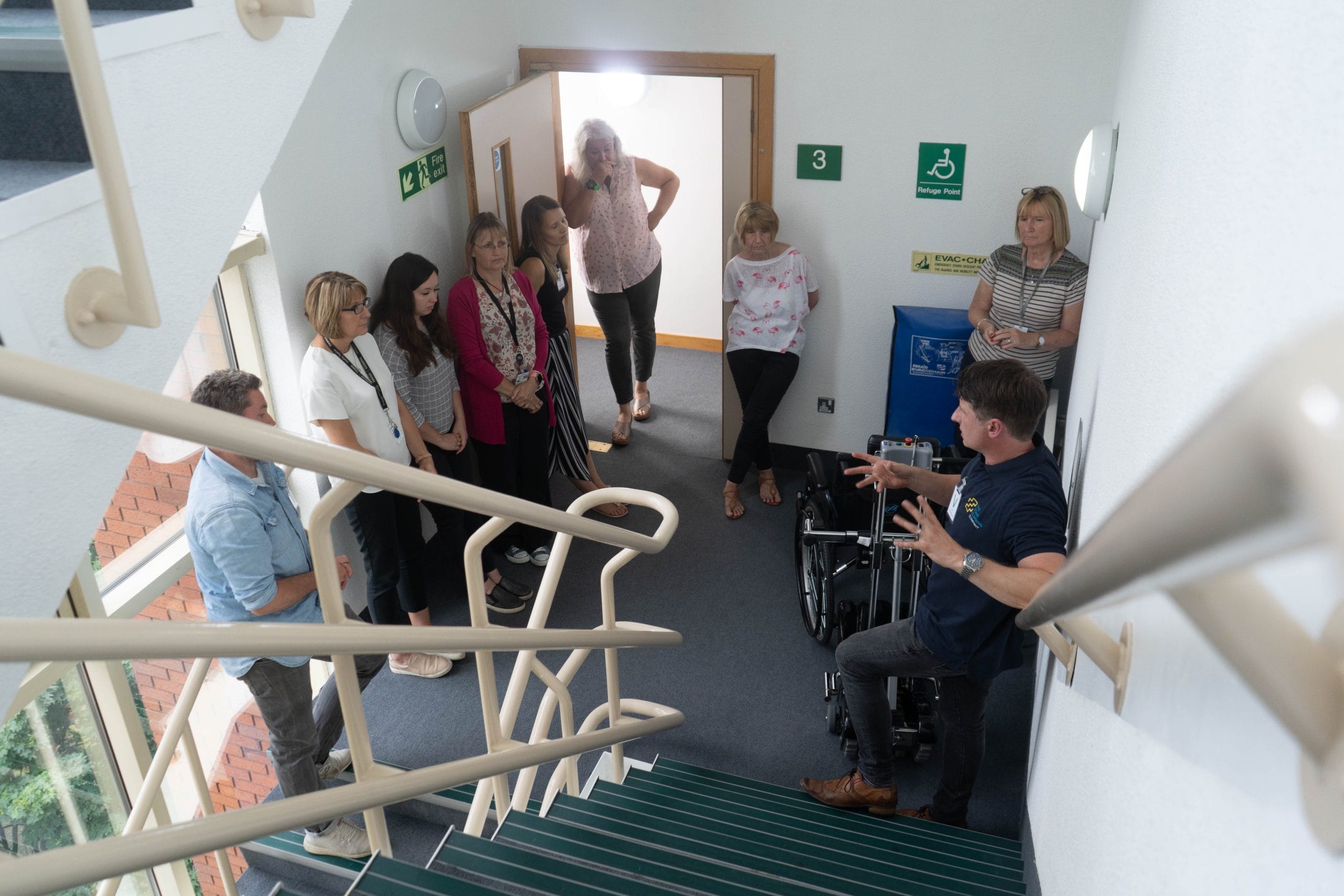
Powered Stair Climbers for Workplace Access: Removing Barriers Without Major Building Work
Powered Stair Climbers for Workplace Access: Removing Barriers Without Major Building Work Need to improve wheelchair access in your workplace? …

Estimated reading time: 5 minutes
When mobility becomes a challenge, stairs are often the first barrier people encounter at home or in public buildings. Stair lifts are commonly suggested as the default solution, but they are not always the most practical, flexible, or cost effective option. For many people and organisations, a stair climber offers a far better alternative to a stair lift.
This guide explores the best alternatives to stair lifts, with a focus on stair climbers as the top solution for both home support and accessibility in buildings.
Stair lifts can be helpful in some situations, but they come with limitations. They are fixed installations, require structural modification, and are designed for a single staircase. This can be restrictive for individuals who want flexibility or for buildings that serve multiple users.
Common reasons people search for an alternative to stair lift solutions include lack of space on the staircase, rental or listed properties where permanent changes are not allowed, the need to access multiple staircases, and the requirement to support wheelchair users rather than ambulant users.
These challenges have driven growing interest in mobile stair lift options, particularly stair climbers.
A stair climber is a powered mobility device designed to transport a person safely up and down stairs while seated or in their wheelchair. Unlike stair lifts, stair climbers are not fixed to the staircase. They are portable and can be used on multiple staircases.
There are two main types of stair climber. The first is a stair climbing wheelchair which integrates climbing technology into the wheelchair itself. The second is a mobile stair climber that attaches to an existing wheelchair.
Both types provide a highly flexible alternative to stair lifts.
For home use, stair climbers offer significant advantages over traditional stair lifts.
A stair climber does not require installation, drilling, or rails. This makes it ideal for rented homes or properties where permanent changes are not permitted. It also avoids the visual impact that stair lifts can have in domestic spaces.
Families supporting a loved one at home often value the ability to move the stair climber between locations. If the home has more than one staircase, a single stair climber can provide access throughout the property. This is not possible with a fixed stair lift.
A mobile stair lift also allows for future proofing. If the individual moves house or their needs change, the stair climber moves with them. This flexibility makes stair climbers a long term mobility investment rather than a fixed adaptation.
One of the biggest limitations of stair lifts is that they usually require the user to transfer from their wheelchair. For many people, this is uncomfortable, unsafe, or simply not possible.
A stair climbing wheelchair removes the need for transfers. The user remains seated in their own wheelchair while being transported up or down the stairs. This improves dignity, comfort, and safety while reducing strain on carers.
For households where carers provide daily support, stair climbers significantly reduce manual handling risks compared to lifting or assisting someone on the stairs.
Accessibility in buildings presents unique challenges. Installing stair lifts in every staircase is expensive and often impractical. Stair lifts also only serve one route, leaving other areas inaccessible.
Stair climbers provide a flexible accessibility solution for schools, offices, care homes, places of worship, and historic buildings. A single stair climber can be used wherever it is needed, supporting multiple users across different staircases.
This makes stair climbers a strong alternative to stair lifts for organisations seeking compliance with accessibility standards without major building alterations.
In many buildings, access needs are not constant. Visitors, patients, or guests may only occasionally require stair access support.
A mobile stair lift such as a stair climber is ideal in these situations. It can be stored when not in use and deployed quickly when needed. This is particularly valuable in venues where permanent installations are not suitable.
Because stair climbers work on straight and curved staircases, they adapt easily to older buildings where stair lift installation would be complex or impossible.
Stair lifts often involve high installation costs and ongoing servicing tied to the fixed rail system. Any change to the staircase can require additional work.
Stair climbers generally have lower upfront costs and simpler maintenance. Since they are not tied to the building structure, they do not become obsolete if the environment changes.
For both private individuals and organisations, this makes stair climbers a cost effective alternative to stair lift solutions.
When comparing flexibility, accessibility, and long term value, stair climbers consistently stand out as the best alternative to stair lifts. They support wheelchair users, adapt to multiple environments, and provide mobility without permanent installation.
Whether used as a mobile stair lift at home or as an accessibility solution in buildings, stair climbers offer independence, safety, and dignity.
For anyone exploring an alternative to stair lift options, a stair climber or stair climbing wheelchair is often the most practical and future ready choice.
Powered Stair Climbers for Workplace Access: Removing Barriers Without Major Building Work Need to improve wheelchair access in your workplace? …

Powered Stair Climbers for Wheelchair Access: A Flexible Way to Overcome Stairs Need to create wheelchair access where stairs are …

Part M Stair Climbers for London Buildings: Accessible Retrofit Without Major Structural Change Improving accessibility in an existing London building? …

Part M Stair Climbers for Retrofit Buildings: Creating Accessible Buildings Without Major Structural Change Retrofitting an existing building and struggling …
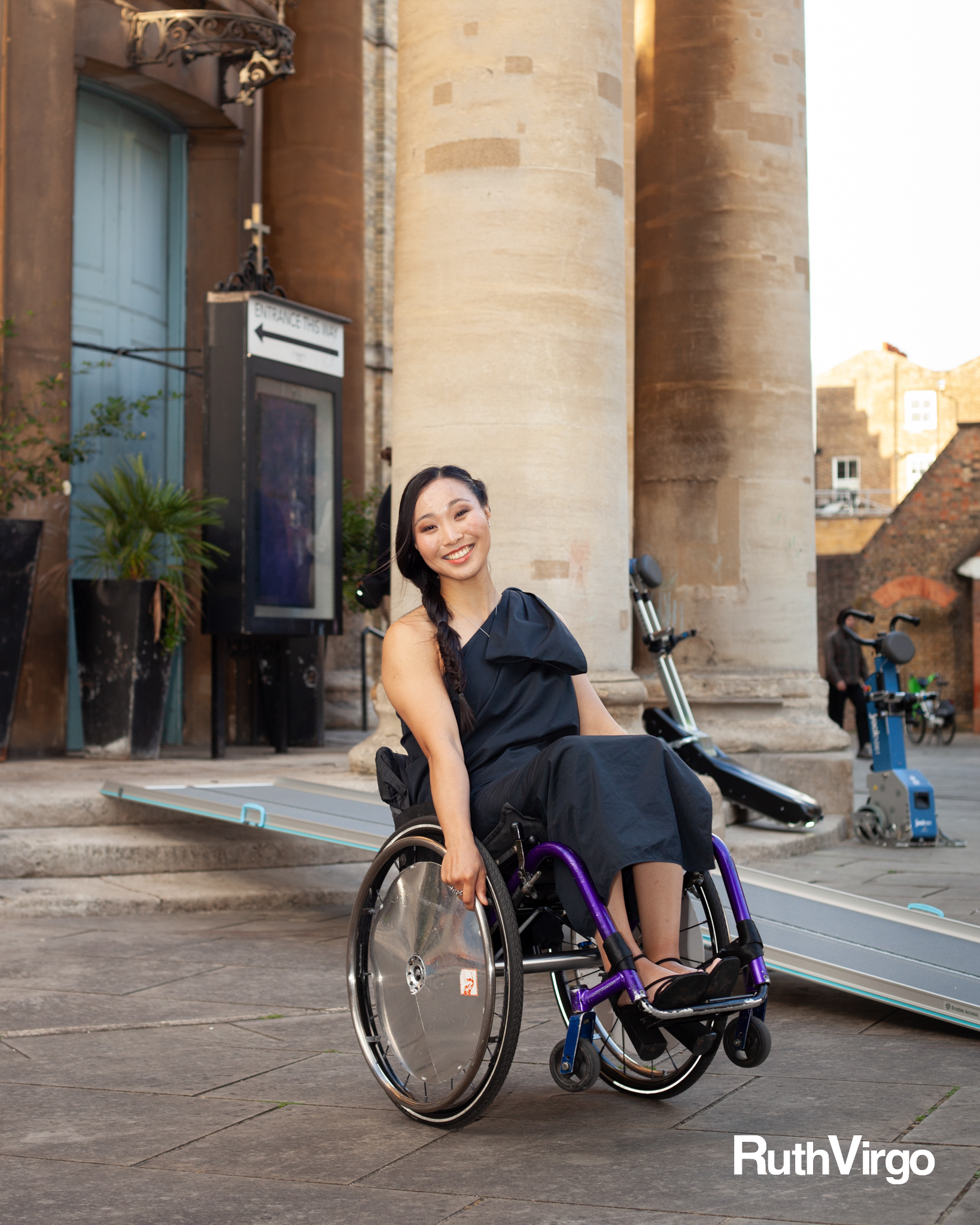
Part M Stair Climbers for London Retrofit Buildings: Practical Access in Constrained Spaces Discuss a London Access Assessment Retrofitting a …

Part M Stair Climber Access: Creating More Inclusive Buildings Without Losing Flexibility Creating an accessible building is rarely about a …