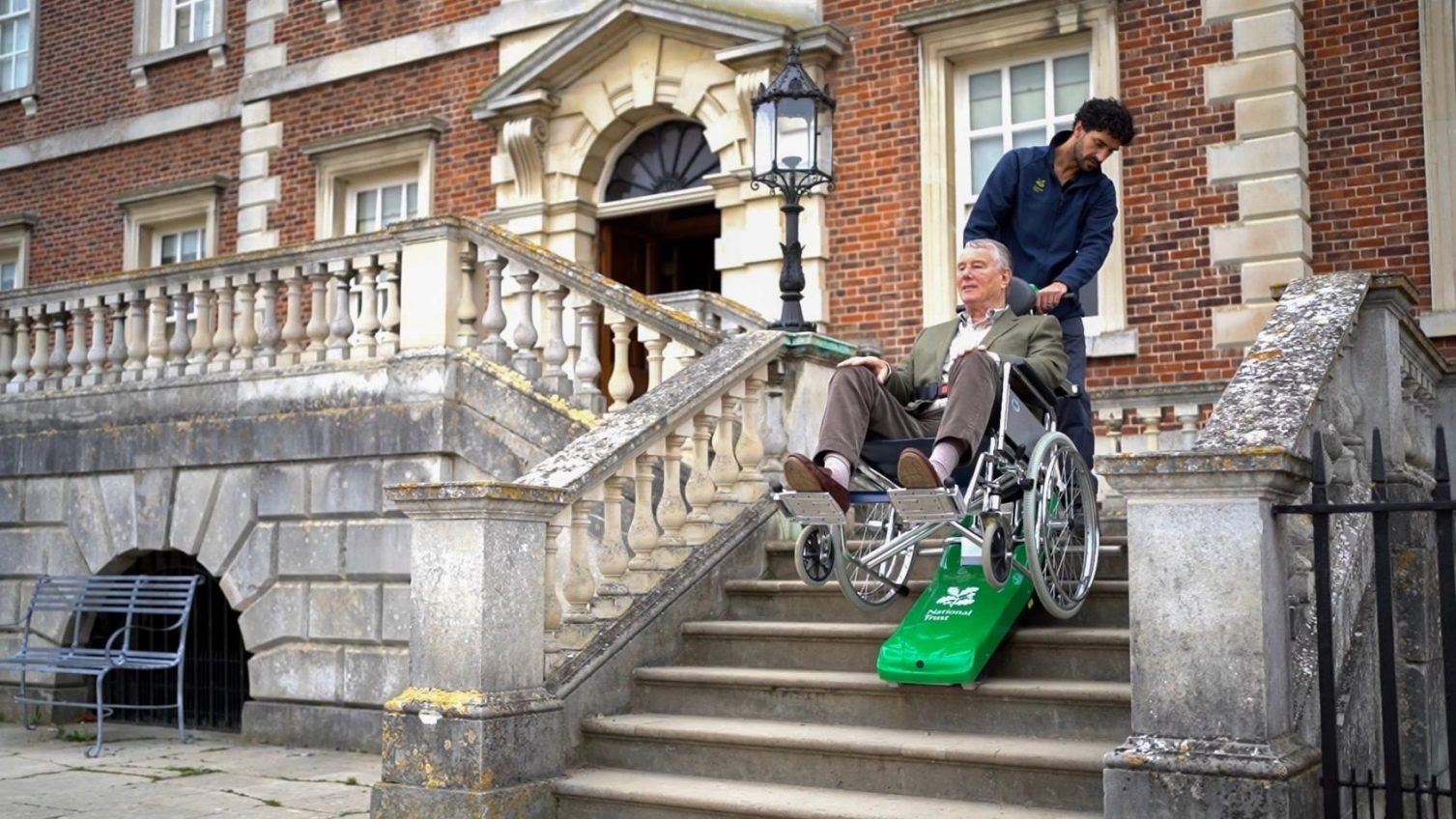
Can Stair Climbers Be A Solution For The Olympia Redevelopment?
The newly redeveloped Olympia Estate in London, a significant project aimed at transforming the area into a dynamic hub for …
Stairs present one of the biggest daily challenges for children with mobility needs. Parents, carers, and occupational therapists rely on paediatric stair climbers to safely move children up and down staircases at home, school, or community venues. Unlike a fixed stairlift, stair climbers are mobile, powered devices that work on most stair types and can be transported between locations. These stair climbers for children are essential mobility aids that improve independence, safety, and quality of life for families facing stairs every day. (The Stair Climbing Company)
In this article we compare two leading solutions: the Skyclimber Junior and the S Max stair climber. We explain why the Skyclimber Junior outclasses the S Max stair climber for young users, especially when customised seating options matter most.
The S Max stair climber is a powered mobility stair climber designed to transport people safely up and down stairs. It can handle narrow or spiral staircases and is compatible with a range of manual wheelchairs and universal seats that can be added as accessories. (Aatgb)
Key Features of the S Max Stair Climber
The S Max stair climber works well for general mobility needs and lighter wheelchair users. It is a versatile solution for adults and children alike. However, its seating options are often generic and not tailored to children with complex paediatric needs.
The Skyclimber Junior is a specialised paediatric stair climber built specifically for children and young people. Designed for users up to around 75kg and up to six feet tall, the Skyclimber Junior prioritises bespoke seating support and adaptability for growing children with complex mobility challenges. (approvedbusiness.co.uk)
Where the S Max stair climber often works as a general-use powered stair climber, the Skyclimber Junior is purpose-built to meet the specific needs of paediatric users. It excels in areas where safety, comfort, and flexibility matter most for children.
One of the biggest advantages of the Skyclimber Junior over the S Max stair climber is the range of bespoke seating options available. The Skyclimber Junior can be configured with specialist seating systems that support postural needs, harnesses, and positioning accessories. These options help ensure a child’s comfort, safety, and stability during stair travel.
By contrast, the S Max relies on more generic seating attachments and universal mounting solutions that might not provide the nuanced support needed for paediatric users with complex physical requirements. The ability to tailor the seating on the Skyclimber Junior means better head support, postural alignment, and overall comfort on every stair. (The Stair Climbing Company)
While the S Max stair climber can be adapted for use with children, it is ultimately a general-purpose stair climber. The Skyclimber Junior was engineered from the ground up with paediatric users in mind. This focus means its centre of gravity, dimensions, and operating controls are all optimised for safe, confident handling by trained adults and caregivers using a device sized appropriately for children’s bodies. (approvedbusiness.co.uk)
Safety is the top concern when carrying a child up stairs. The Skyclimber Junior includes features such as automatic braking systems, motor control that steps safely and smoothly, and robust construction for secure operation on straight or curved staircases. These elements are particularly important for children who may have involuntary movement or need additional support. (The Stair Climbing Company)
The S Max stair climber also offers safety features like automatic brakes and adjustable speed, but its less specialised seating and support systems limit its effectiveness for paediatric users with greater support needs. (John Preston)
Skyclimber Junior units are battery powered, portable, and easily disassembled for travel or storage. This flexibility makes them ideal for families who want mobility both at home and on the move. They can be taken to school, family events, or on holidays, giving children consistent access wherever stairs might otherwise be a barrier. (The Stair Climbing Company)
The S Max stair climber is portable too, but without the child-centred seating adaptability, it is often better suited to adults or older, less complex paediatric cases. (Safety Chair)
Occupational therapists increasingly recommend devices like the Skyclimber Junior because they can be tailored to a child’s specific mobility profile. This tailored approach supports better outcomes in therapy, greater family independence, and improved emotional wellbeing for the child. (The Stair Climbing Company)
Choosing the right stair climber for children is about more than carrying a child upstairs. It is about safety, independence, comfort, and inclusion. The Skyclimber Junior shines in these areas because it is designed specifically for paediatric use and offers bespoke seating and posture support that the S Max stair climber cannot match.
For families, caregivers, and occupational therapists seeking the most effective paediatric stair climber, the Skyclimber Junior provides a child-first solution that outclasses the S Max stair climber and other generic stair climbers for children.
If you are researching “paediatric stair climbers”, “S Max stair climber”, or “stair climbers for children”, and want to make the best choice for meaningful mobility improvements and everyday independence, the Skyclimber Junior should be at the top of your list.
Estimated reading time: 5 minutes
The newly redeveloped Olympia Estate in London, a significant project aimed at transforming the area into a dynamic hub for …

Insight from Emma and Chris Persey, directors of The Stair Climbing Company Navigating Workplace Accessibility Challenges Changing jobs is …

Schools are important. They are the building blocks of our society that provide youngsters with exposure to knowledge, activities, and …