
Expanding Access Across the UK with Stair Climbing Wheelchairs
Expanding Access Across the UK with Stair Climbing Wheelchairs Stair climbing wheelchairs are playing an increasingly important role in improving …

Facilities managers and heritage building custodians face a unique challenge. They must balance accessibility, safety, and compliance while preserving the character and structure of older buildings. Installing traditional lifts is often expensive, invasive, and sometimes impossible due to planning restrictions. This is where stair climbers and stairclimbers offer a powerful and flexible lift alternative.
Historic and listed buildings are essential to cultural identity. However, many were designed long before modern accessibility standards. Narrow staircases, fragile structures, and strict conservation regulations can make permanent modifications difficult.
According to guidance from the UK Government on listed buildings and accessibility, solutions should minimise impact while improving inclusivity.
https://historicengland.org.uk/advice/your-home/owning-historic-property/accessibility/
This creates demand for non-invasive solutions like heritage building stair climbers and historic building stair climbers that allow access without structural changes.
Stair climbers are portable devices designed to transport people or goods up and down stairs safely. They come in several forms:
Unlike lifts, stair climbers do not require installation, planning permission, or major building work.
For facilities teams managing sensitive environments, this flexibility is critical.
Traditional lifts are not always viable in heritage settings. Structural limitations, cost, and conservation rules often prevent installation.
The Royal Institute of British Architects highlights that interventions in historic buildings should be reversible and minimal where possible.
https://www.architecture.com/knowledge-and-resources/resources-landing-page/designing-for-accessibility
This is where stair climbers stand out as a lift alternative:
For many facilities managers, stair climbers bridge the gap between accessibility requirements and preservation obligations.
Installing a lift can involve cutting through floors, reinforcing structures, and altering layouts. In listed buildings, this may not be permitted.
Historic building stair climbers allow full accessibility without compromising original architecture.
Lift installation can cost tens of thousands of pounds, not including maintenance and servicing.
Stair climbers provide a cost effective alternative with minimal ongoing expenses.
Facilities teams often manage multiple buildings. A portable stair climber can be used across different locations, increasing return on investment.
Unlike lifts, which can take months to design and install, stair climbers can be deployed immediately.
Many museums operate in historic buildings with limited accessibility options. Stair climbers enable visitor inclusion without altering protected spaces.
The Museums Association supports inclusive access while respecting heritage constraints.
https://www.museumsassociation.org/campaigns/accessibility-and-inclusion/
Places of worship often feature narrow staircases and listed status restrictions. Stair climbers provide a respectful and practical solution.
Universities and schools housed in historic buildings must meet accessibility standards. Stair climbers offer a compliant and flexible approach.
Hotels, offices, and event venues in historic buildings benefit from improved accessibility without compromising aesthetics.
Accessibility is not just best practice. It is a legal requirement under the Equality Act 2010.
The Equality and Human Rights Commission outlines the duty to make reasonable adjustments for disabled users.
https://www.equalityhumanrights.com/en/advice-and-guidance/reasonable-adjustments
Stair climbers and stairclimbers help facilities managers meet these obligations by:
Proper staff training and equipment maintenance are essential to ensure safe operation.
When selecting a stair climber for a heritage or historic building, consider:
Working with a specialist provider ensures the solution is tailored to the building and operational needs.
For expert guidance on stair climbers and accessibility solutions, resources such as the British Healthcare Trades Association can provide useful insights.
https://www.bhta.com/
As accessibility expectations increase, facilities managers must find solutions that respect both users and buildings.
Heritage building stair climbers and historic building stair climbers are becoming an essential part of this strategy. They offer a practical, compliant, and cost effective lift alternative that aligns with conservation principles.
Rather than forcing buildings to adapt through invasive changes, stair climbers allow accessibility to adapt to the building.
Stair climbers are transforming how facilities approach accessibility in heritage environments. They provide a non-invasive, flexible, and cost effective alternative to lifts, making them ideal for historic and listed buildings.
For facilities managers, the choice is no longer between accessibility and preservation. With the right stair climber solution, both can be achieved.
If you are managing a heritage site or historic building, now is the time to explore how stair climbers and stairclimbers can enhance accessibility while protecting the integrity of your space.
Expanding Access Across the UK with Stair Climbing Wheelchairs Stair climbing wheelchairs are playing an increasingly important role in improving …
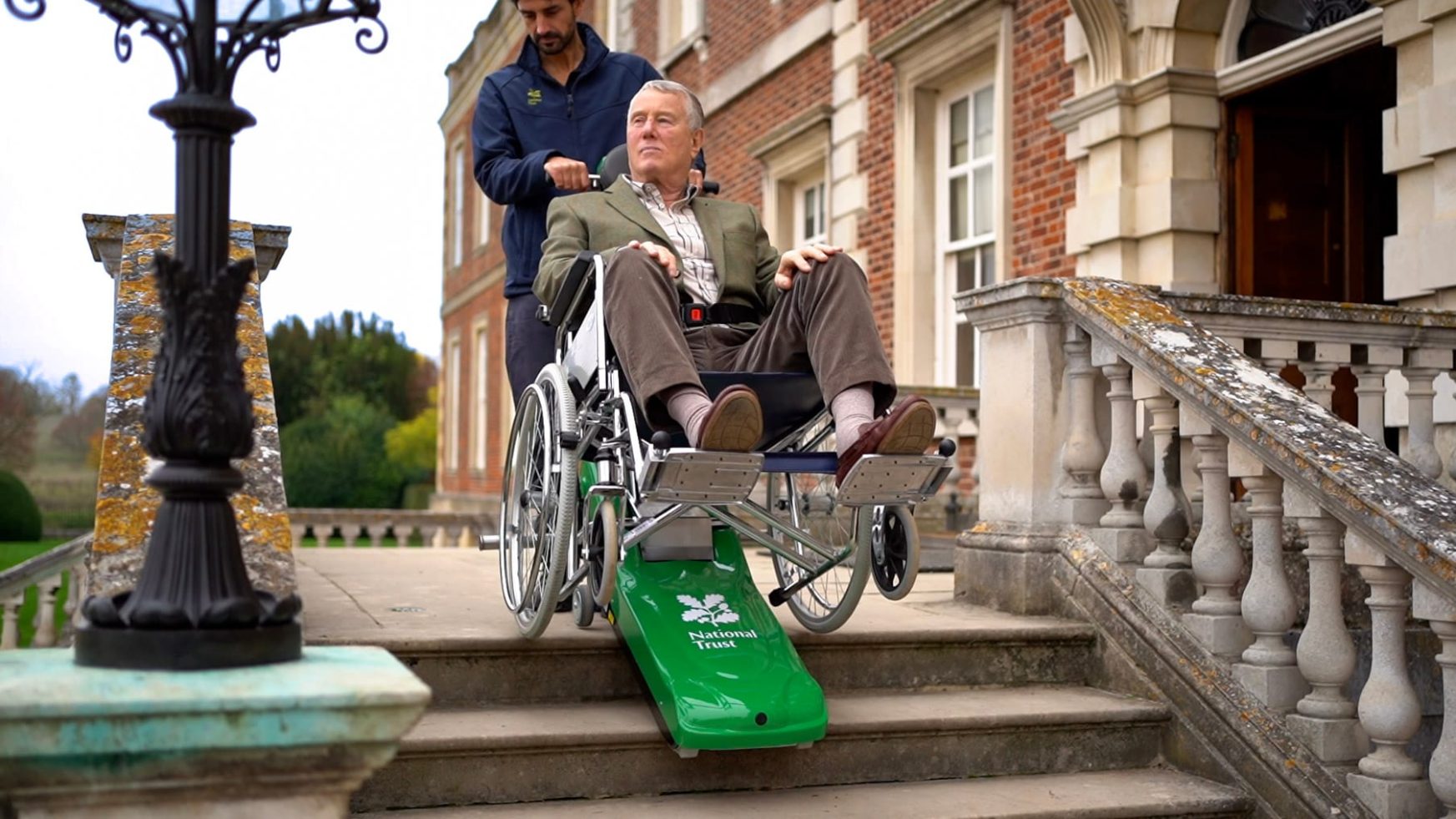
Wheelchair Stair Climbers Improve Access For The National Trust As The Stair Climbing Company Embarks on Access for Everyone with …

Facilities Management Journal interview with Emma Ensuring accessibility and safe egress: Particularly sites with no lifts or ramps Posted by:&…
Estimated reading time: 5 minutes