
Accessibility for Disabled Children
An urgent deployment of our bespoke ‘Sky Climber’ adapted Stair Climber for disabled children, and their families, in isolation. Occupational …

Looking for an alternative to a stair lift without permanent installation? A powered stair climber can provide a flexible way to overcome stairs in homes, workplaces and public buildings while avoiding major structural alterations.
The Stair Climbing Company provides powered stair climbers for adults and children, including solutions that enable wheelchair users to remain in their own wheelchair. We provide free assessments, demonstrations, hire, purchase, training and ongoing support across the UK.
Unlike a permanently installed stair lift or platform lift, a stair climber can be stored when it is not required and, depending on the model and assessment, may be used on different staircases or at different locations. This makes powered stair climbers an important stair lift alternative where permanent installation is impractical, undesirable or disproportionate.
Portable stair lift” is a phrase commonly used by people searching for a non-permanent way of overcoming stairs. In practice, the equipment may be described as a powered stair climber rather than a conventional stair lift.
| Portable powered stair climber | Fixed stair lift | Platform lift | |
|---|---|---|---|
| Permanent installation | No | Yes | Yes |
| Can carry wheelchair | Yes | No | Yes |
| Portable | Yes | No | No |
| Trained operator | Yes | Usually no | Usually no |
| Structural work | None | Rail installation | Often substantial |
| Multiple locations | Yes | No | No |
| Assessment required | Yes | Yes | Yes |
A stair climber is a mobility device designed to help individuals safely ascend and descend stairs. Unlike a stair lift, which is typically installed along the length of a staircase and requires the user to remain seated while the device moves up or down, a stair climber is a portable device operated by a trained operator. Stair climbers are often compact and can be used on any set of stairs, making them ideal for those who want mobility assistance without the need for structural changes to their home.
Stair climbers are battery-powered and can carry individuals with ease. Some models are designed to accommodate various types of stairs, from straight to spiral or curved, ensuring versatility in different environments. These devices work by using tracks or legs that lift at the edge of the stairs, lifting the user in a controlled, steady motion.

“We have worked for many years with the team and there attention to detail when deploying stair climbers to our families is second to none. I highly recommend using The Stair Climbing Company for their thorough assessments with stair climbers for Children through to Adults”


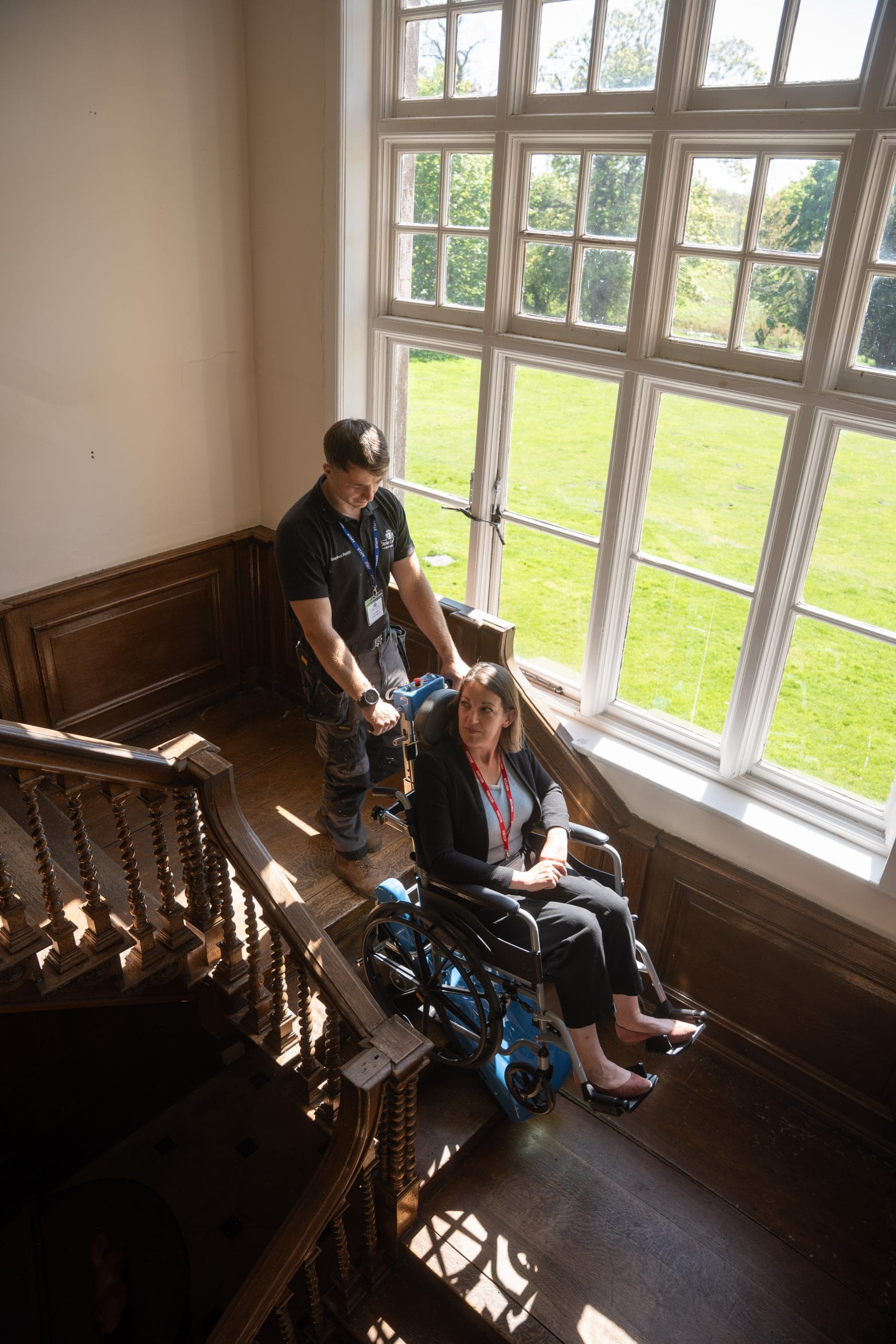
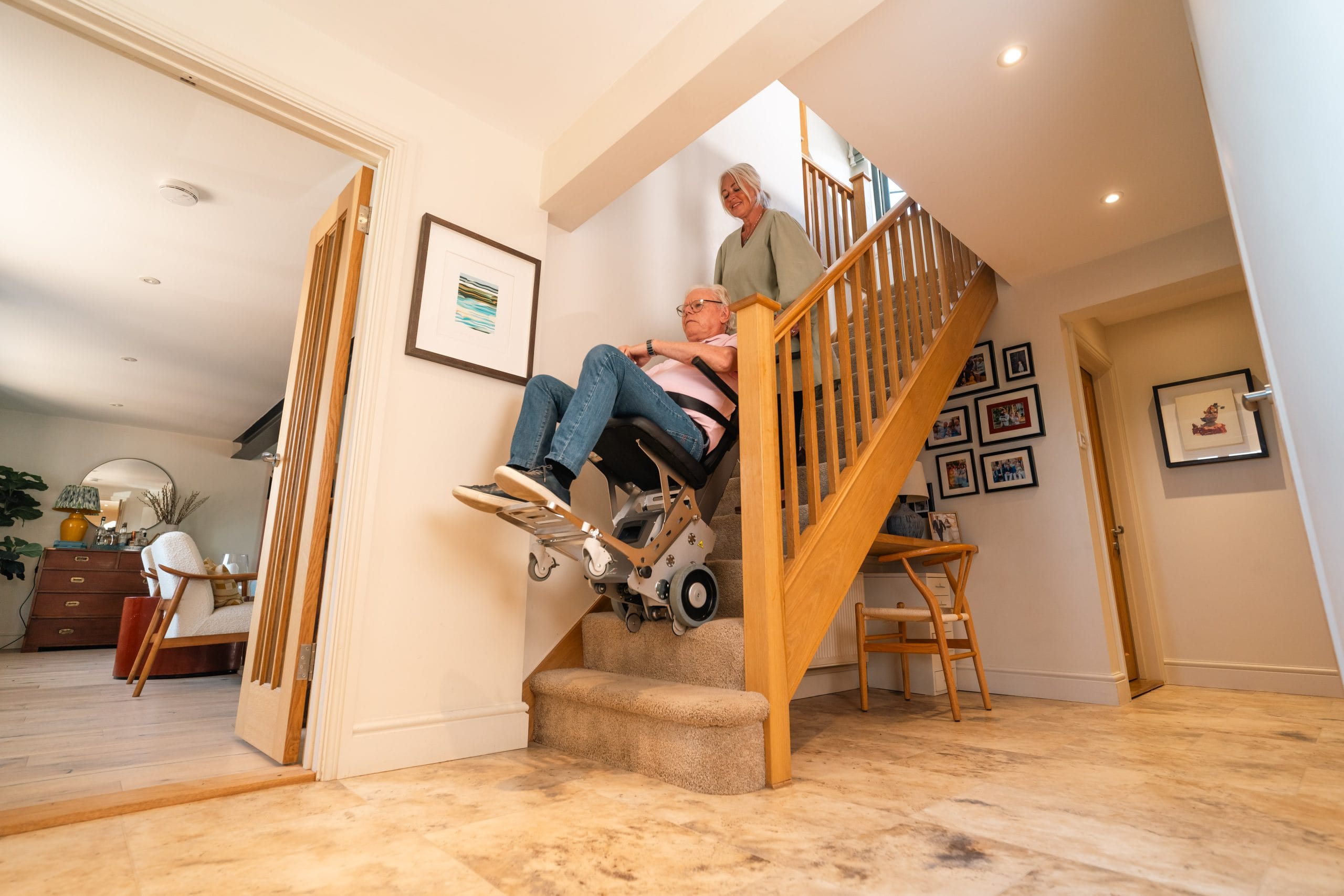


Both stair climbers and stair lifts serve the same general purpose: to help people navigate stairs when they have limited mobility. However, the two devices differ in terms of operation, installation, cost, and flexibility. Below are some key comparisons between stair climbers and stair lifts:
One of the main advantages of stair climbers is their portability. Stair climbers are compact and can be easily moved between different locations, including different homes or areas within the same building. Unlike stair lifts, which are fixed in place and often require permanent installation along the staircase, stair climbers can be taken along for the ride when traveling or visiting friends and family. This makes them an excellent option for individuals who need mobility assistance but do not want to commit to a permanent installation.
Stair lifts typically require the installation of tracks or rails along the staircase, which can be a costly and time-consuming process. The installation may also be disruptive and may not be an option for renters or individuals who do not own their property. Additionally, stair lifts require a certain amount of space on the staircase to be properly installed, which may be a problem in narrower or more congested stairwells.
On the other hand, stair climbers do not require any permanent installation. They are used manually by the person with mobility challenges or with the assistance of an operator. Since they don’t require any modifications to the home, they are an ideal choice for individuals who live in rental properties, communal spaces, outside spaces, listed buildings or those who prefer not to make permanent changes to their living space.
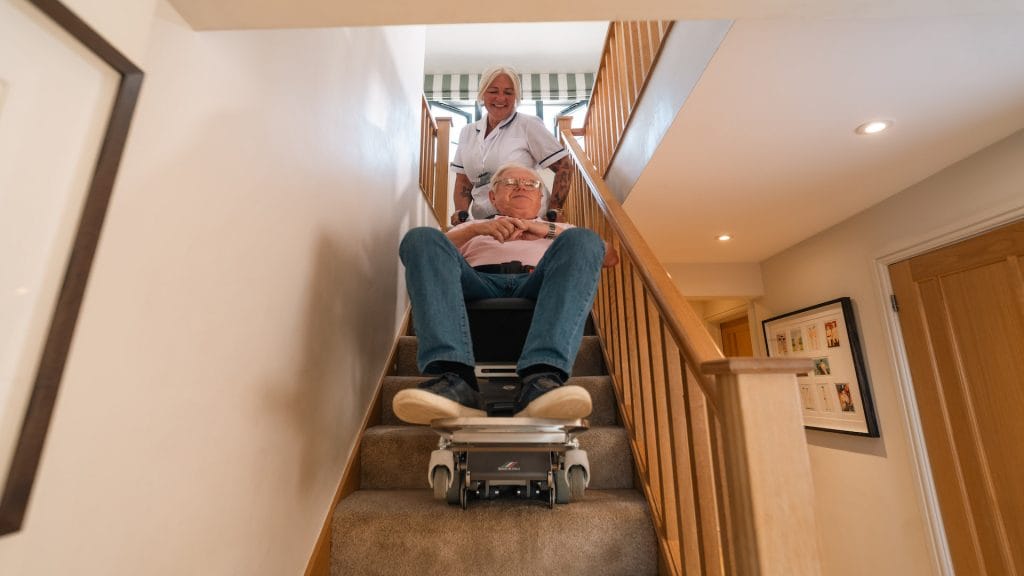
Costs vary considerably according to the staircase, equipment and installation requirements. A portable stair climber can avoid the structural work associated with some fixed access solutions, but suitability and overall cost should be established through assessment.
Stair lifts are relatively simple to use. Once installed, the user simply sits down and activates the lift, which carries them up or down the stairs at a steady pace. Stair climbers, while still easy to operate, require and operator to remain standing and manually control the device as it ascends or descends the stairs. Depending on the specific model, the operator may need some physical strength or assistance from a caregiver to guide the stair climber.
For individuals who can operate the stair climber, these devices can be an excellent way to maintain some independence for their family members. They are often easier to use for people with limited mobility who do not require complete assistance in sitting down or standing up.
Stair lifts are generally designed for one type of stairway—typically a straight set of stairs. For curved or spiral staircases, custom stair lifts are available, but these models can be much more expensive. In contrast, stair climbers are more versatile and can often be used on a variety of stair designs, including curved or irregular stairs. The mobility of a stair climber makes it an excellent option for people who need to navigate different staircases in various settings, such as in a multi-level home, public buildings, or even commercial spaces.
Stair lifts generally require regular maintenance, including checking the batteries, lubricating the moving parts, and ensuring that the lift functions smoothly. If anything breaks or malfunctions, repair costs can add up, especially if the system is older.
Stair climbers, on the other hand, typically require less maintenance. Since they are operated manually, there are fewer mechanical components that can break down. The key maintenance tasks involve checking the batteries, brakes and ensuring the tracks and wheels are functioning properly.

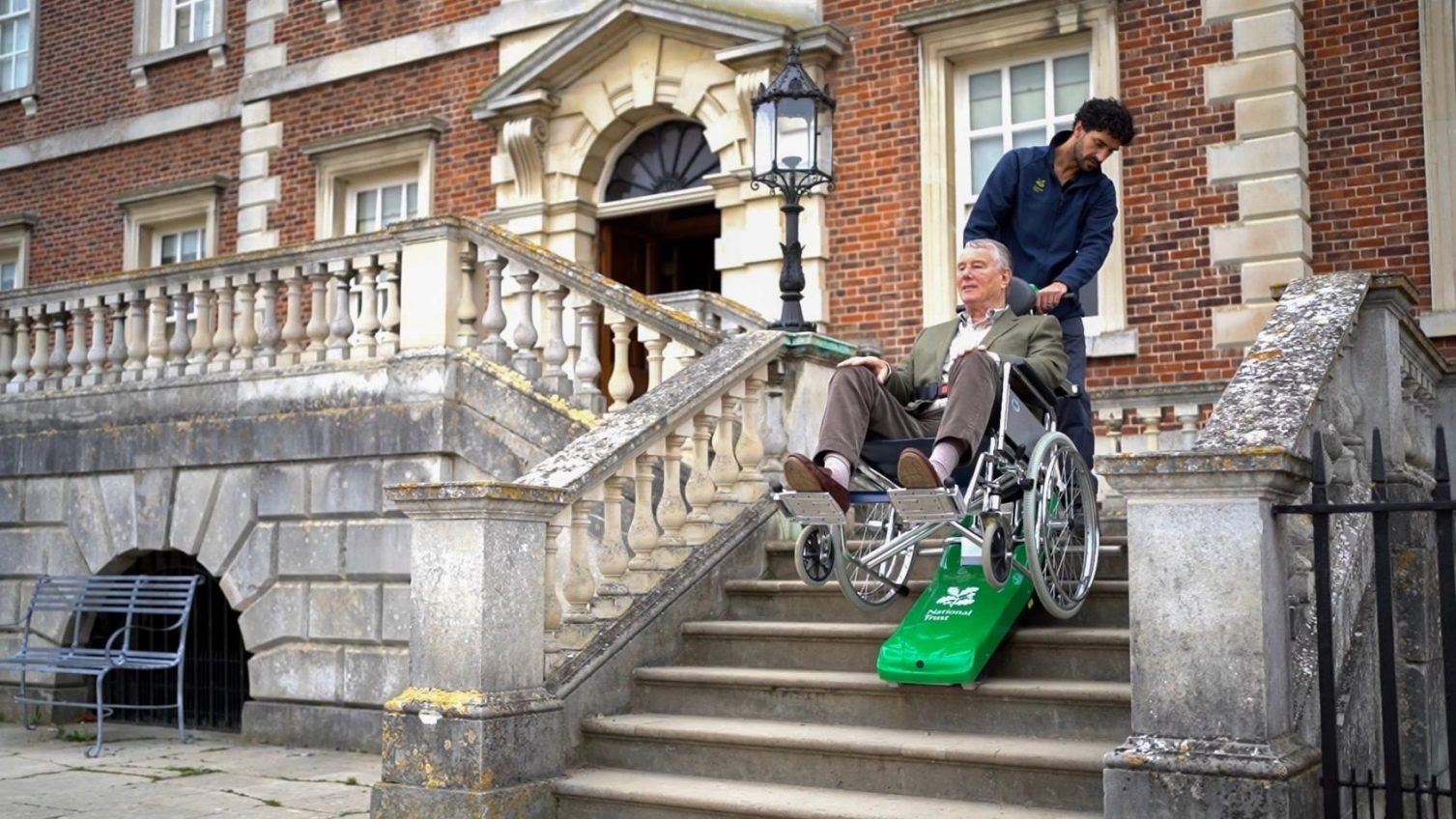
“The stair climber from The Stair Climbing Company has transformed the accessibility for Wimpole Hall allowing 580 more families to access the property in the last 12 months, a highly recommend contacting Chris and the team to support your access needs”
Residential Use
For homeowners with limited mobility, a stair lift offers a convenient solution for navigating stairs independently. However, if the individual uses a wheelchair, a stair climber might be more appropriate, allowing them to remain in their chair during transit.
Commercial and Public Spaces
In public buildings, stair climbers provide a flexible and cost-effective means of ensuring accessibility without the need for structural modifications. Their portability allows for easy relocation and use in various areas.
Emergency Situations
Stair climbers serve as an excellent contingency plan in case of lift failure, ensuring uninterrupted access and mobility within facilities .
While stair lifts are often the preferred choice for individuals who have significant mobility impairments or need to use the device on a daily basis, stair climbers offer several benefits that make them an attractive alternative:
A battery powered device designed to be used on all stairs to carry a wheelchair or childs buggy or alternatively a seating system or intergrated seat.
Yes in all but name!
Yes.
No just a trained operator.
Yes, a stair climber can be used on curved stairs.
Yes in rain or shine..
Yes they are used with us across many listed buildings including National Trust properties.
Yes from as little as 1 week to lease hire for several years..
Yes. We work with 100s of OTs every year from Children to Adults..
For those who are considering options for navigating stairs safely, stair climbers offer a practical, affordable, and versatile alternative to traditional stair lifts. Whether for a multi-level home or when traveling, stair climbers offer a convenient and space-efficient way to improve mobility without the need for costly or permanent installations. Before making a decision, it’s important to assess your specific needs and preferences, but for many individuals, a stair climber can be a great way to regain access to the full range of spaces in their homes and beyond.

For Further Information And A Free Assessment Please Complete The Form Below:
An urgent deployment of our bespoke ‘Sky Climber’ adapted Stair Climber for disabled children, and their families, in isolation. Occupational …
The newly redeveloped Olympia Estate in London, a significant project aimed at transforming the area into a dynamic hub for …

Claridge’s, one of London’s premier luxury hotels, has recently implemented an innovative solution to improve accessibility for …
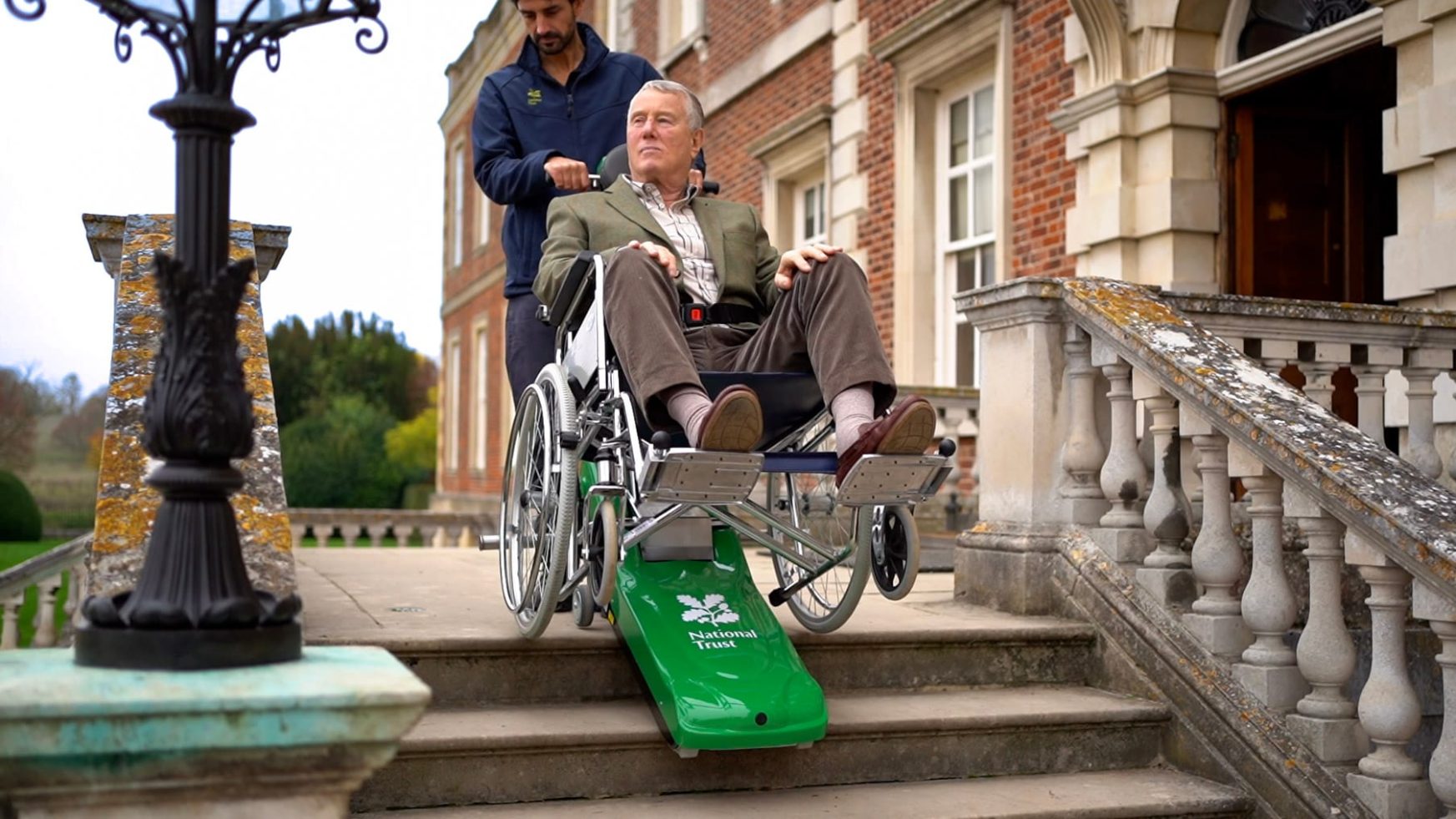
Wheelchair Stair Climbers Improve Access For The National Trust As The Stair Climbing Company Embarks on Access for Everyone with …
Estimated reading time: 8 minutes