
Accessibility for Disabled Children
An urgent deployment of our bespoke ‘Sky Climber’ adapted Stair Climber for disabled children, and their families, in isolation. Occupational …

Creating safe, inclusive and practical buildings is no longer optional. Across the UK, organisations are under increasing pressure to ensure that less able people and wheelchair users can access and exit buildings safely and with dignity. While lifts and ramps are valuable tools, they do not provide a complete solution. This is where the Stair climber becomes essential. A modern Stairclimber or Stair climbing wheelchair bridges the gap between accessibility and evacuation, ensuring buildings are usable in everyday situations and during emergencies.
Stairs remain one of the biggest barriers to access for wheelchair users and less able individuals. Many buildings were designed before accessibility regulations became standard. Even newer buildings may rely heavily on lifts, which immediately become unusable during fire alarms, power failures or emergency evacuations.
When lifts are out of action, wheelchair users can be left stranded. This creates risk, stress and inequality. A Stair climbing wheelchair provides a reliable and controlled way to move people up and down stairs, regardless of building layout or power availability. This makes stair climbers an essential part of both access planning and evacuation strategy.
A Stair climber is a powered device designed to transport wheelchair users or less able individuals safely on staircases. Depending on the model, it may carry a person in their own wheelchair or transfer them into a dedicated Stairclimbing wheelchair with integrated safety features.
Modern stair climbers are engineered for stability, balance and operator control. They can be used on straight stairs, spiral stairs and narrow stairwells, making them suitable for offices, schools, hospitals, residential blocks and public buildings. The adaptability of a Stairclimber means it can be deployed quickly without permanent building alterations.
Accessibility is not just about emergencies. It is about enabling independence and participation. A Stair climbing wheelchair allows wheelchair users to access upper or lower floors for meetings, events, education and social activities when a lift is unavailable or impractical.
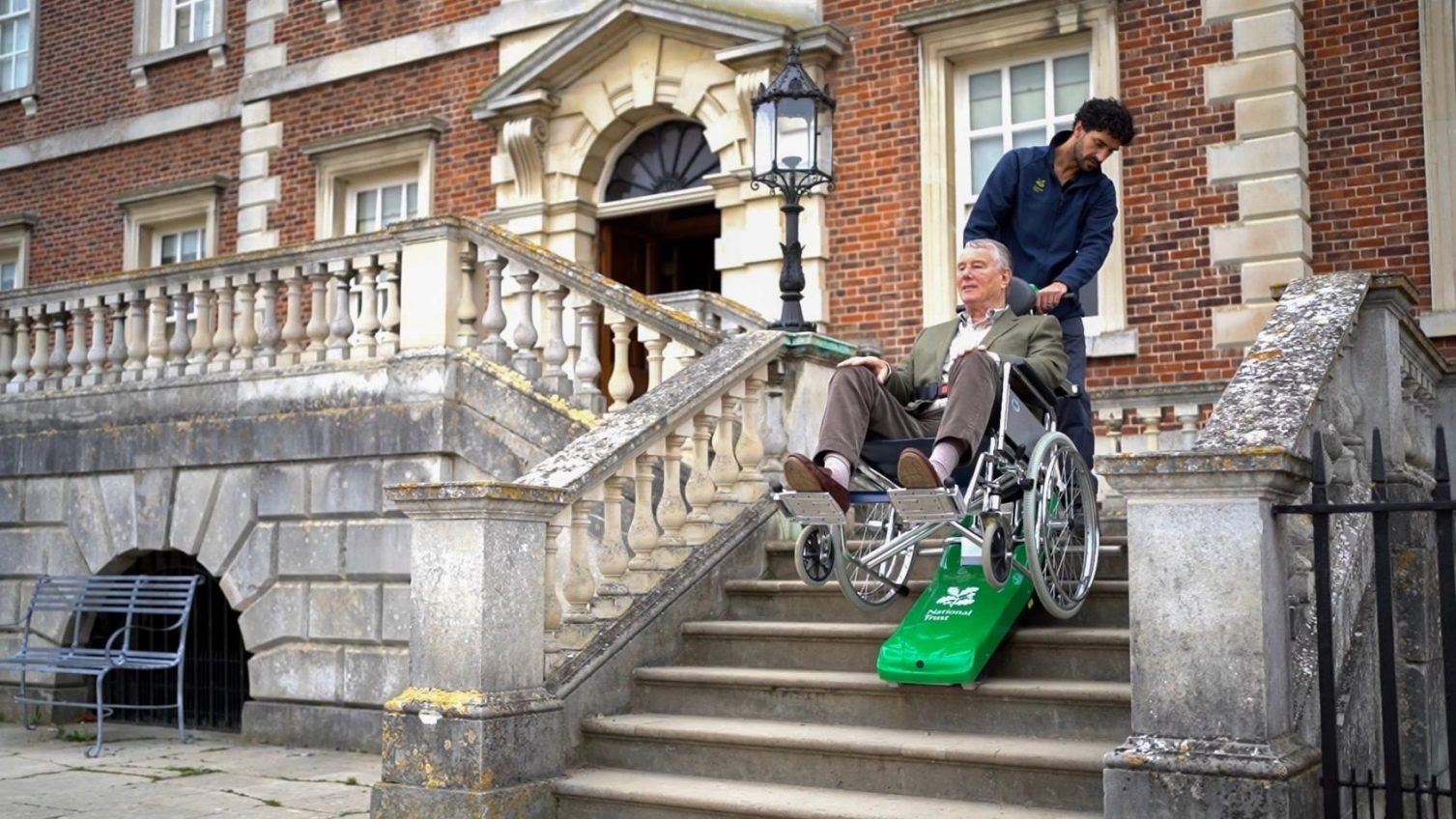
For listed buildings or older properties where ramps and lifts are restricted, a Stair climber offers a non intrusive solution. This helps building owners meet accessibility expectations while preserving architectural features. It also demonstrates a commitment to inclusion and equality for staff, visitors and residents.
Evacuation planning is one of the most critical responsibilities for building managers. Fire regulations require that all occupants, including wheelchair users, can be evacuated safely. Relying solely on lifts is not acceptable in an emergency.
A Stairclimber is a proven evacuation tool. It allows trained staff to assist wheelchair users down staircases calmly and efficiently. Many Stair climbing wheelchair models are designed specifically for evacuation, with features such as secure harnesses, braking systems and ergonomic handles.
Including stair climbers in evacuation plans reduces risk and ensures compliance with fire safety responsibilities. It also provides reassurance to less able individuals that their safety has been properly considered.
For wheelchair users, dignity and confidence are paramount. Being carried manually down stairs is uncomfortable and unsafe. A Stair climbing wheelchair provides a controlled and respectful alternative, reducing anxiety during both routine movement and emergencies.
For staff and carers, a Stair climber reduces physical strain and manual handling risks. Proper training enables teams to operate the equipment smoothly, protecting both the operator and the person being transported. This leads to safer workplaces and better outcomes for everyone involved.
UK accessibility guidance and fire safety standards increasingly recognise the importance of practical evacuation solutions. While a Stair climber may not be explicitly named in every regulation, it clearly supports the duty of care placed on employers, landlords and building operators.
By investing in a Stairclimber or Stair climbing wheelchair, organisations demonstrate proactive risk management. It shows that access and evacuation have been properly assessed rather than treated as a tick box exercise.
Not all stair climbers are the same. Factors such as stair width, user weight, wheelchair type and frequency of use all matter. Some settings benefit from a dedicated Stairclimbing wheelchair, while others require a stair climber that works with existing wheelchairs.
Equally important is training. Even the best Stair climber is only effective when staff are confident and competent in its use. Regular training and maintenance ensure equipment is ready when it is needed most.
True accessibility goes beyond entry points. It considers how people move within buildings and how they are kept safe in emergencies. The Stair climber plays a crucial role in this wider approach, supporting independence, safety and equality.
For less able people and wheelchair users, a Stair climbing wheelchair is not just a piece of equipment. It is a lifeline that enables access, participation and peace of mind. For organisations, it is a practical, cost effective way to enhance building access and strengthen evacuation planning.
As awareness grows, stair climbers are becoming a standard part of responsible building management. Investing in the right Stairclimber today helps create safer, more inclusive spaces for everyone tomorrow.
An urgent deployment of our bespoke ‘Sky Climber’ adapted Stair Climber for disabled children, and their families, in isolation. Occupational …

The festive season is about togetherness. It is a time when families and friends gather to celebrate, attend events, and …
The newly redeveloped Olympia Estate in London, a significant project aimed at transforming the area into a dynamic hub for …

The Heritage Network Conference 2025 is one of the most anticipated events for professionals and organisations committed to preserving and promoting …
Estimated reading time: 5 minutes