Powered Stair Climbers for Workplace Access: Removing Barriers Without Major Building Work
Powered Stair Climbers for Workplace Access: Removing Barriers Without Major Building Work Need to improve wheelchair access in your workplace? …

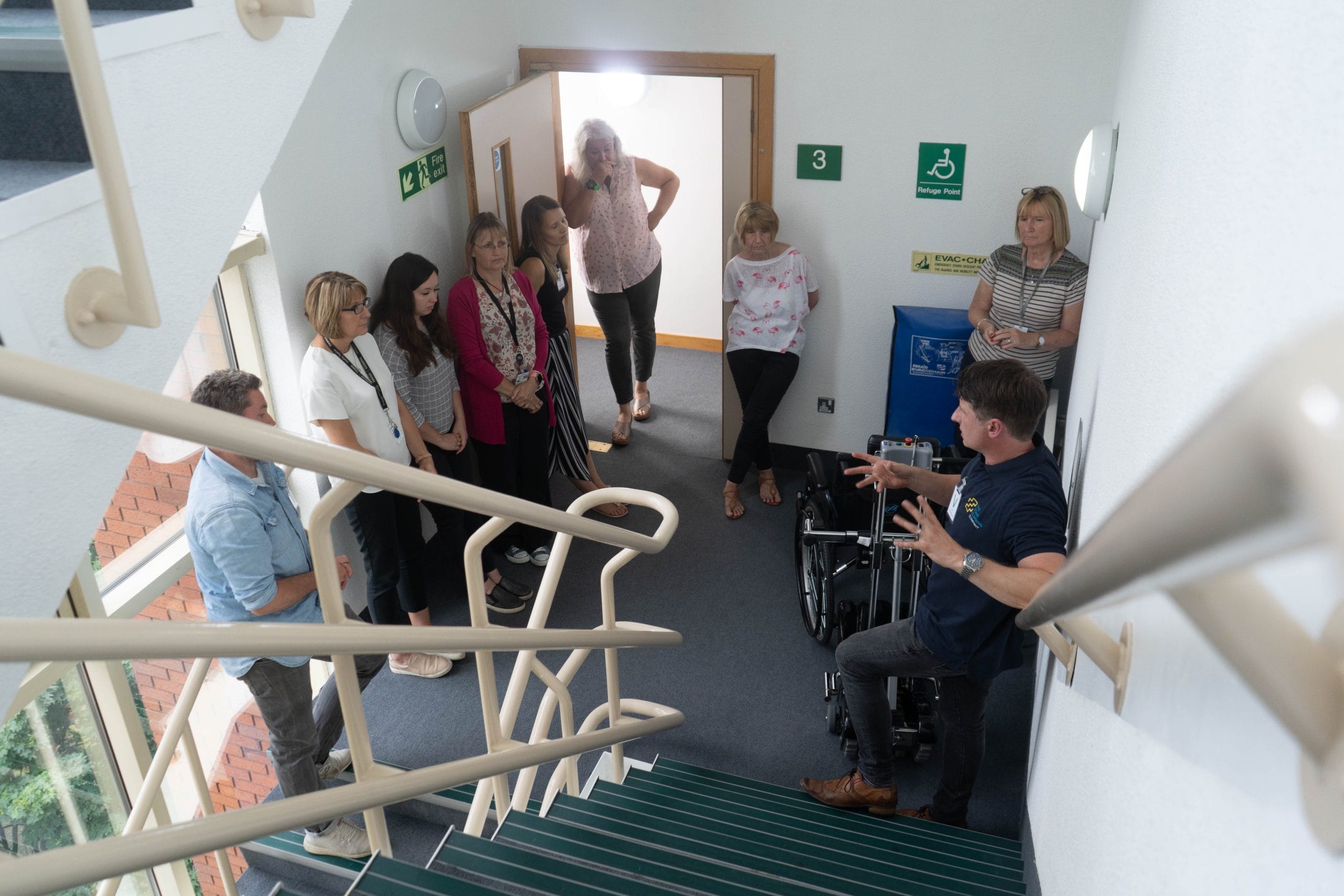
Educational establishments have clear legal responsibilities to ensure that emergency evacuation procedures are inclusive and effective.
The Equality Act 2010 requires schools, colleges and universities to make reasonable adjustments for disabled students, employees and visitors. This includes considering how individuals with mobility impairments will be evacuated safely during emergencies.
The Regulatory Reform (Fire Safety) Order 2005 places a duty on the Responsible Person to assess fire risks and implement appropriate fire safety measures, including suitable evacuation arrangements for all building occupants.
The Fire Safety Act 2021 strengthened fire safety responsibilities and reinforced the importance of comprehensive fire risk assessments across educational premises.
The Building Safety Act 2022 has further increased focus on occupant safety and building risk management, particularly within complex and multi-storey buildings.
Educational establishments must also consider guidance published by the Department for Education, the Health and Safety Executive (HSE), the National Fire Chiefs Council (NFCC), the Fire Protection Association (FPA), the Institution of Fire Engineers (IFE) and local fire authorities such as London Fire Brigade.
Where students, staff members or visitors cannot safely use stairs independently during an emergency, powered stairclimbers and powered evacuation chairs can form an important part of a compliant evacuation strategy.
When integrated into Personal Emergency Evacuation Plans (PEEPs), Generic Emergency Evacuation Plans (GEEPs) and Building Emergency Evacuation Plans (BEEPs), powered stair climbers help educational establishments demonstrate a proactive approach to accessibility, fire safety and duty of care.
Powered Stair Climbers for Workplace Access: Removing Barriers Without Major Building Work Need to improve wheelchair access in your workplace? …

Powered Stair Climbers for Wheelchair Access: A Flexible Way to Overcome Stairs Need to create wheelchair access where stairs are …

Part M Stair Climbers for London Buildings: Accessible Retrofit Without Major Structural Change Improving accessibility in an existing London building? …

Part M Stair Climbers for Retrofit Buildings: Creating Accessible Buildings Without Major Structural Change Retrofitting an existing building and struggling …
Part M Stair Climbers for London Retrofit Buildings: Practical Access in Constrained Spaces Discuss a London Access Assessment Retrofitting a …

Part M Stair Climber Access: Creating More Inclusive Buildings Without Losing Flexibility Creating an accessible building is rarely about a …
Estimated reading time: 2 minutes